
Operations beginner
Many church AV systems aren't too old or too small. They're too complicated for a volunteer. A simple button panel built with Bitfocus Companion can hide that complexity behind plain-word buttons, and a church can often build it themselves. Here's when that works, when to call a professional, and how to start.
Oct 11, 2026 • 6 min read

Operations beginner
A three-person livestream team only works if everyone shares the same plan, the same wiring diagram, and the same news when something breaks. Here's how WorshipMetrics connects the director, slides, and camera volunteers through the week: chat, alerts, documentation, AI help, scheduling, and cloud control for OBS and vMix.
Oct 11, 2026 • 6 min read

Operations beginner
A church livestream runs best with three clear jobs: a director on OBS or vMix, a slides operator, and a camera operator. Here's what each role does before, during, and after the service, what skills it takes, and how the three talk to each other.
Oct 11, 2026 • 6 min read
Operations beginner
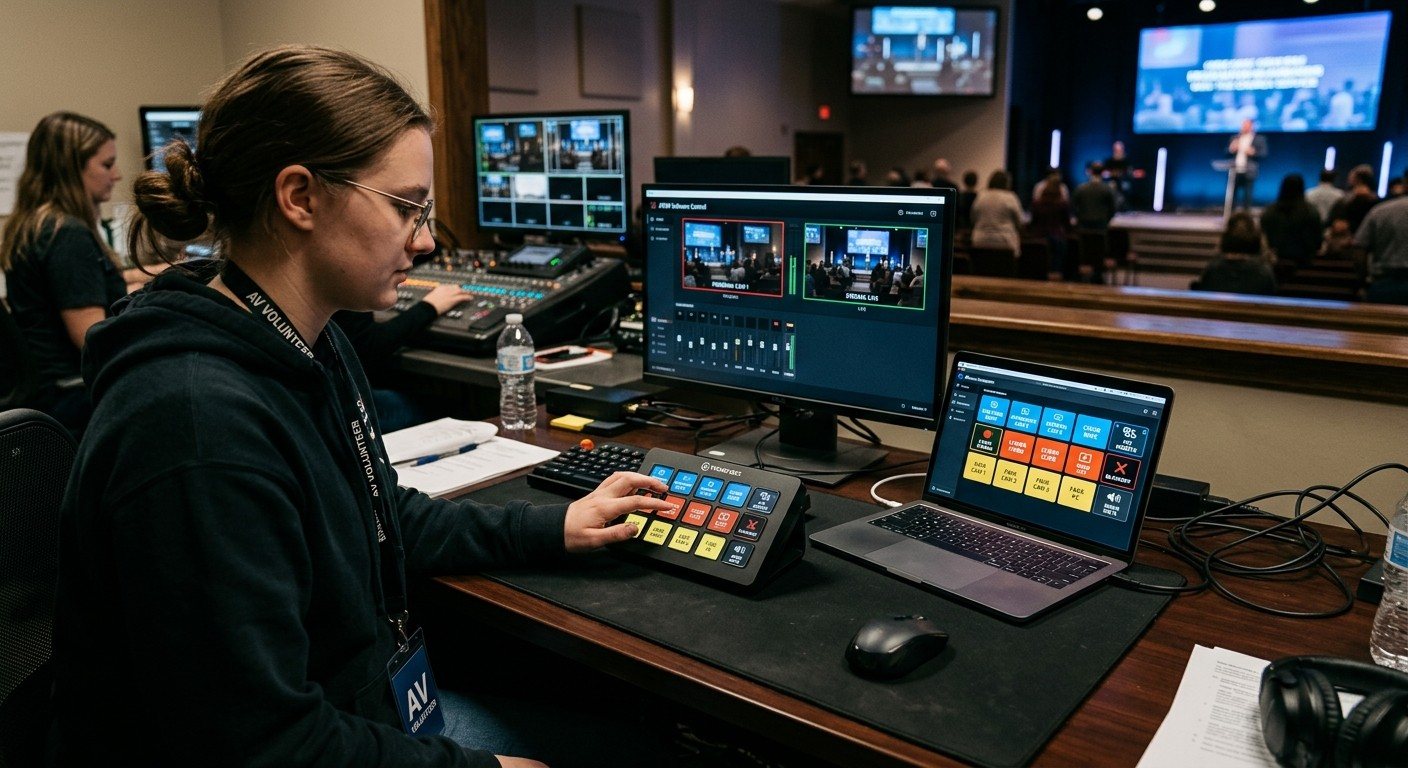
A Companion panel is only volunteer-friendly if it's designed that way. Plain-word labels, one page per seat, colors that mean the same thing everywhere, feedback that shows what's live, and dangerous buttons that are hard to hit. Here's a practical layout guide for church booths.
Oct 11, 2026 • 6 min read
Operations beginner
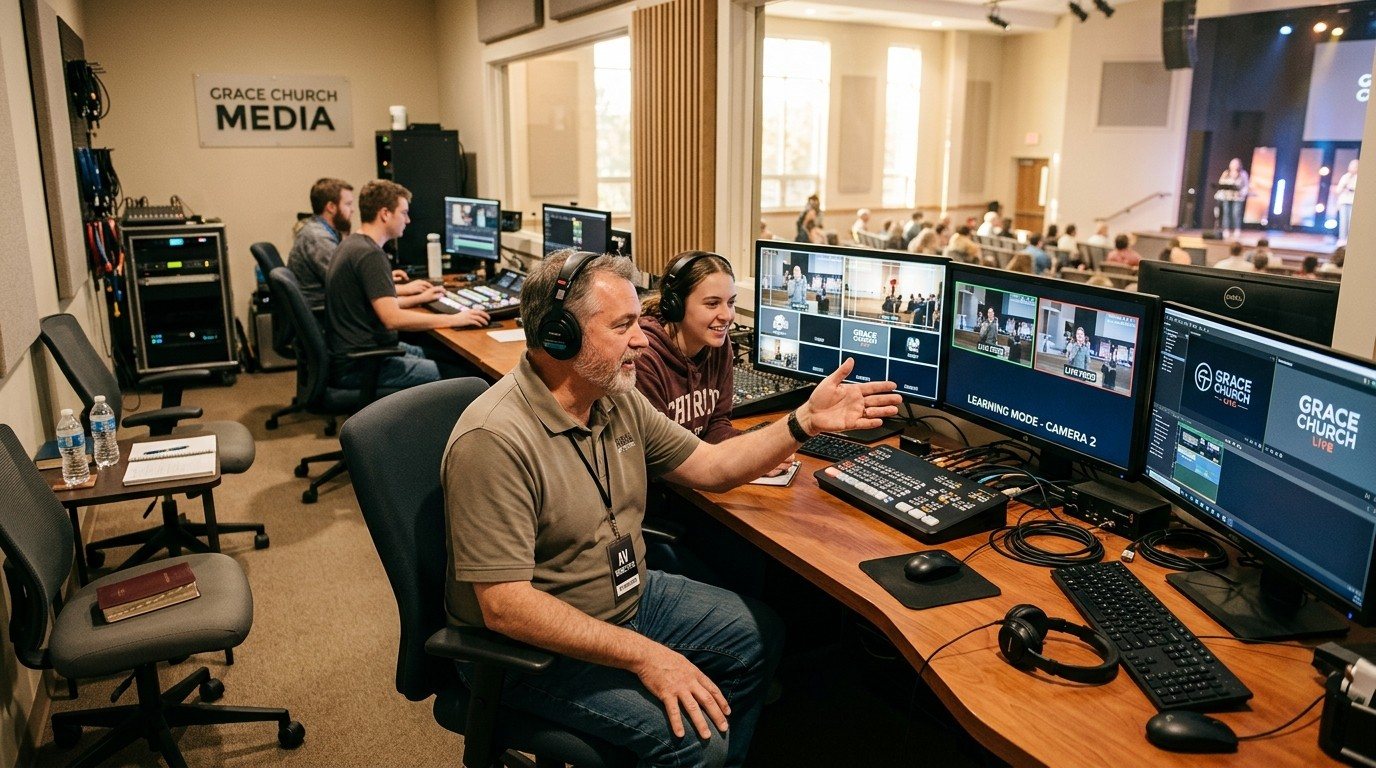
'Can you help run the livestream?' sounds like a big, technical commitment. 'Can you run lyrics twice a month?' sounds doable. Splitting the booth into seats (slides, cameras, director) makes recruiting easier, training faster, and the team stronger. Here's how.
Oct 11, 2026 • 6 min read
Operations beginner
A church isn't a conference center or a concert venue. Volunteers run it, Sunday comes every week, and the livestream is a ministry. Here's how to find an AV integrator who designs for that: the questions to ask, the green flags to look for, and how WorshipMetrics approaches it.
Oct 10, 2026 • 6 min read
Operations beginner
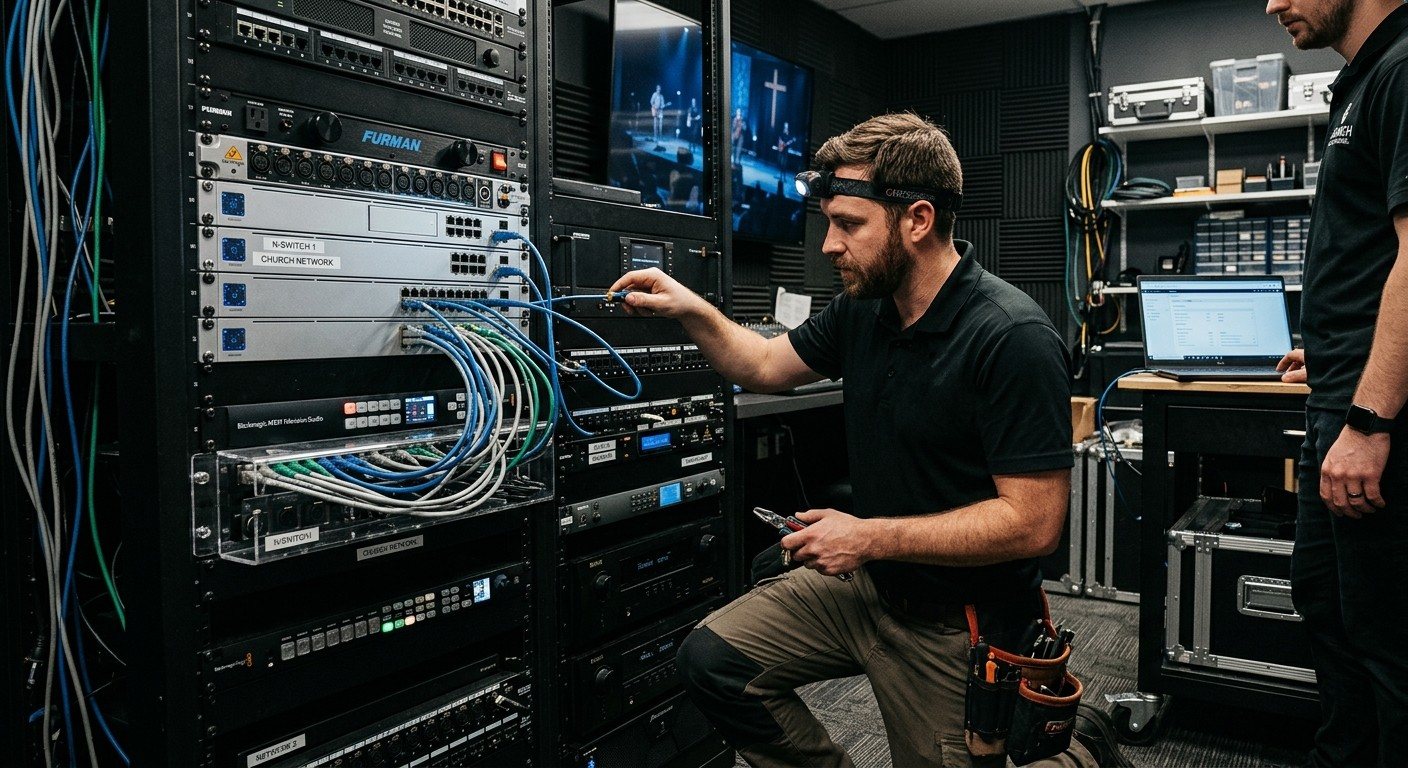
From the first conversation to the Sunday after handoff, here's how a church livestream and AV project should run: consultation, mapping what you own, the recommendation, a project manager and an on-site contact, build and testing, setup, training, and support. Plus what we'll ask of your church along the way.
Oct 10, 2026 • 6 min read
Operations beginner
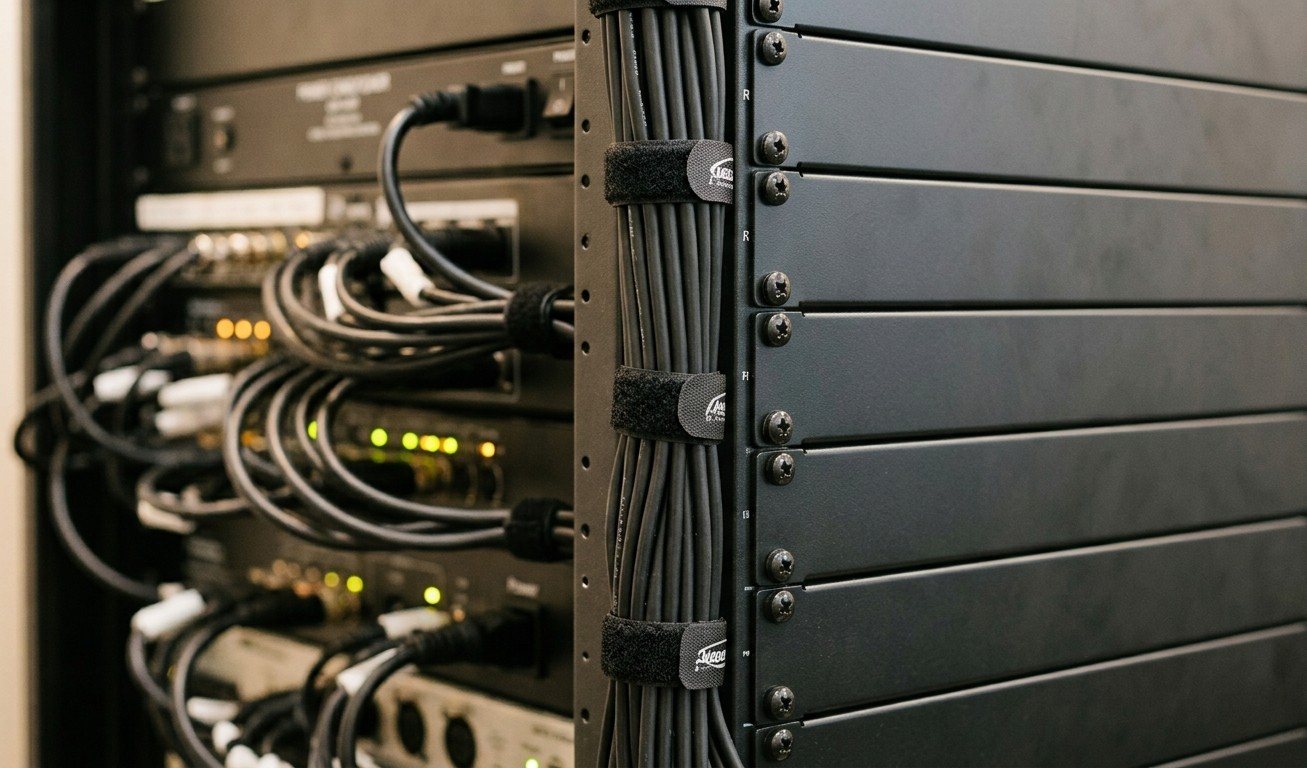
Loose cables are how booth equipment gets broken: tugged ports, kicked power strips, unplugged cameras. Practical cable management for church booths, including trays, hook-and-loop straps, strain relief, color coding and labels, plus a printed wiring diagram in a binder that stays in sync with the Signal Map.
Oct 10, 2026 • 6 min read
Operations beginner
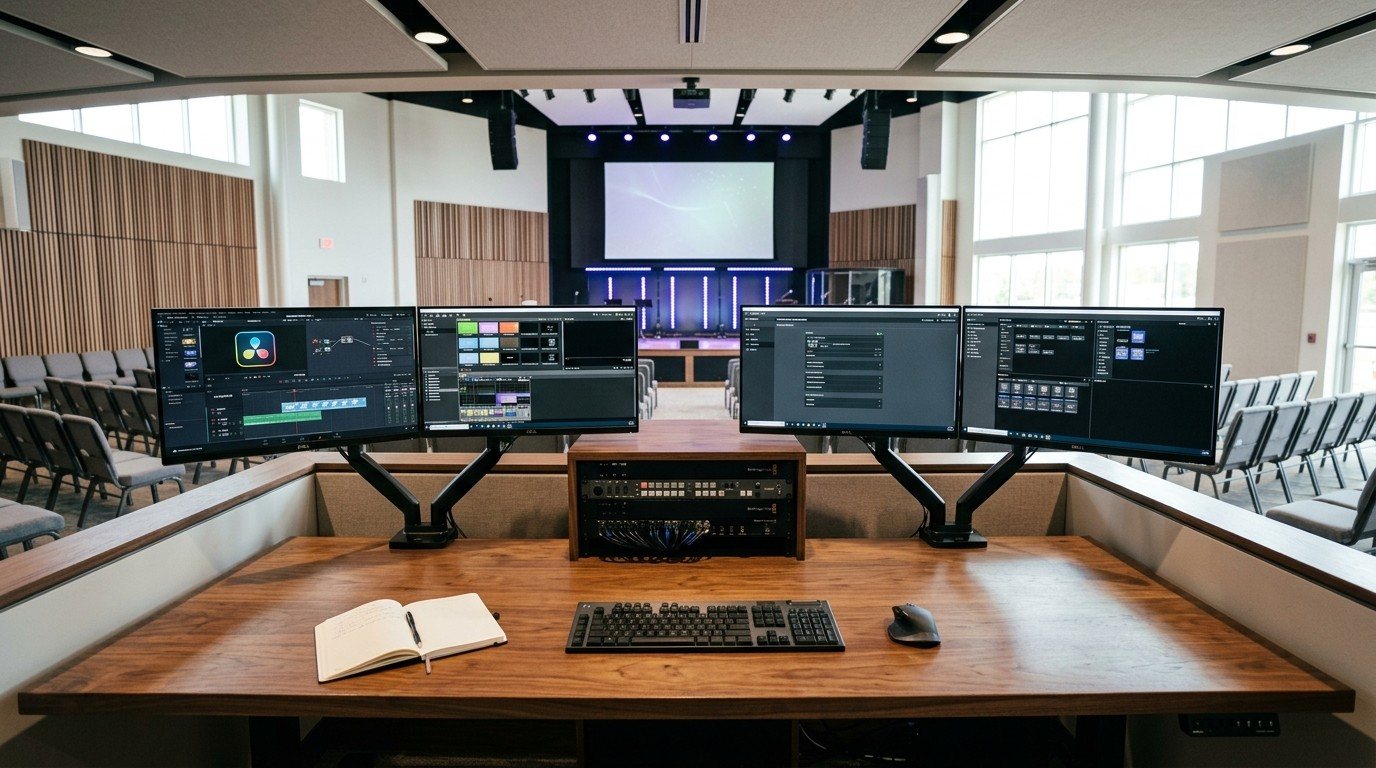
A booth with one chair has one volunteer. Why every church booth should have an open seat and a few smaller stations next to the main streaming computer, so young people and new volunteers can learn, serve and belong, plus how to repurpose old equipment for an AV Club.
Oct 10, 2026 • 6 min read
Operations beginner
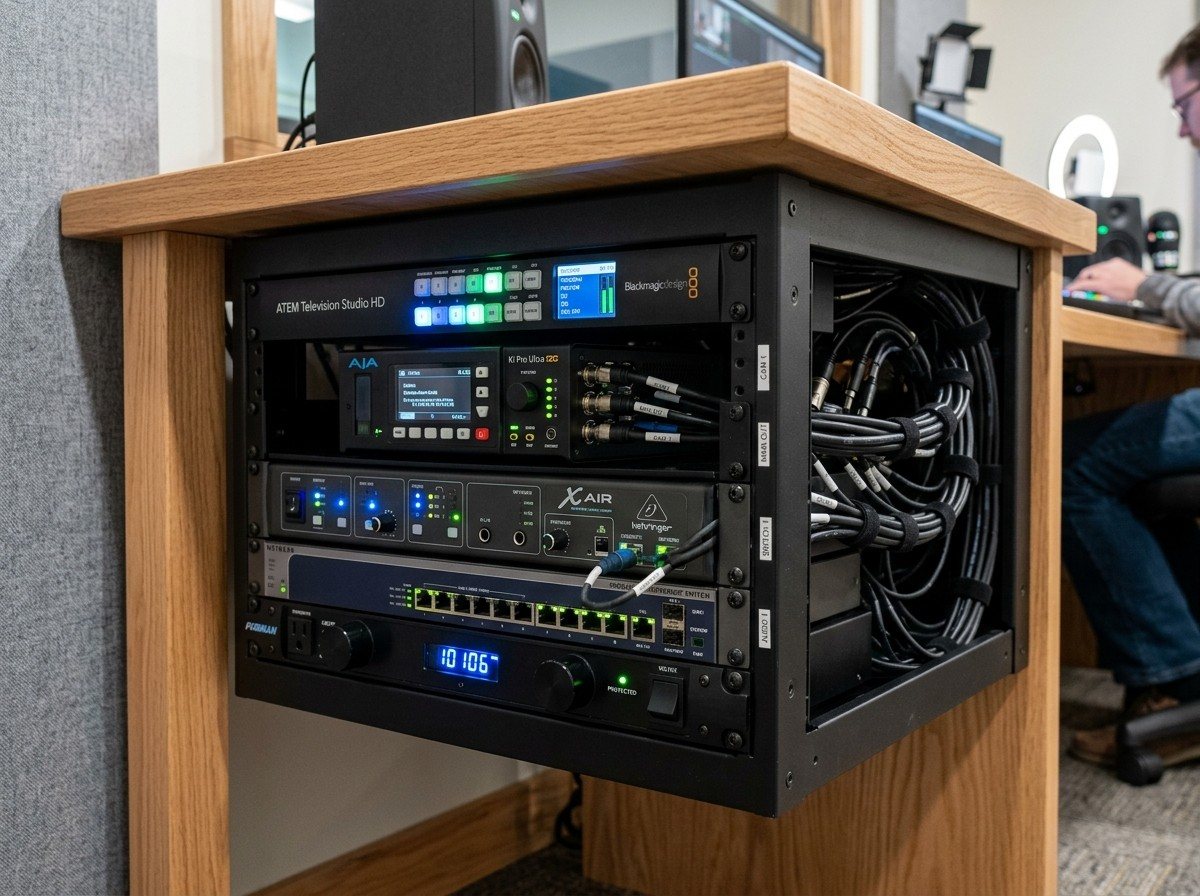
Church booth equipment is shared, used weekly and handled by many people. Why commercial-grade gear usually costs less over its life than consumer gear, where it matters most (keyboards and mice, monitors, cables, power, the computer), where consumer gear is fine, and why healthcare-grade washable keyboards are worth it.
Oct 10, 2026 • 6 min read
Operations beginner
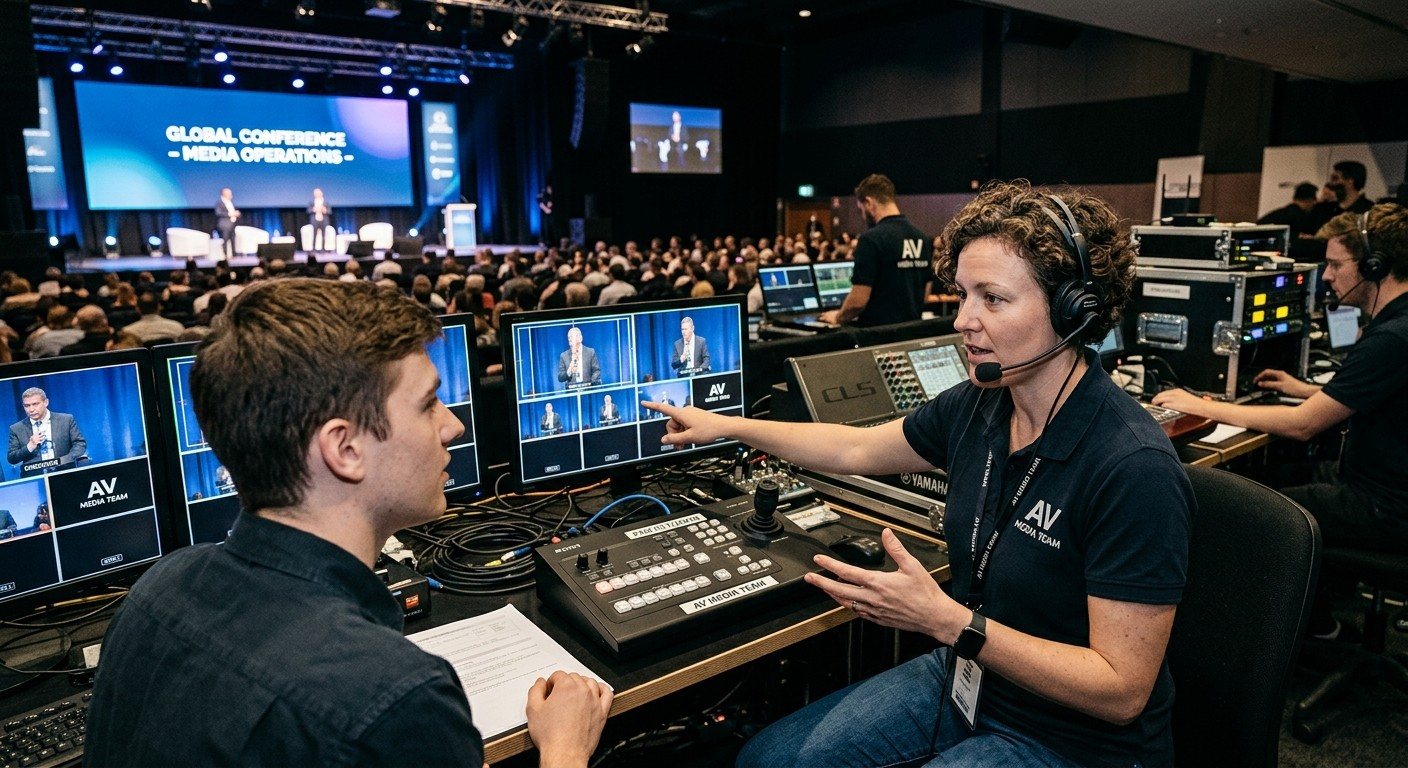
Plenty of AV companies list 'houses of worship' among their markets. A true worship specialist designs for volunteers, for the livestream, and for every Sunday for years. Here's what a house of worship AV integrator does, and how to tell whether one really specializes.
Oct 10, 2026 • 6 min read
Operations beginner
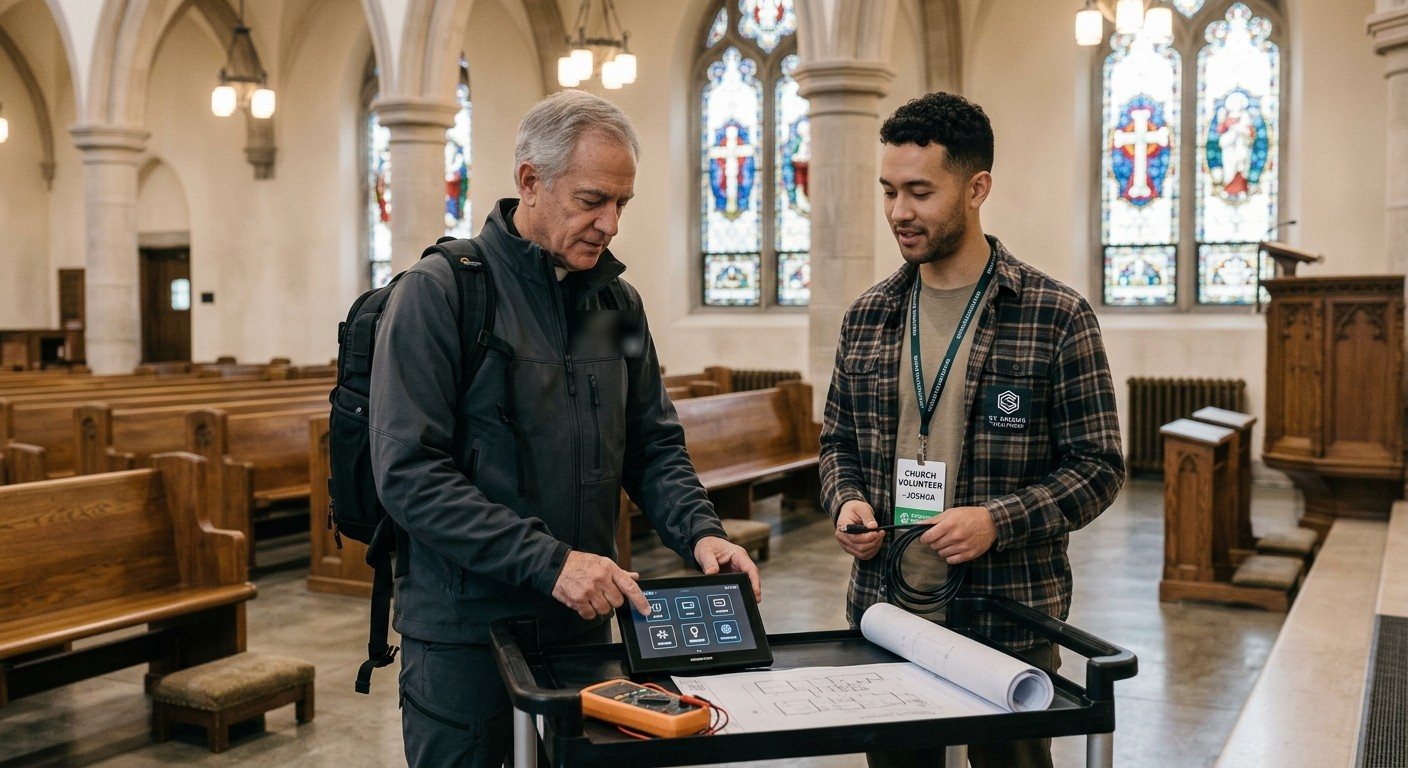
Install day is day one of a system your church will run for years. The integrator worth hiring has a plan for year two and year five: documentation that stays current, monitoring, warranty, remote help, training as volunteers change, and an upgrade path. Here's what to look for.
Oct 10, 2026 • 6 min read
Operations beginner
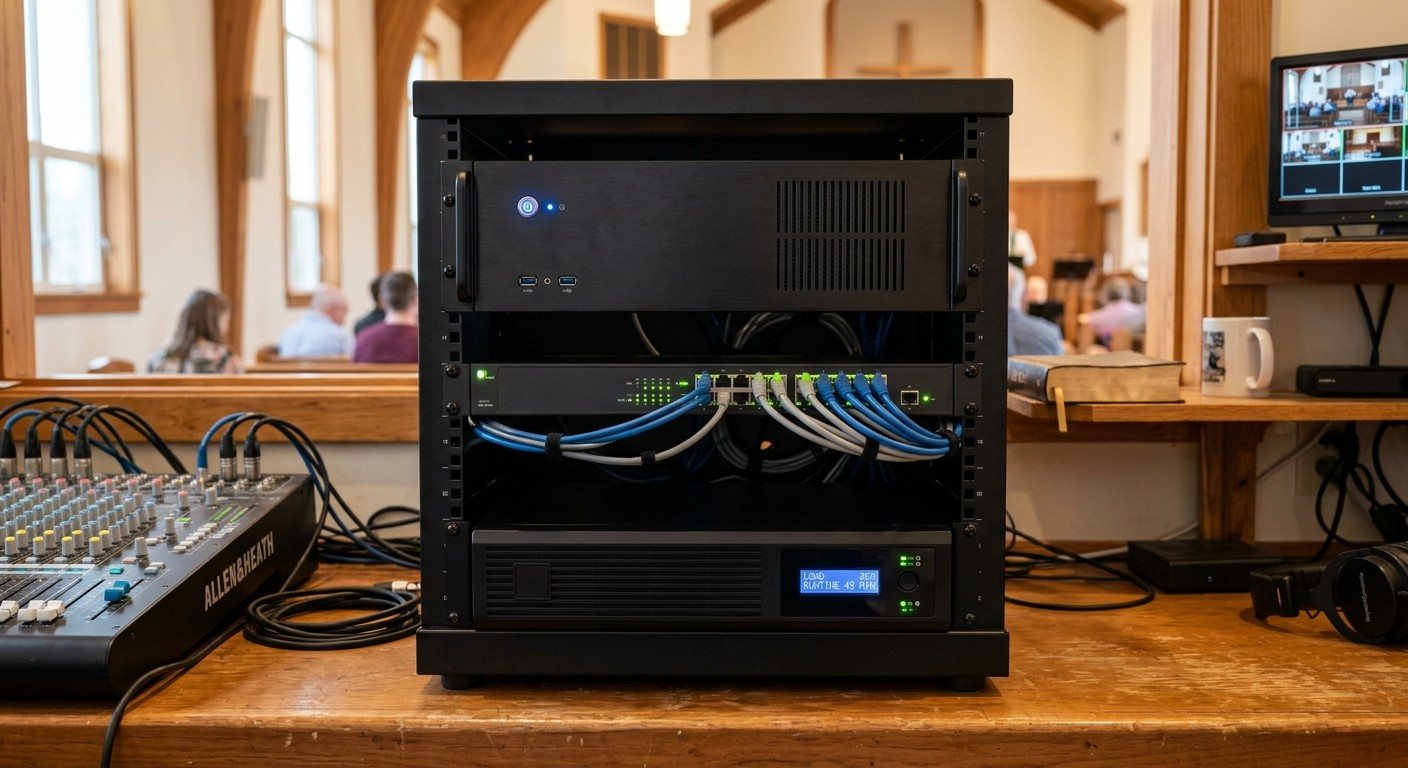
A small, properly installed equipment rack keeps the streaming computer, capture, network switch and power in place, safe from bumps and tugged cables, and frees the table for volunteers. What to rack, what to leave on the table, how big a rack you need, and how to do it safely.
Oct 10, 2026 • 6 min read
Operations beginner
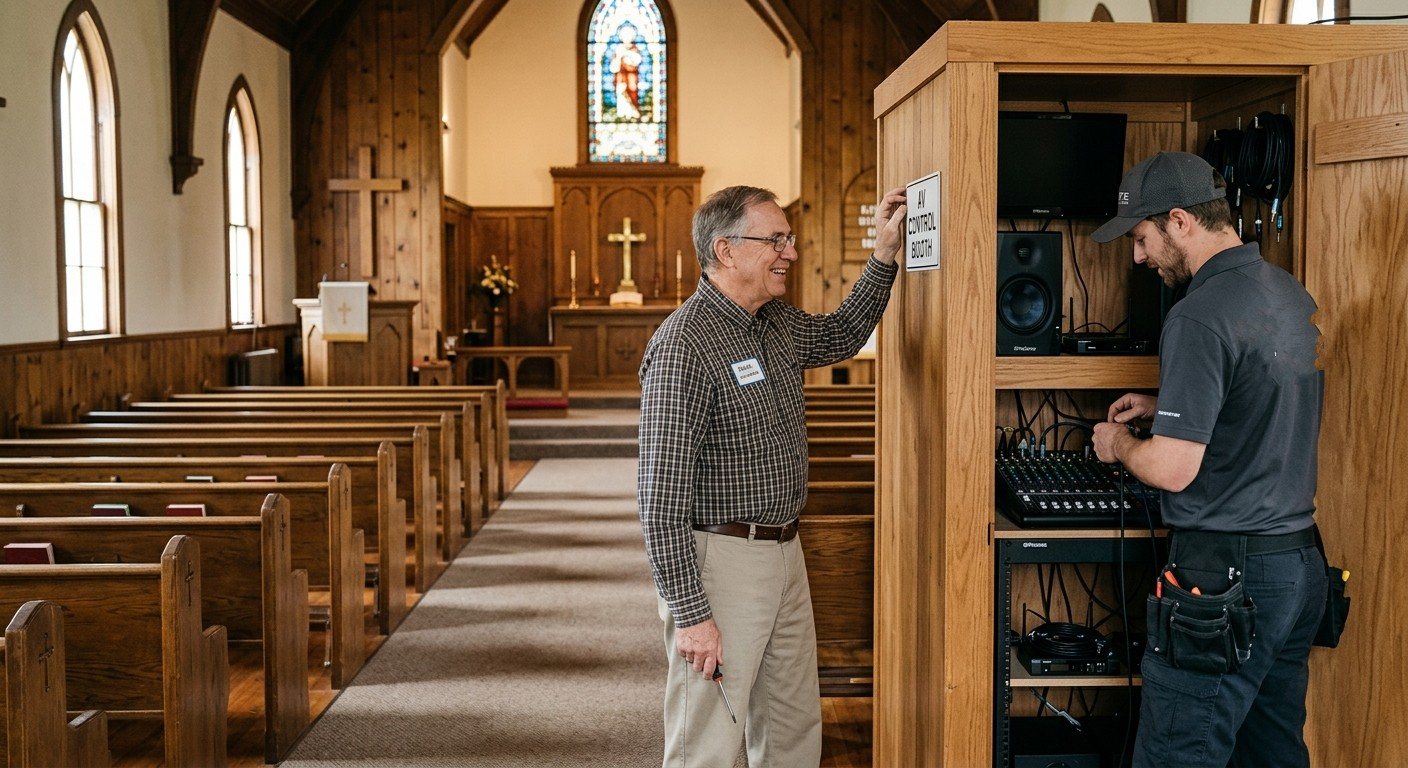
Small churches often hear 'not a fit,' get quotes sized for a much bigger room, or never hear back at all. It isn't personal: it's how most integration businesses are built. Here's why it happens, what a small church actually needs, and how to get real help anyway.
Oct 10, 2026 • 6 min read
Operations beginner
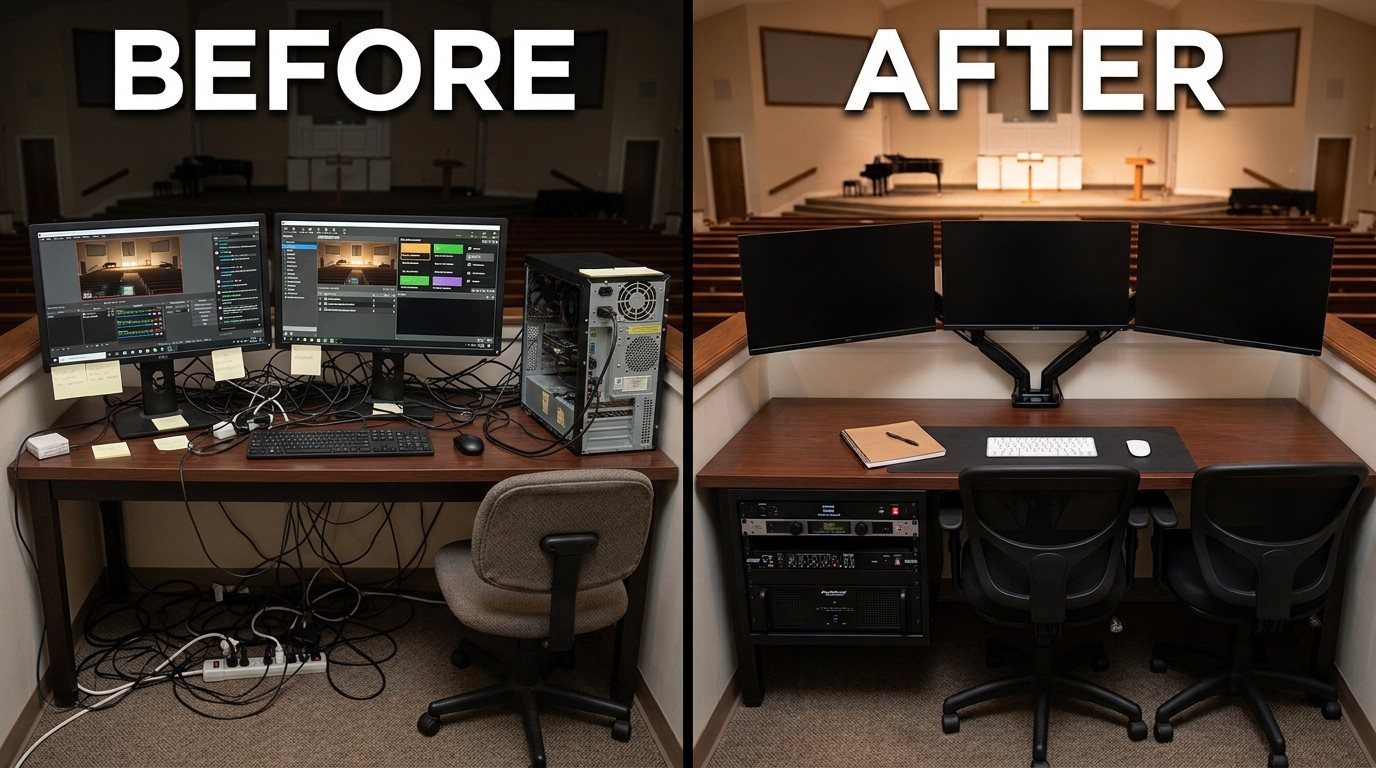
A church booth is shared equipment run by rotating volunteers in front of the whole congregation. Twelve practical tips that make it easier to learn, quieter during worship, harder to break and more welcoming: commercial-grade gear, matched calibrated monitors, open table space, quiet washable keyboards, labeled cables, a rack, and room for one more person.
Oct 10, 2026 • 6 min read
Operations beginner
If you oversee church operations but you're not the tech person, the AV booth can feel like a black box. Here's a plain-English guide: what each piece does, the questions to ask your team, the signs your system needs attention, and how to plan and budget for it.
Oct 9, 2026 • 6 min read
Operations beginner
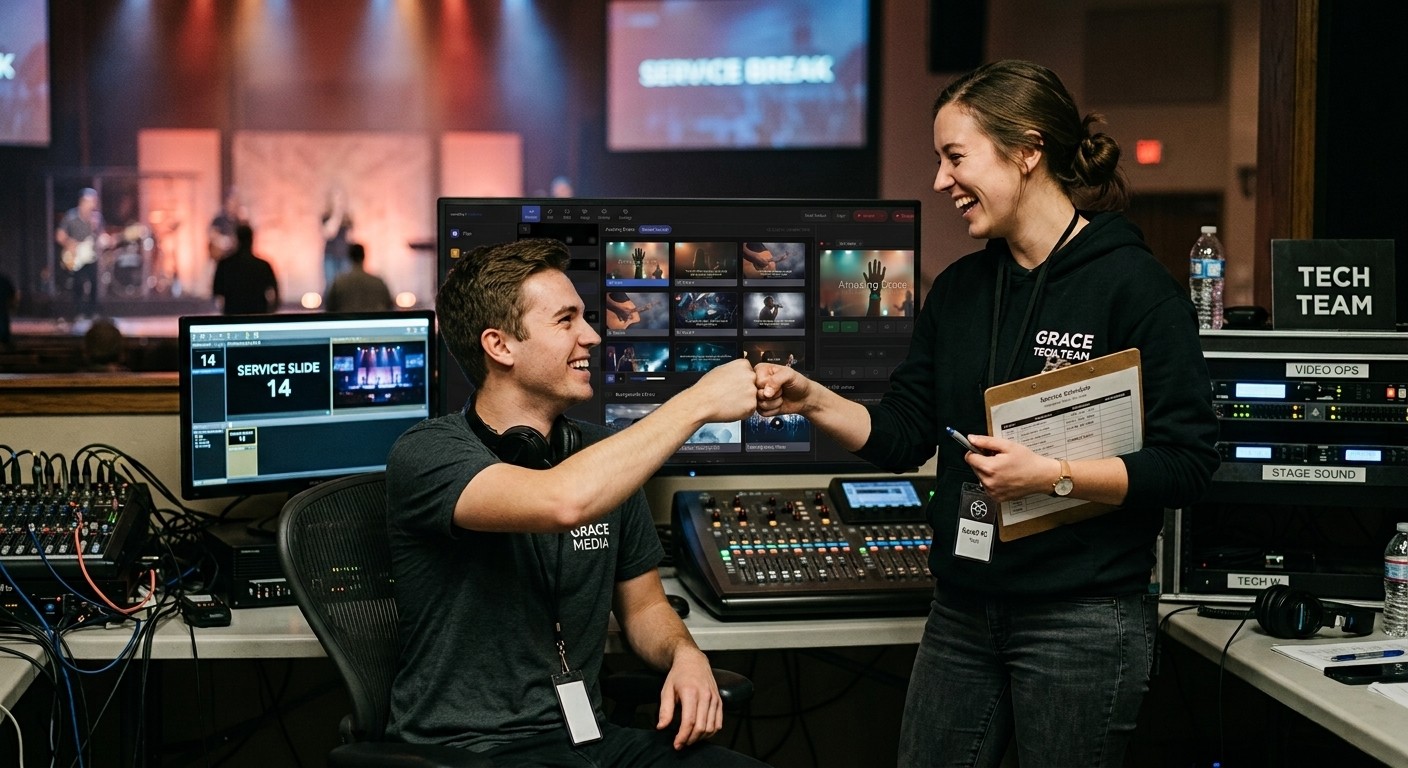
Two services every Sunday and only two or three people who can run the AV booth is a recipe for burnout and missed Sundays. Here's how small and mid-size churches can make the booth easier to run, cover both services, and grow the team, without hiring staff.
Oct 9, 2026 • 6 min read
Operations beginner
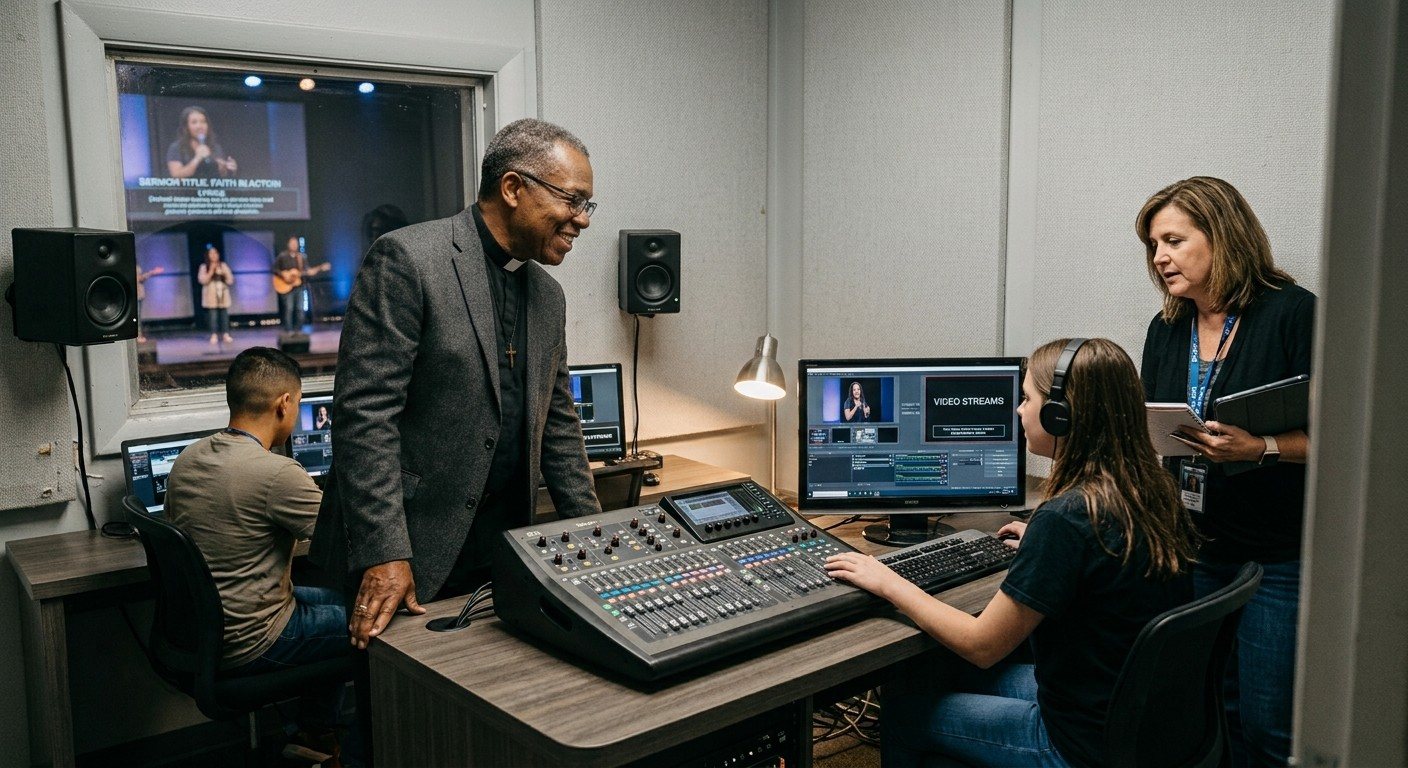
When church AV keeps going wrong, the instinct is to blame the gear. Often the real cause is people (too few can run it), process (nothing written down, problems found too late), or both. Here's how to tell which is which, and what fixes each one.
Oct 9, 2026 • 6 min read
Operations beginner
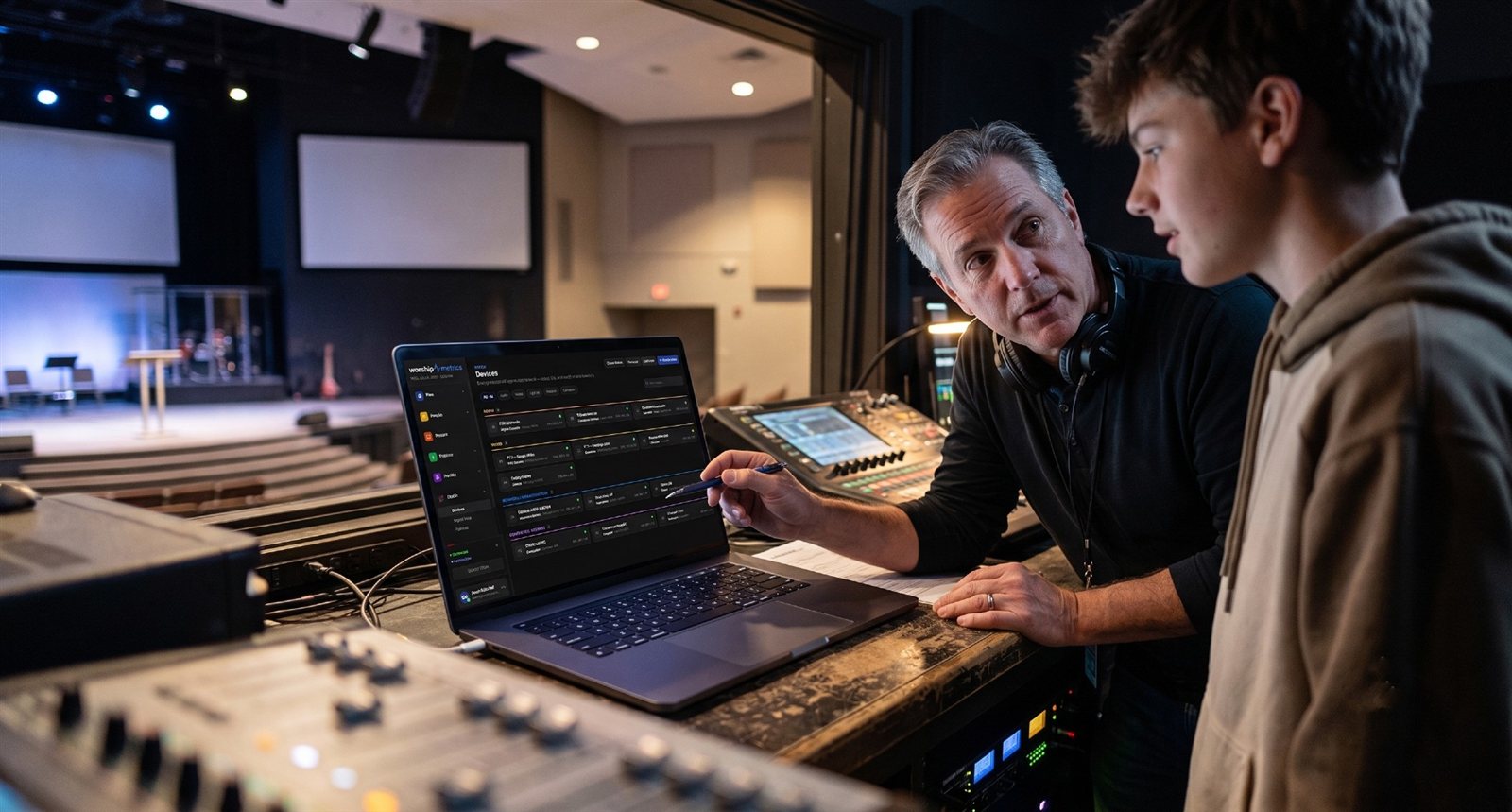
Thinking about getting help with your church's AV system? Here's what a system review with WorshipMetrics looks like: a free 30-minute call, what we ask, how mapping your system first makes it more useful, and what you'll walk away with, whether that's a few fixes or a plan for something new.
Oct 9, 2026 • 6 min read
Operations beginner
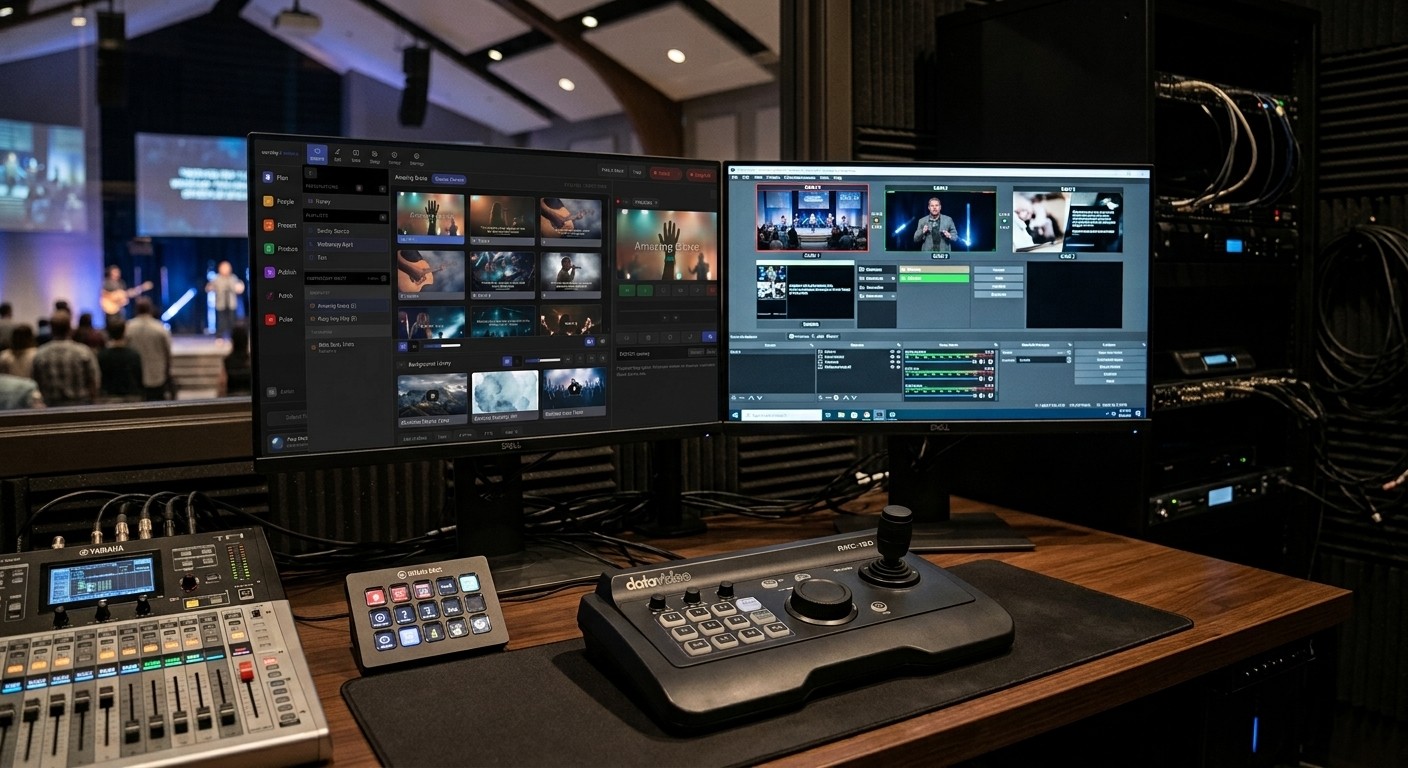
If your church's AV system is aging, hard to run, and depends on a few volunteers, the instinct is to buy new gear. Start somewhere else. Here's a practical, phased upgrade plan for churches of 100 to 300: document what you have, fix what fails most, simplify the work, then upgrade gear.
Oct 9, 2026 • 6 min read
Operations beginner
When your church's AV system is old and keeps causing trouble, the big question is whether to fix it or start over. Here's a plain-English decision guide: signs a tune-up will do, signs it's time to replace, the middle path most churches take, and the mistake that makes a new system fail the same way as the old one.
Oct 9, 2026 • 6 min read
Operations beginner
Software can't fix a broken camera or recruit volunteers, but it can carry a surprising share of what makes church AV hard: watching the stream, documenting the system, simplifying the booth, and answering questions at 9:55 on Sunday morning. Here's an honest look at what software, cloud tools, and AI can and can't fix.
Oct 9, 2026 • 6 min read
Operations beginner
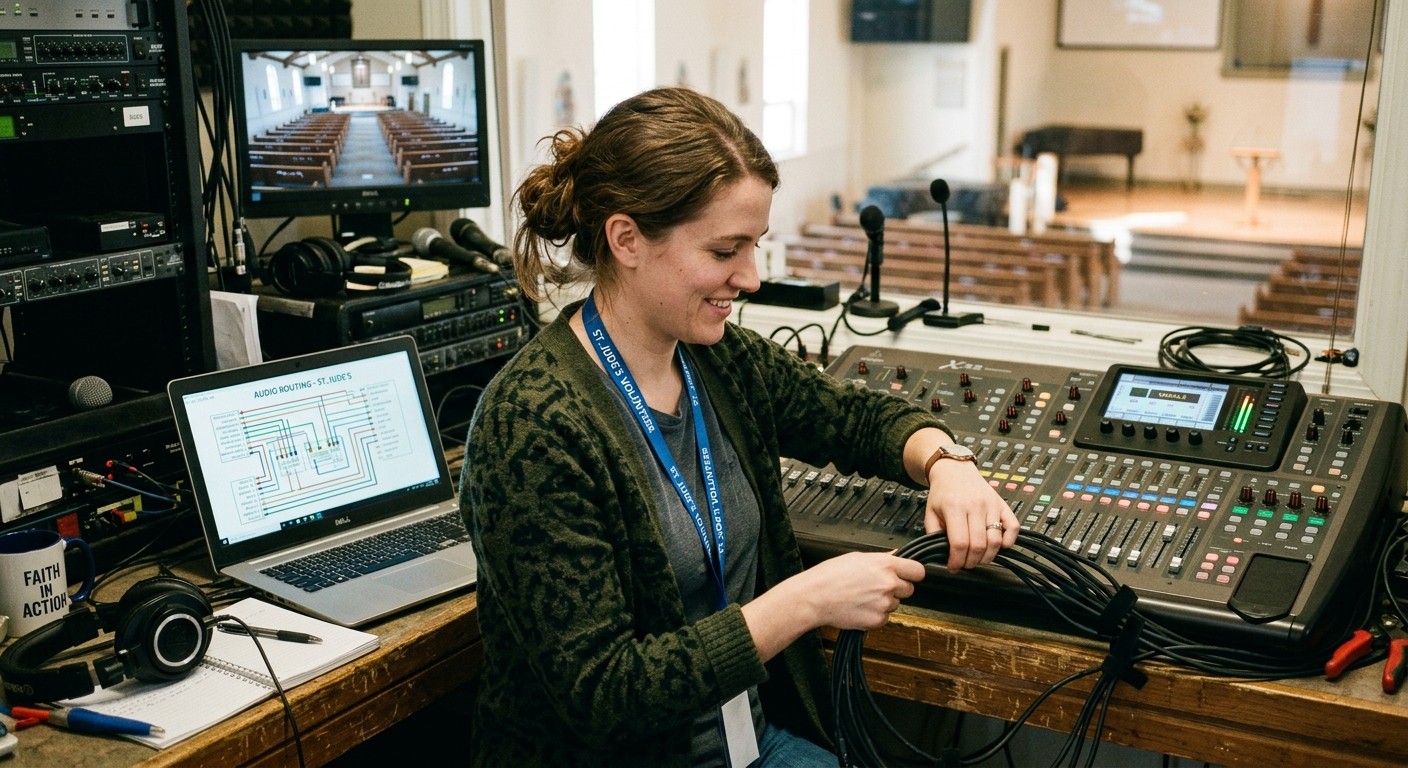
The best way to get the best price on a church livestreaming system is to show exactly what you already have. A simple, non-technical way to map your booth: what plugs in, what does the work, where it goes, and what to write down for each, so we can reuse what works and only quote what's missing.
Oct 9, 2026 • 6 min read
Operations beginner
When the livestream drops, the slides don't show up online, or the sound is bad at home, it's hard to know what's actually broken. Here's a plain-English guide for non-technical church leaders: common symptoms, their most likely causes, and what to check first before you buy anything.
Oct 9, 2026 • 6 min read
Operations beginner
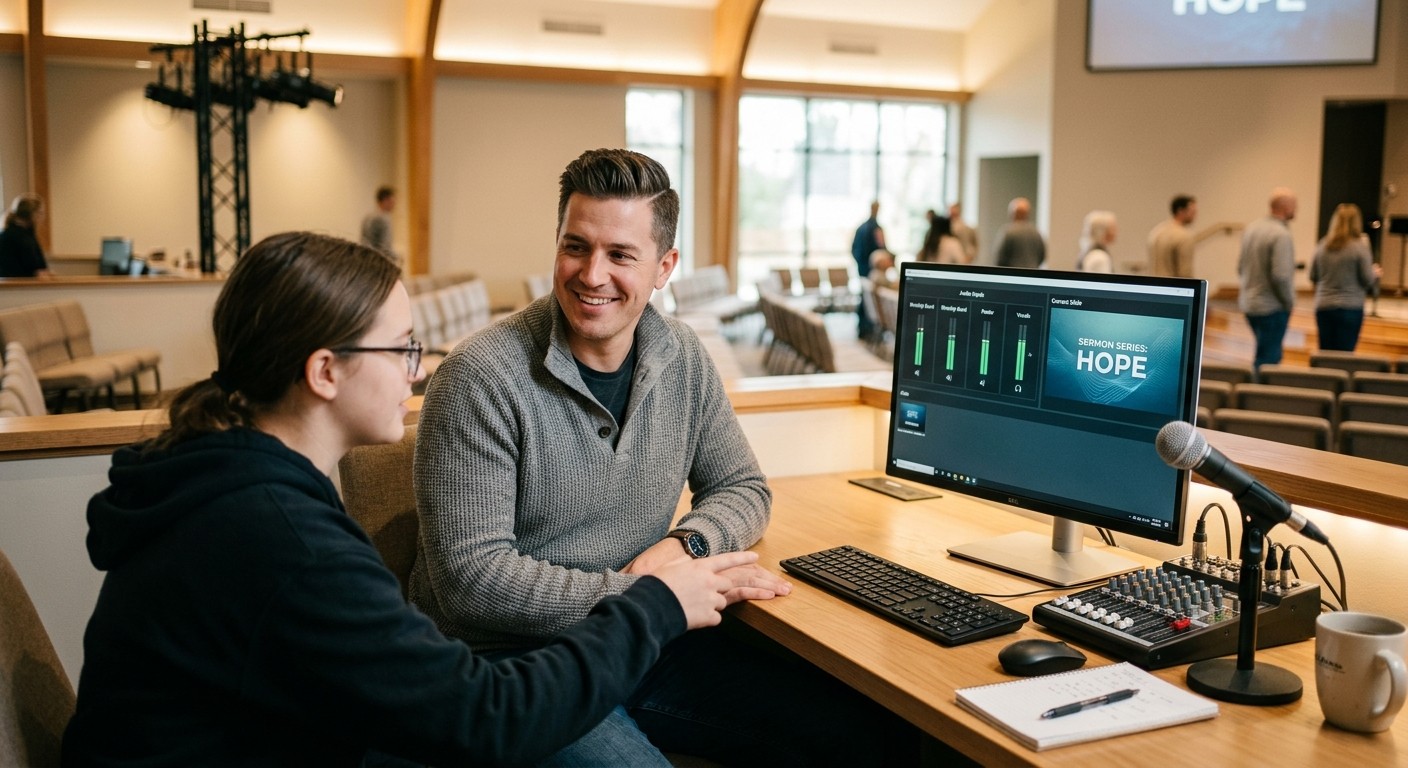
If only one or two people can run your church's AV booth, the problem usually isn't the volunteers. Systems grow complicated one fix at a time, until they need an expert. Here's why it happens, how to tell how complicated your booth really is, and how to make it something ordinary volunteers can run.
Oct 9, 2026 • 6 min read
Operations beginner
Your church now produces data every week: attendance, online viewers, and how each sermon and song clip performed. Here's a simple 45-minute monthly review that turns those numbers into decisions for pastors and leadership, with an agenda, the questions to ask, and how to keep ministry ahead of metrics.
Oct 8, 2026 • 6 min read
Operations beginner
Is social media something the church should embrace or avoid? Scripture doesn't mention Instagram, but it says a lot about carrying a message to people where they are, using the tools of the day, and speaking with grace. Here's a biblical framework church leaders can use to decide how to show up online.
Oct 7, 2026 • 6 min read
Operations beginner
When your livestream, lyric slides, lobby screens, and social clips all look different, your church feels scattered. A simple, consistent look builds recognition and trust. Here's a practical church branding guide: colors, fonts, logo, lower thirds, captions, and how to keep it consistent with a volunteer team.
Oct 7, 2026 • 6 min read
Operations beginner
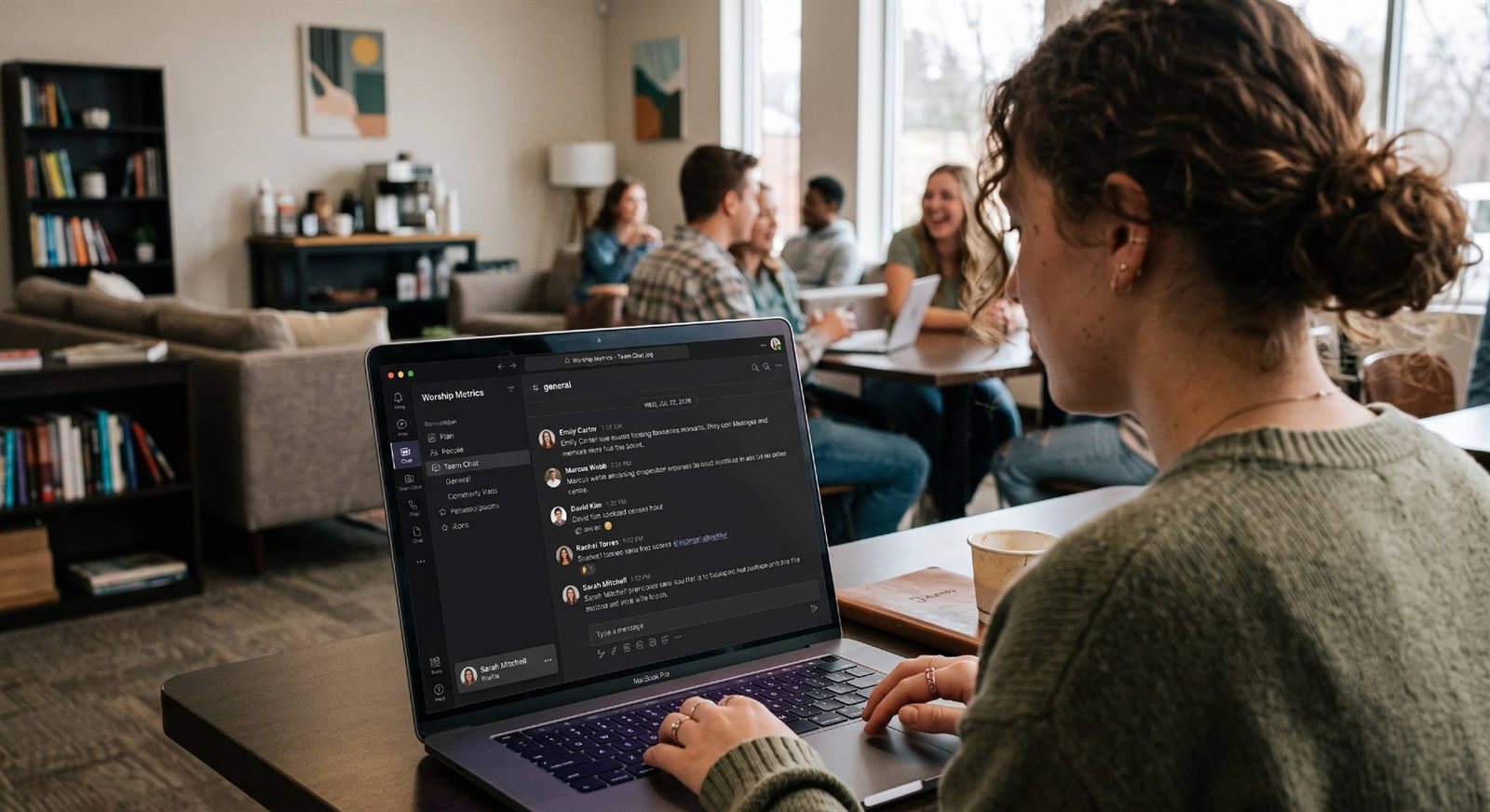
The comments under your church's posts are full of people: some encouraging, some hurting, some skeptical, a few hostile. Treating replies as ministry, not housekeeping, changes how people experience your church online. Here's how to respond with care, when to move a conversation private, and how to handle critics and trolls.
Oct 7, 2026 • 6 min read
Operations beginner
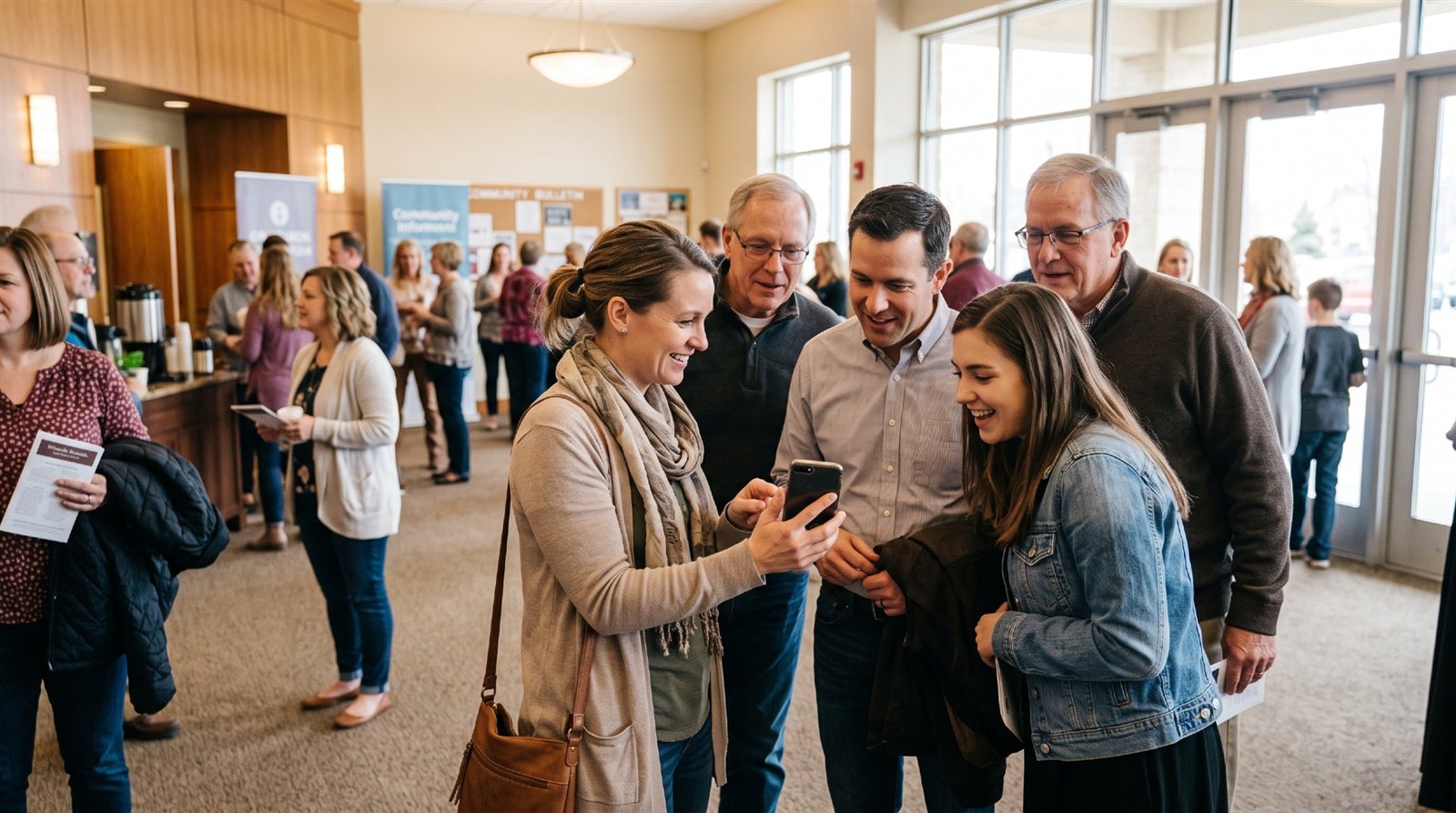
Your church account reaches your followers. Your members reach everyone they know. Here's how to equip people of every age, from teenagers to grandparents, to share your church's message online naturally: what to share, how to add a personal word, and how to make it easy.
Oct 7, 2026 • 6 min read
Operations beginner
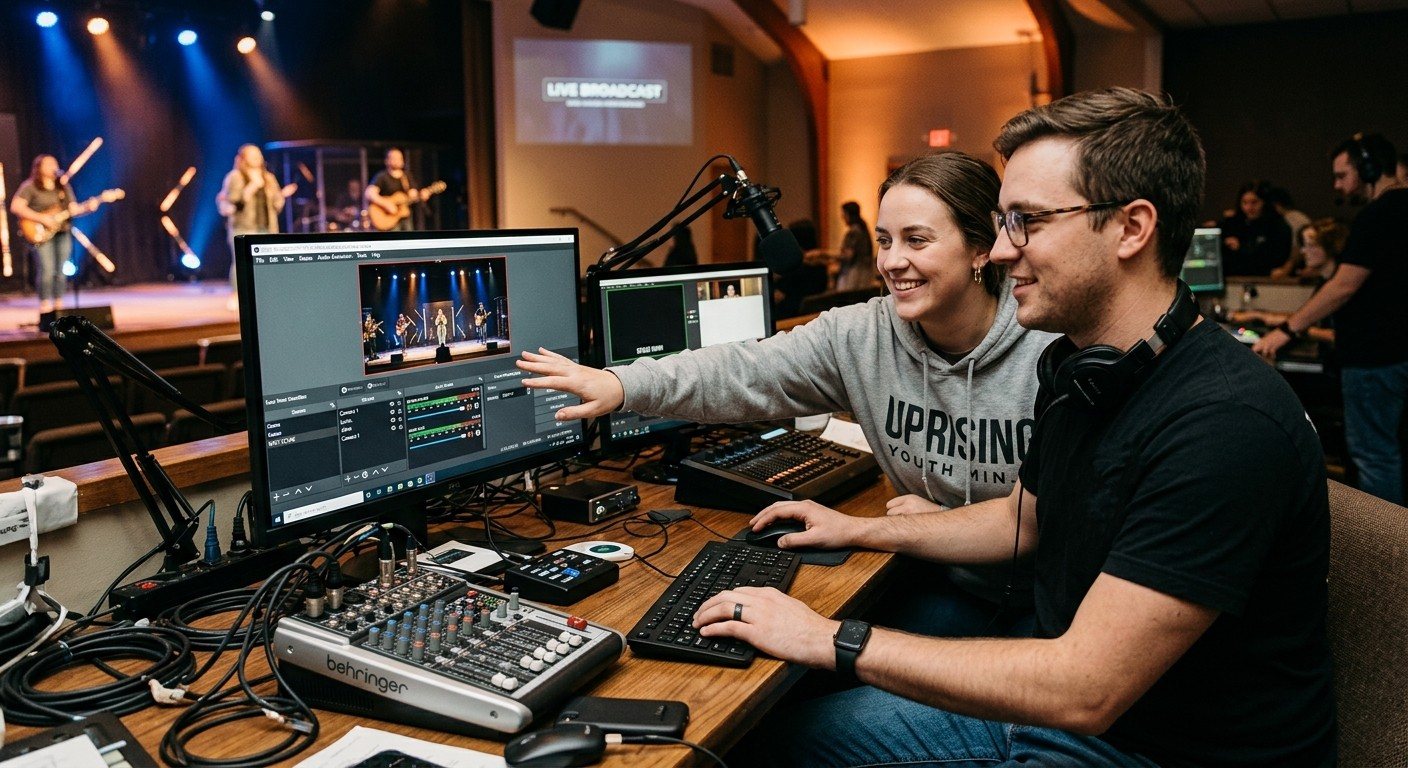
Churches rightly want to do their best for God, but perfectionism burns out volunteers and stops good work from ever getting posted. Here's how to pursue excellence in church media, from the booth to social clips, with high standards, grace for mistakes, and steady improvement.
Oct 7, 2026 • 6 min read
Operations beginner
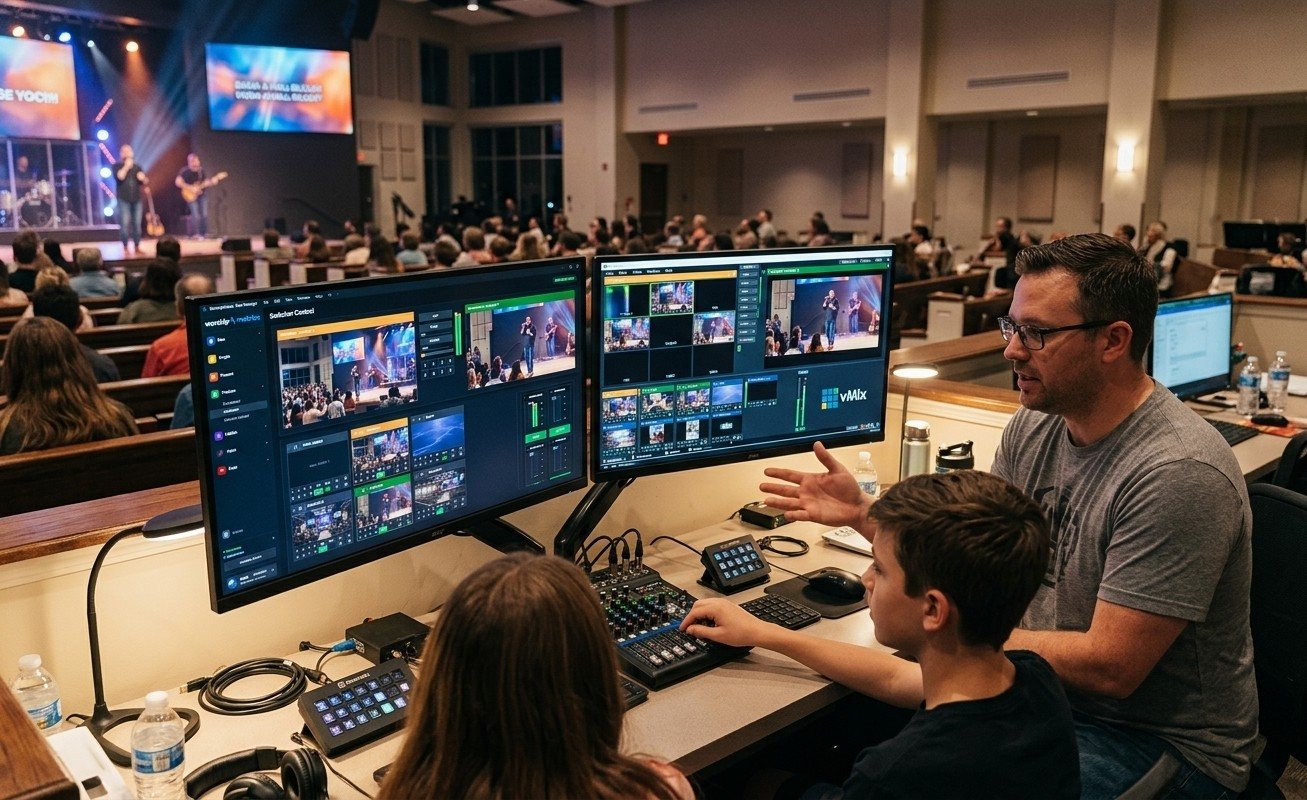
When everyone can post, nobody owns it, and when one person owns it, it collapses when they leave. Here's a simple structure for church social media: who sets direction, who manages day to day, who creates content, who approves, and how oversight works without slowing everything down.
Oct 7, 2026 • 6 min read
Operations beginner
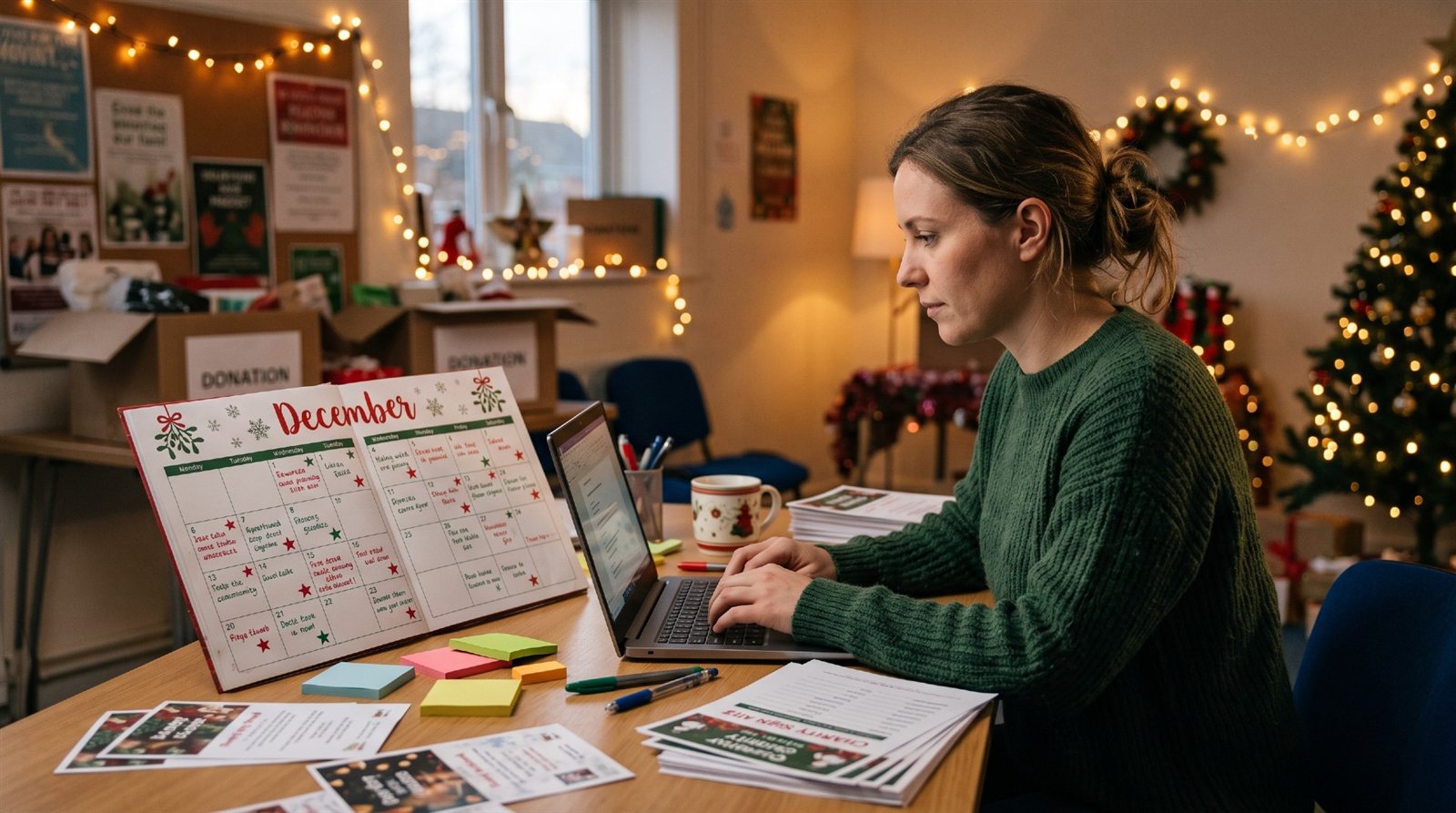
Christmas Eve is one of the biggest nights of the year for first-time guests, online and in person. Here's a week-by-week social media plan from mid-November through Christmas Eve 2026: what to post, when to invite, which sermon clips to share, and how to keep a small team from burning out.
Oct 6, 2026 • 6 min read
Operations beginner
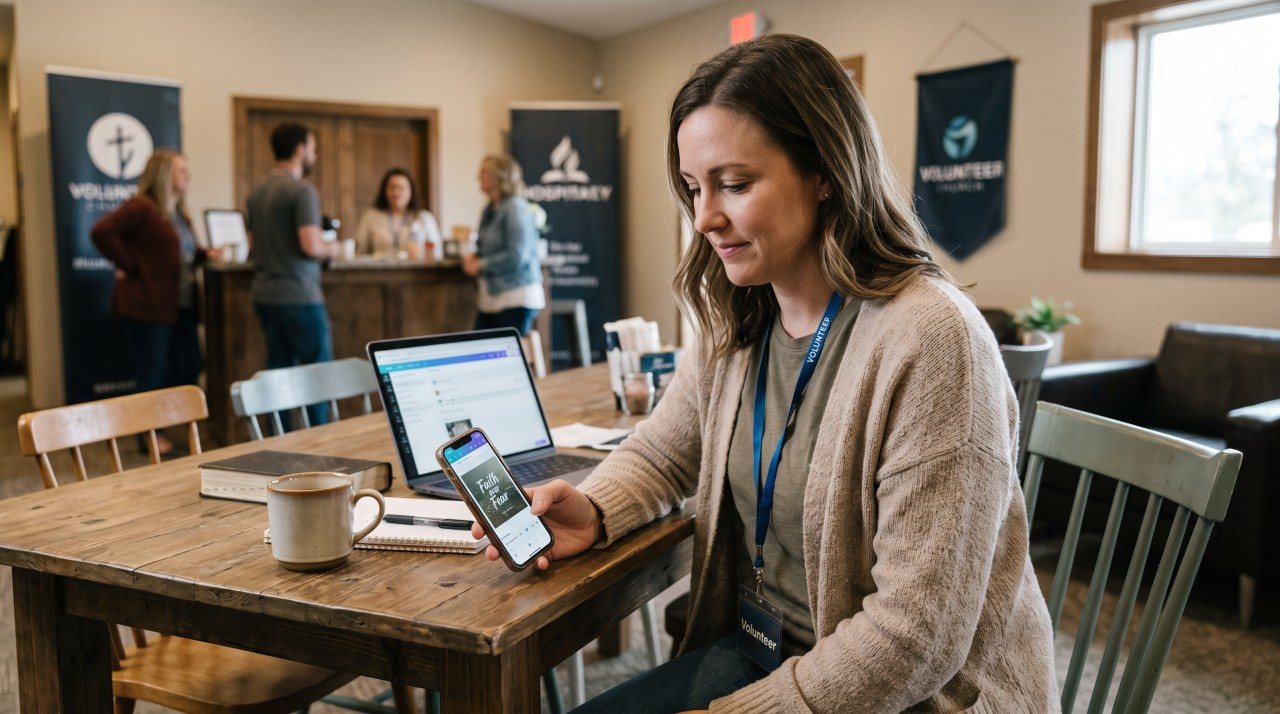
Instagram is where many churches' members, neighbors, and first-time guests already look. Here's a simple plan that takes about an hour a week: setting up your profile, what to post in Reels, Stories, and the feed, how to use the link in your bio, and how to keep it going.
Oct 6, 2026 • 6 min read
Operations beginner
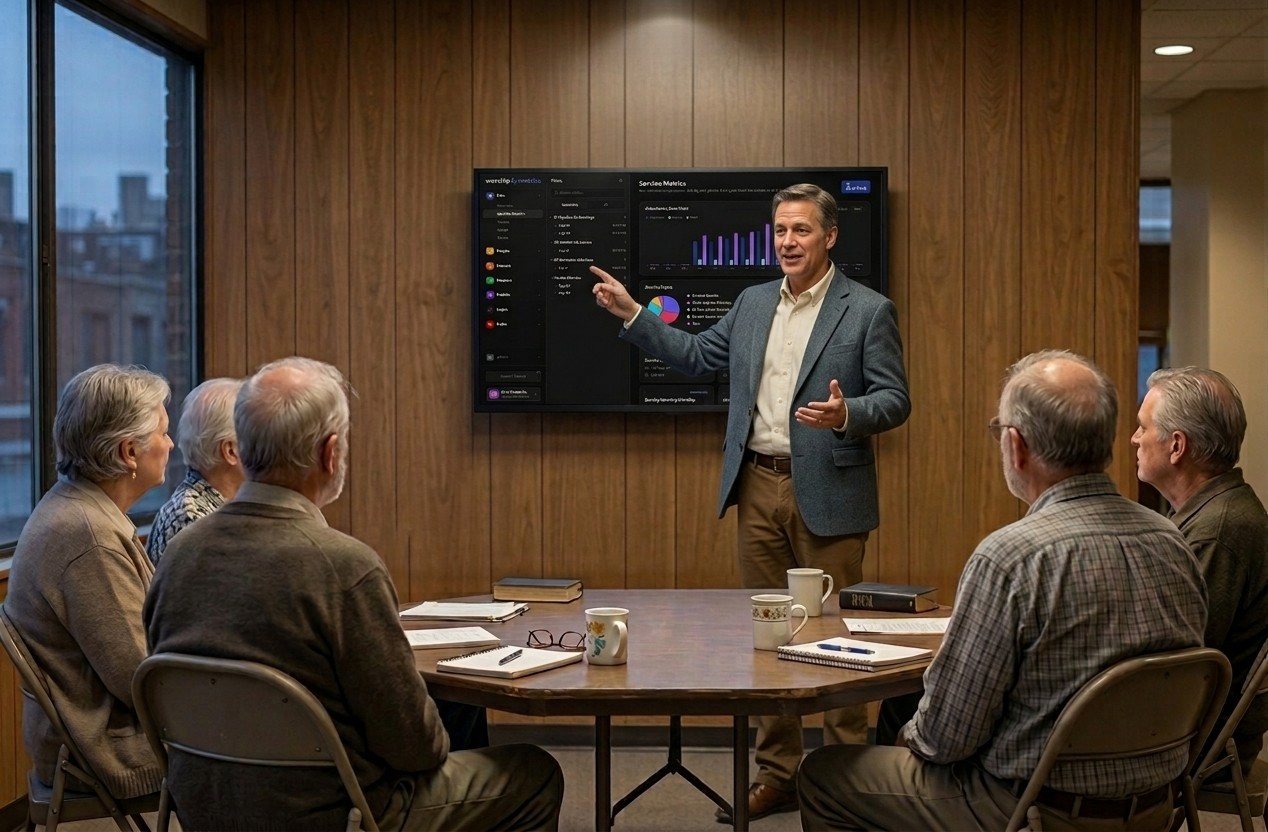
A clear social media policy lets your church post with confidence. This template covers who can post, approvals, what never gets posted, comments and moderation, privacy and minors, account security, music, crisis response, and staff personal accounts. Copy it, adapt it, and have leadership approve it.
Oct 6, 2026 • 6 min read
Operations beginner
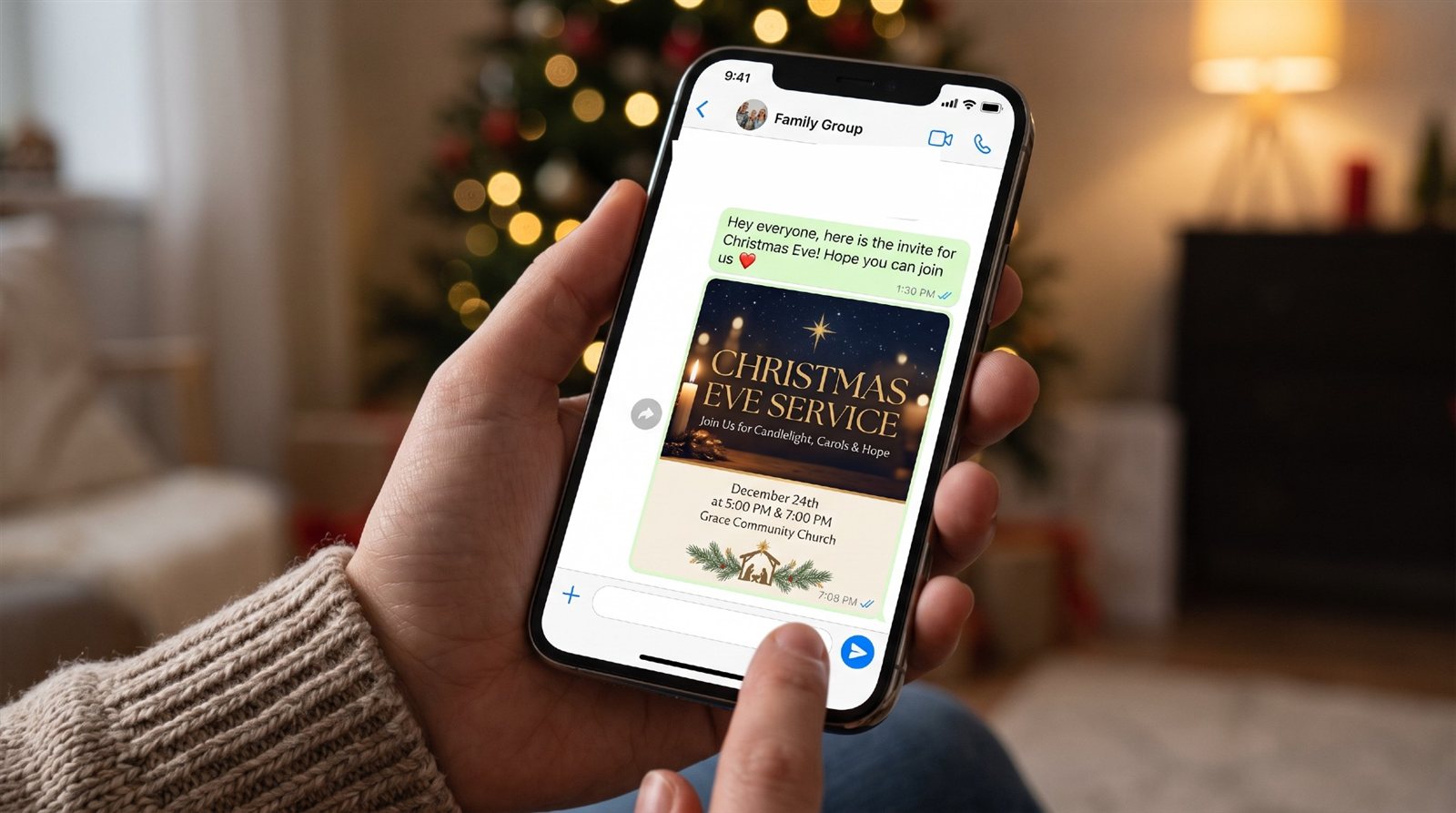
Most people who visit a church on Christmas Eve were invited by someone, and today many invitations happen on a phone. Here's how to make Christmas Eve invitations people actually share: a 30-second pastor invite clip, a shareable event post, a first-timer guide, and a way for your congregation to invite their friends.
Oct 6, 2026 • 6 min read
Operations beginner
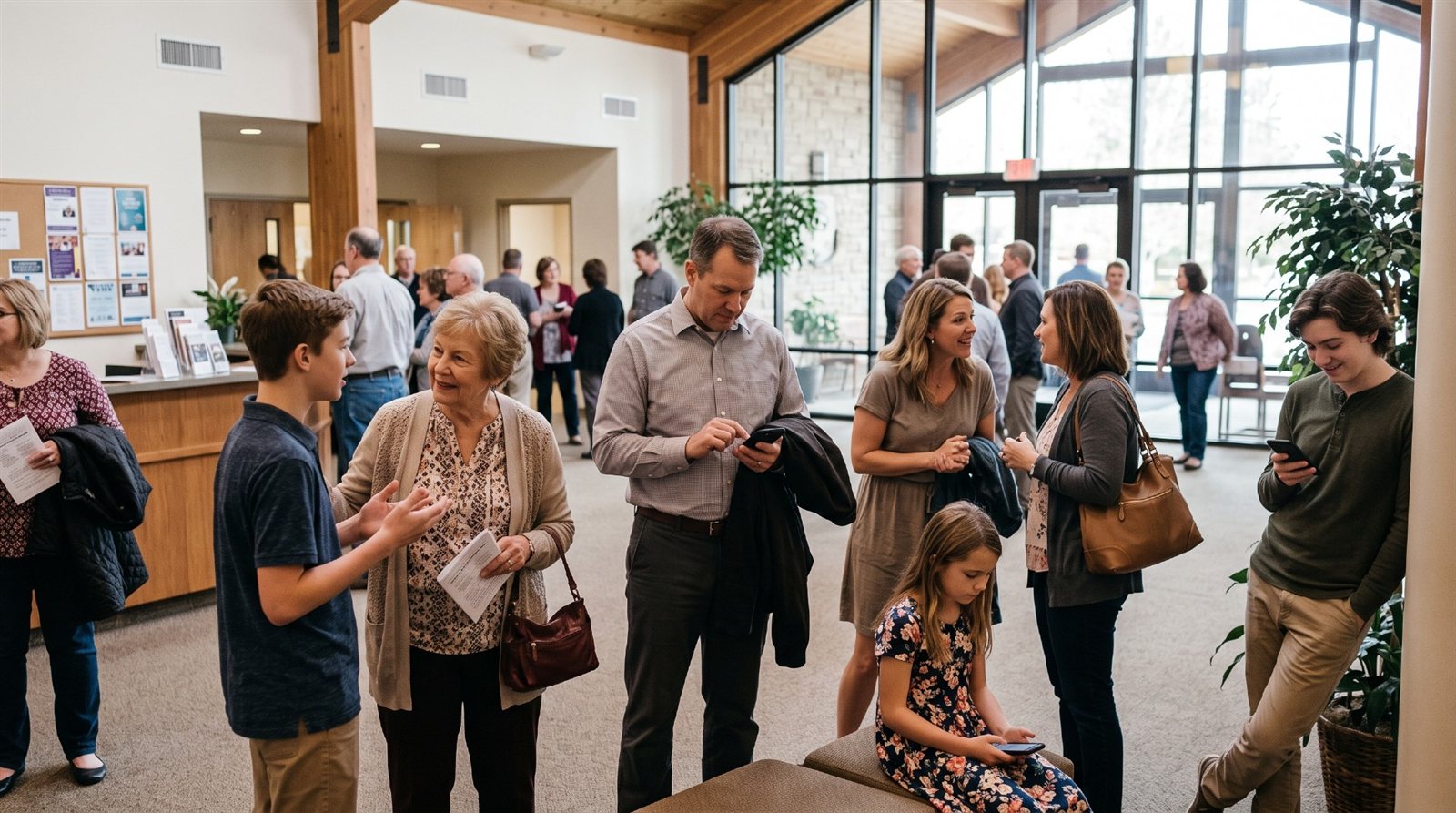
Social media has real problems: outrage, comparison, misinformation, and serious concerns about young people's mental health. It also connects people, carries good news, and builds community. Here's an honest look at both sides, and how a church can use it in ways that help rather than harm.
Oct 6, 2026 • 6 min read
Operations beginner
Views and likes don't tell you whether social media is growing your church. Here's how to measure what matters: clip engagement, online attendance, first-time guests, how they heard about you, and whether they come back, without fancy analytics software.
Oct 6, 2026 • 6 min read
Operations beginner
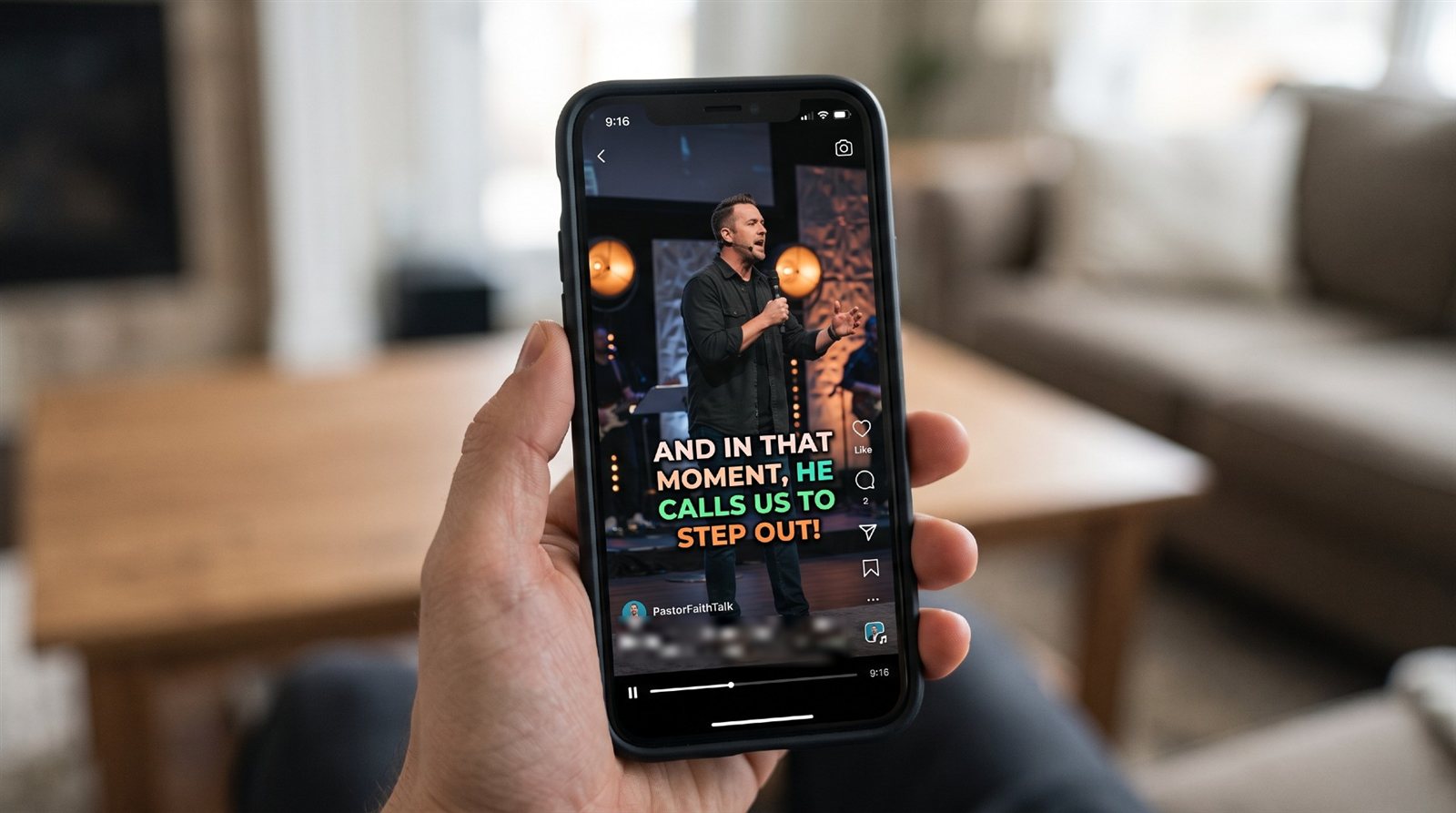
TikTok reaches young people and new audiences in a way few platforms can, even for accounts with no followers. It also raises real questions about content, privacy, and young users. Here's an honest look at whether TikTok fits your church, and how to start safely if it does.
Oct 6, 2026 • 6 min read
Operations beginner
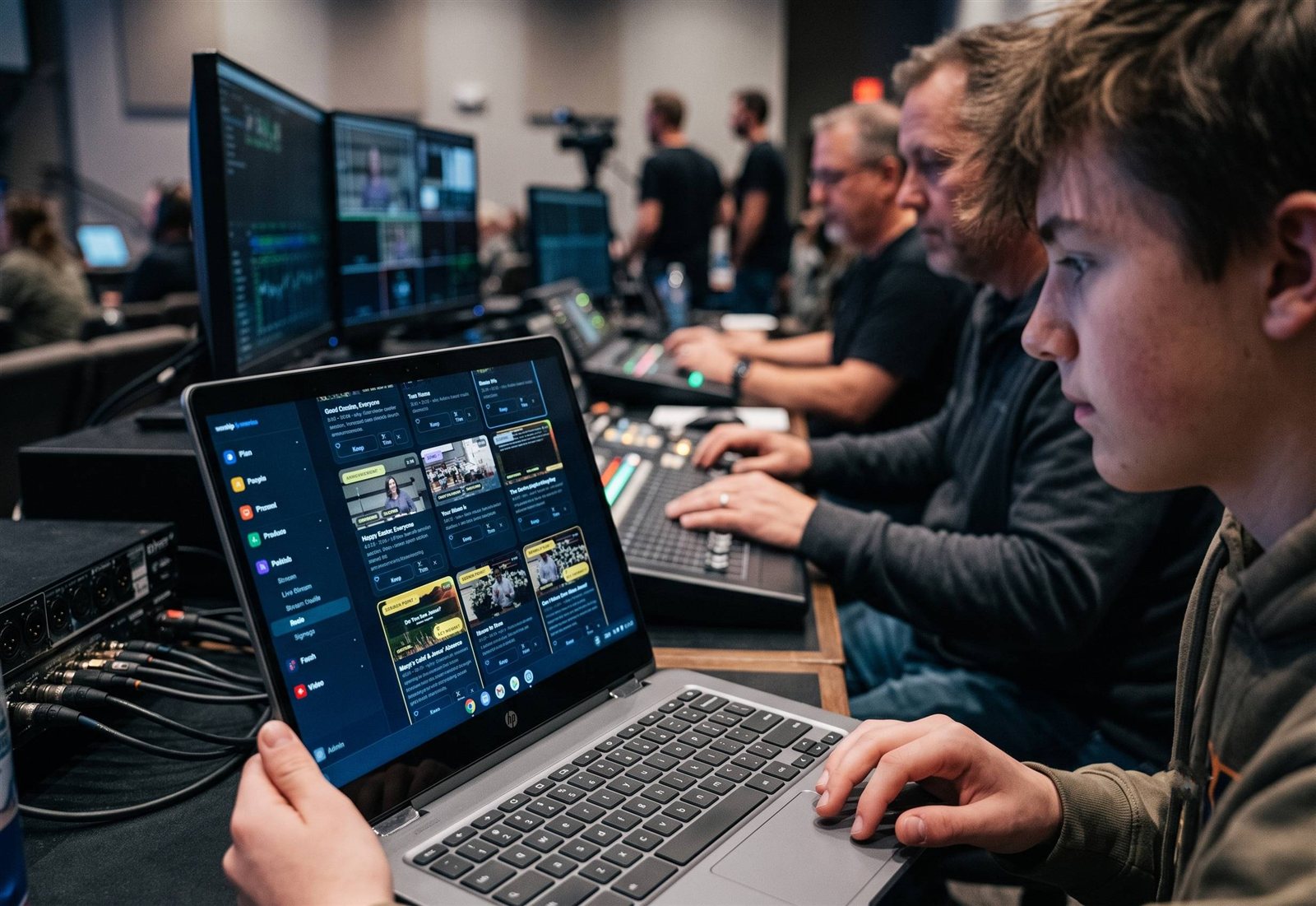
No staff, no budget, no problem. Small churches can have a real social media presence with a simple, sustainable plan: pick one or two platforms, turn each Sunday's sermon into three short clips, and give one volunteer an hour a week. Here's the whole strategy.
Oct 6, 2026 • 6 min read
Operations beginner
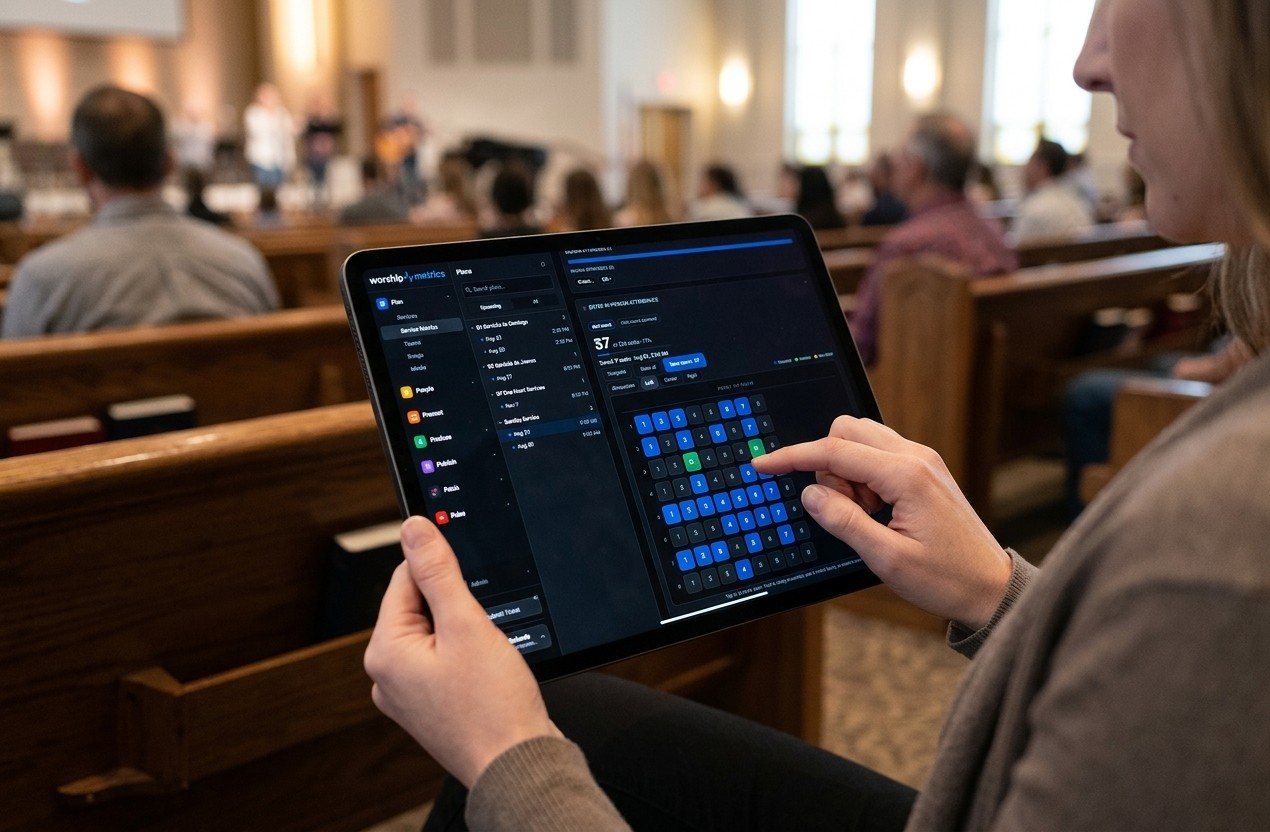
You don't need to be a tech expert to understand why some church posts reach thousands and others reach a handful. Here's how social media algorithms decide what people see, in plain English, and the honest ways a church can work with them without chasing trends or clickbait.
Oct 6, 2026 • 6 min read
Operations beginner
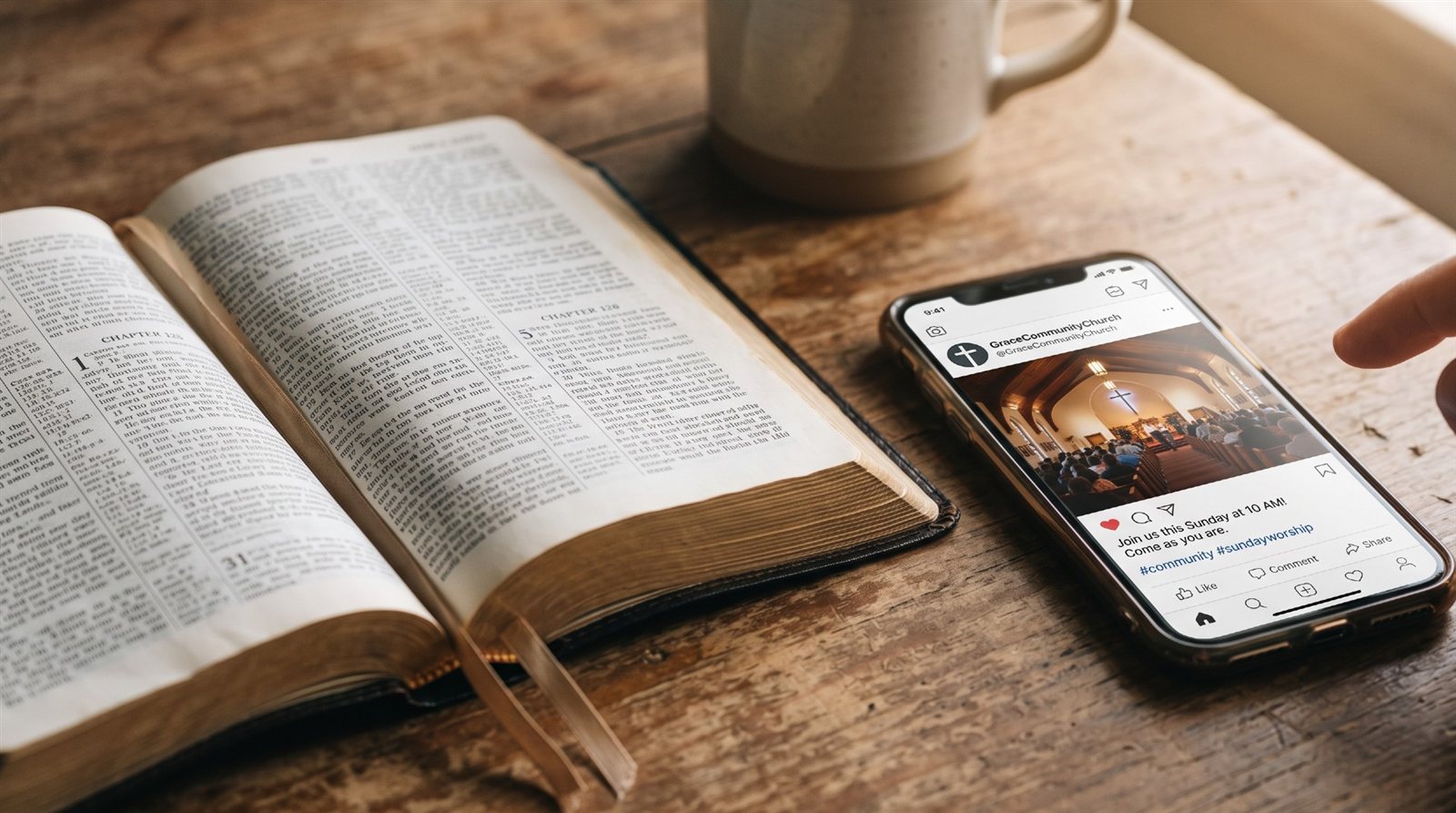
The printing press put scripture and sermons into ordinary hands and helped reshape the church. Social media is a communication revolution of the same scale: free, global, and two-way. Here's what that history teaches churches about the moment we're in, and how to step into it wisely.
Oct 6, 2026 • 6 min read
Operations beginner
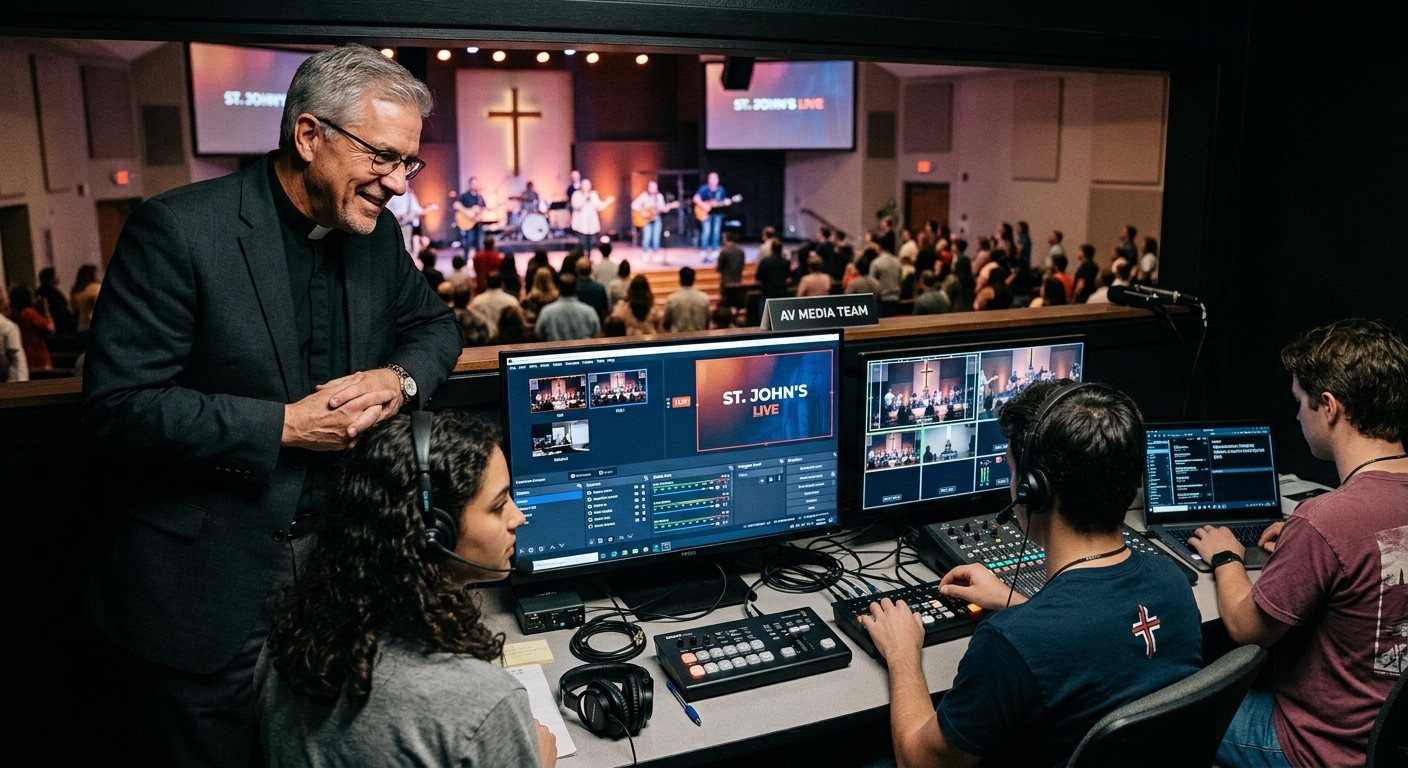
Handing students part of your church's public voice is a big step. A few clear rules make it safe for everyone: who approves clips, who holds the passwords, what never gets posted, and how adults and students communicate. Here's the checklist to decide before day one.
Oct 6, 2026 • 6 min read
Operations beginner
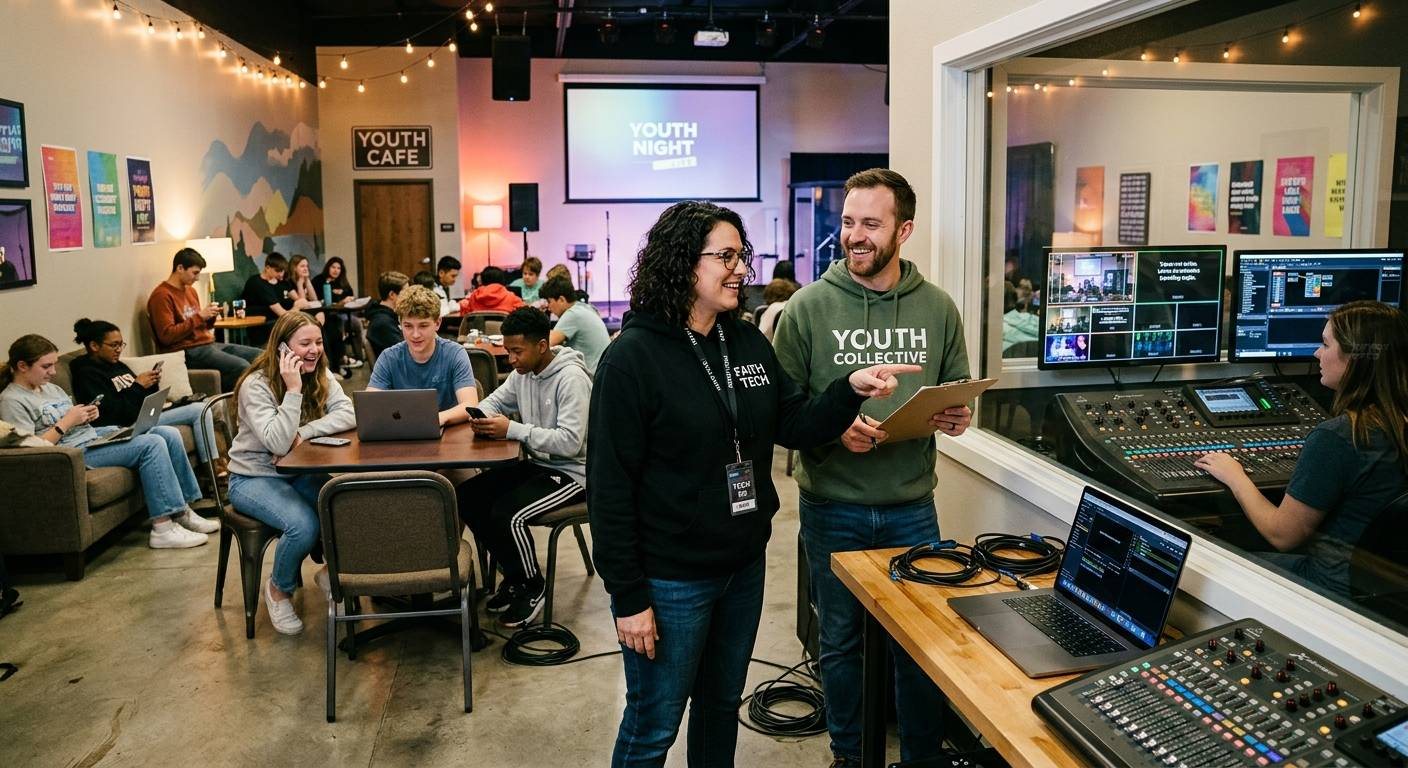
Students in the booth is one of the best things a church can do. It also needs a safeguarding layer from day one: the two-adult rule, background checks, parental consent, clear communication rules, and a known reporting path. Here's the checklist.
Oct 3, 2026 • 6 min read
Operations beginner
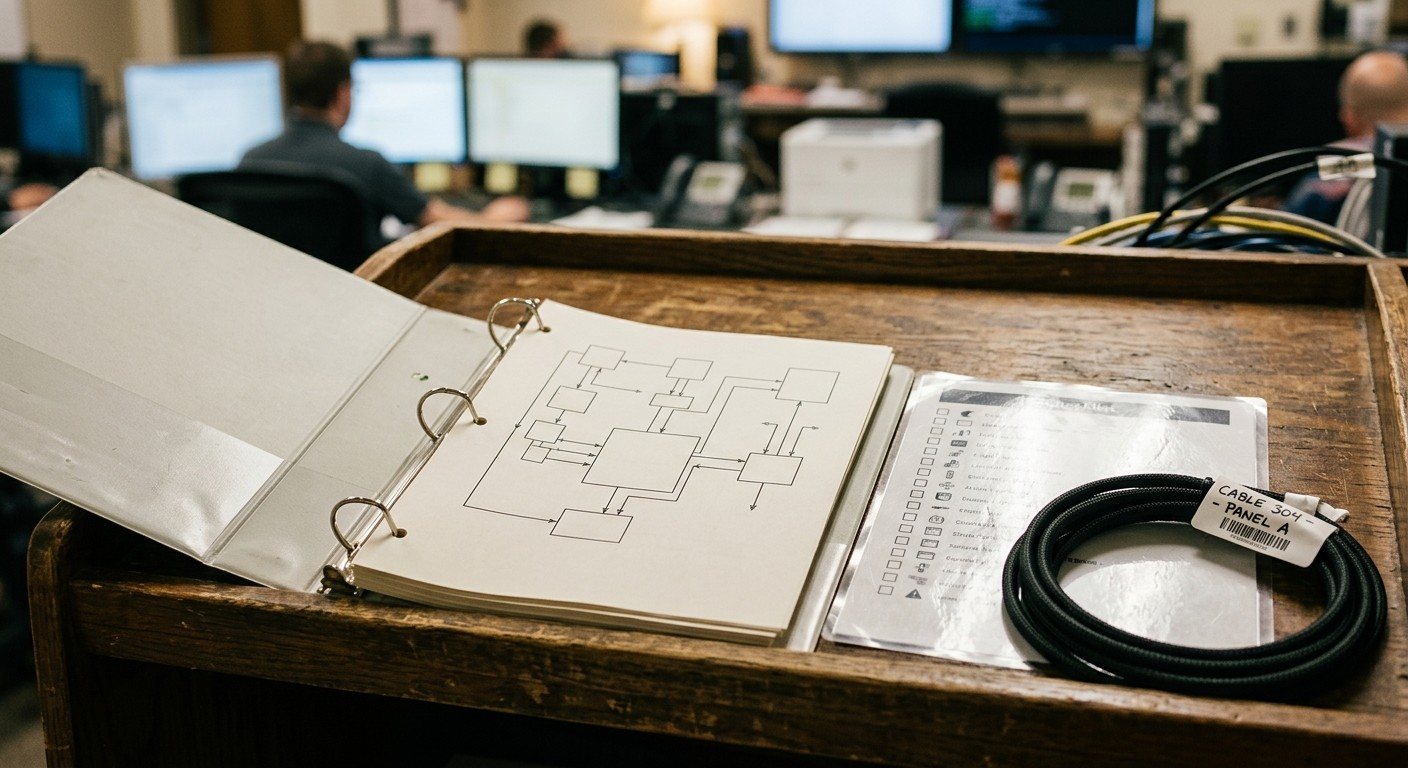
When a long-time volunteer or tech director leaves, the system often collapses, because the knowledge lived in their head. A written handoff covering access, checklists, common fixes, people, and 'what I wish I'd known' keeps Sunday running through the transition.
Oct 3, 2026 • 6 min read
Operations beginner
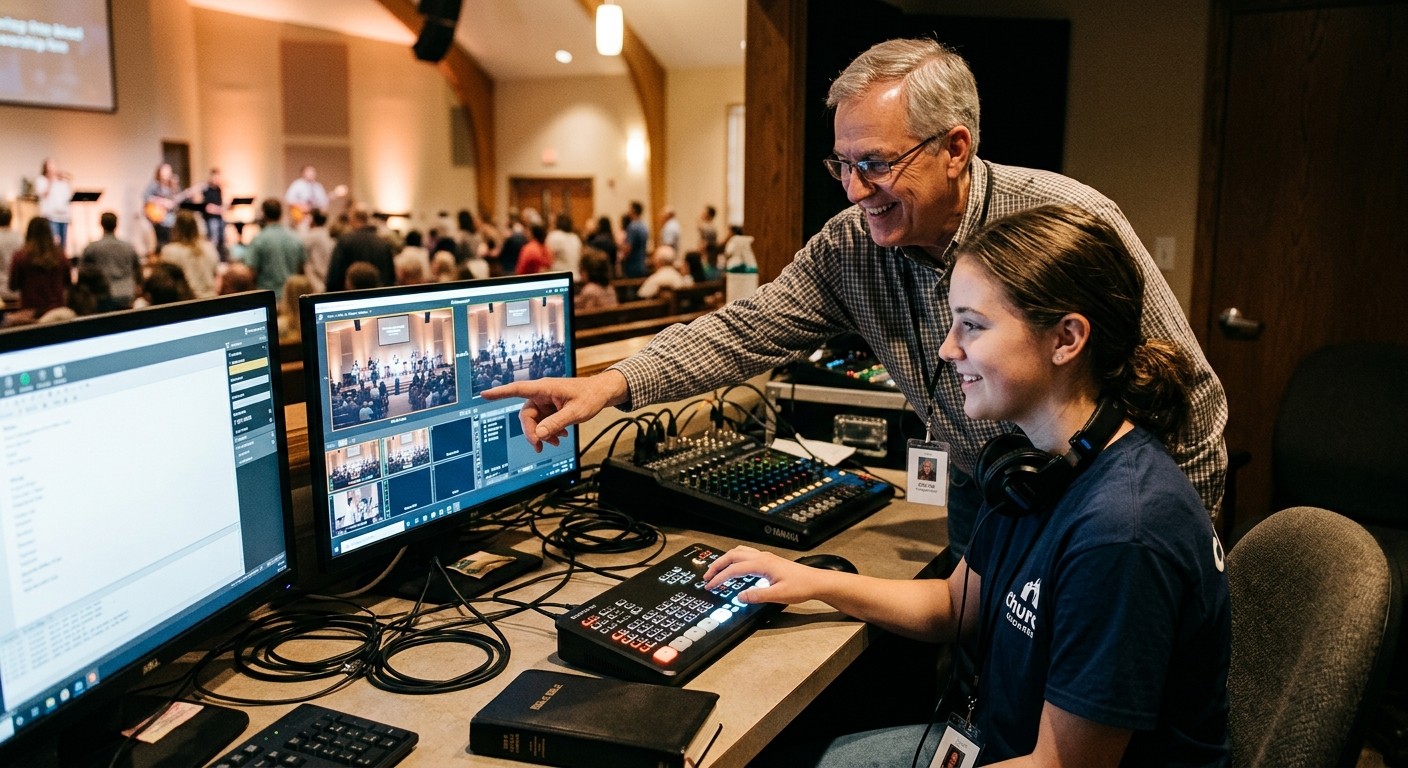
Most church AV training is 'sit with me once and you'll get it.' A predictable 90-day path, shadow, assist, operate with a safety net, then run solo, gets new volunteers serving confidently and tells you when the problem is the role, not the person.
Oct 3, 2026 • 6 min read
Operations beginner
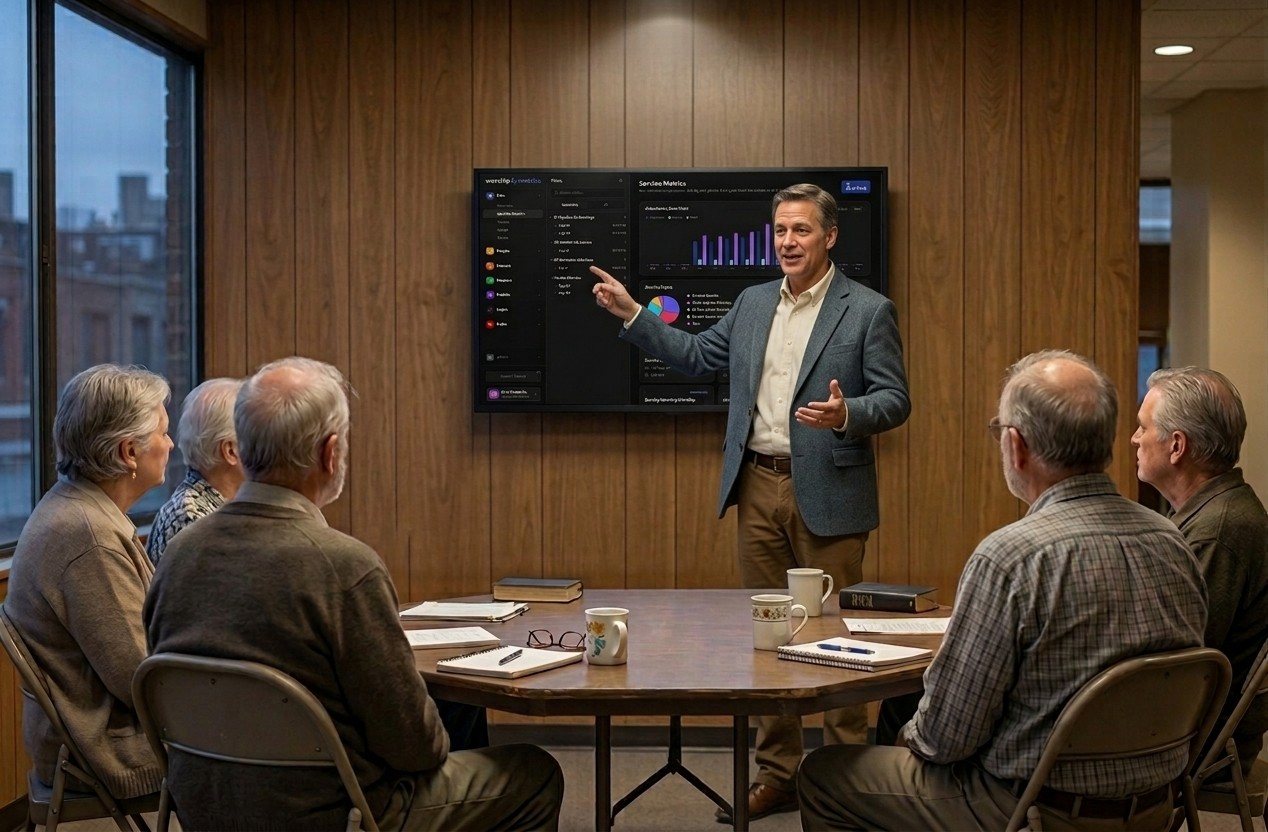
Online viewers rarely go from stranger to visitor in one step. They build trust through many small, consistent touches across the week. Here's how to map every digital touchpoint your church has, give each one an owner, and add the ones that are missing.
Oct 3, 2026 • 6 min read
Operations beginner
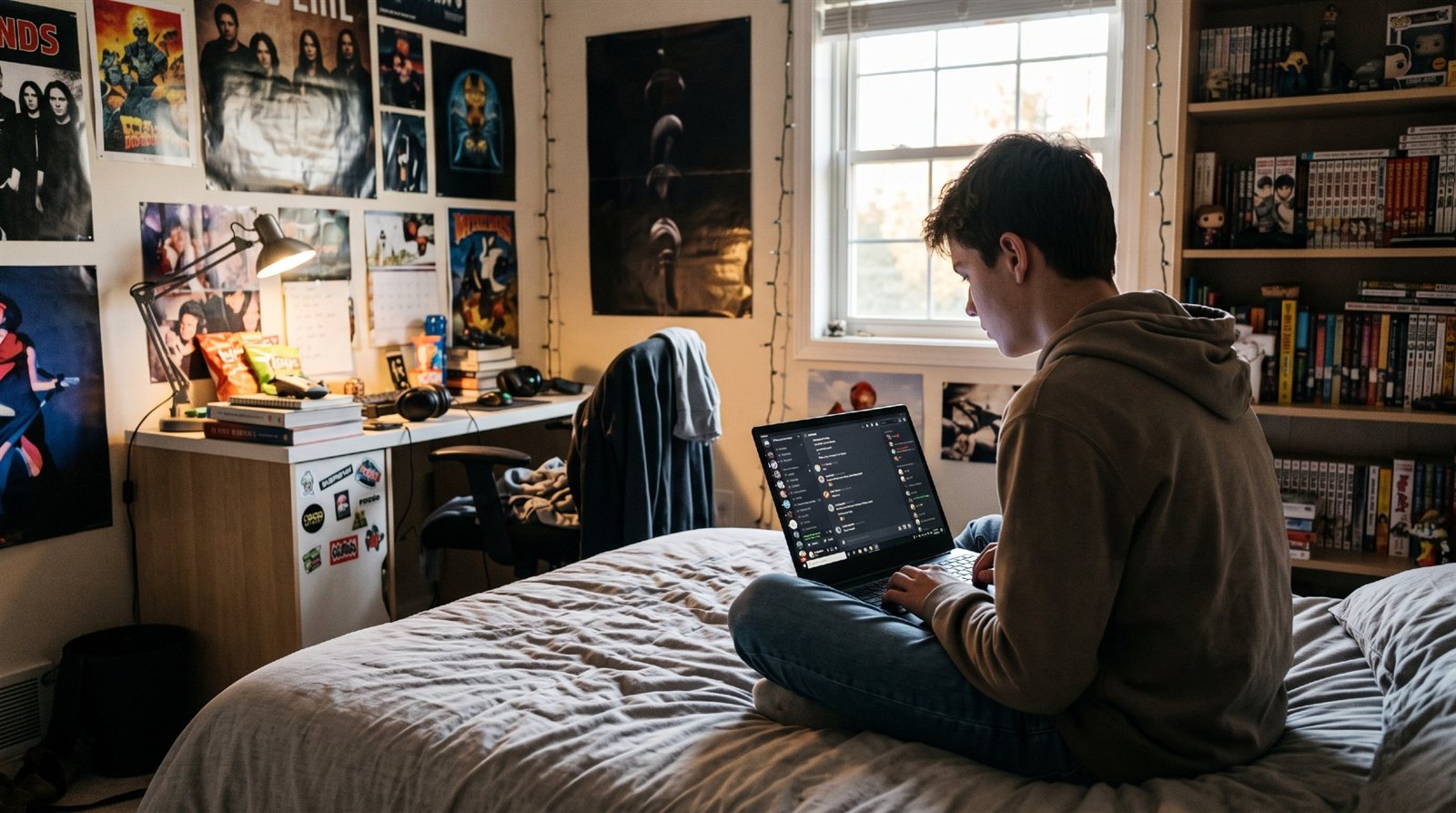
A private online community gives online viewers a place between watching anonymously and walking through the door. Here's a simple starter structure for a church Discord server, the moderation and safety rules to put in place before you open it, and how to help every generation join.
Oct 3, 2026 • 6 min read
Operations beginner
A role card is one page that tells a volunteer what the seat does, why it matters, what success looks like on a normal week, and how they can grow. Here are starter cards for seven core church media roles, plus how to use them for recruiting and training.
Oct 3, 2026 • 6 min read
Operations beginner
If your media ministry only exists on Sunday morning, it will always feel rushed. Here's a simple weekly rhythm, from Monday's review to Saturday's checks, that spreads the work out and keeps your church connected between services.
Oct 3, 2026 • 6 min read
Operations beginner
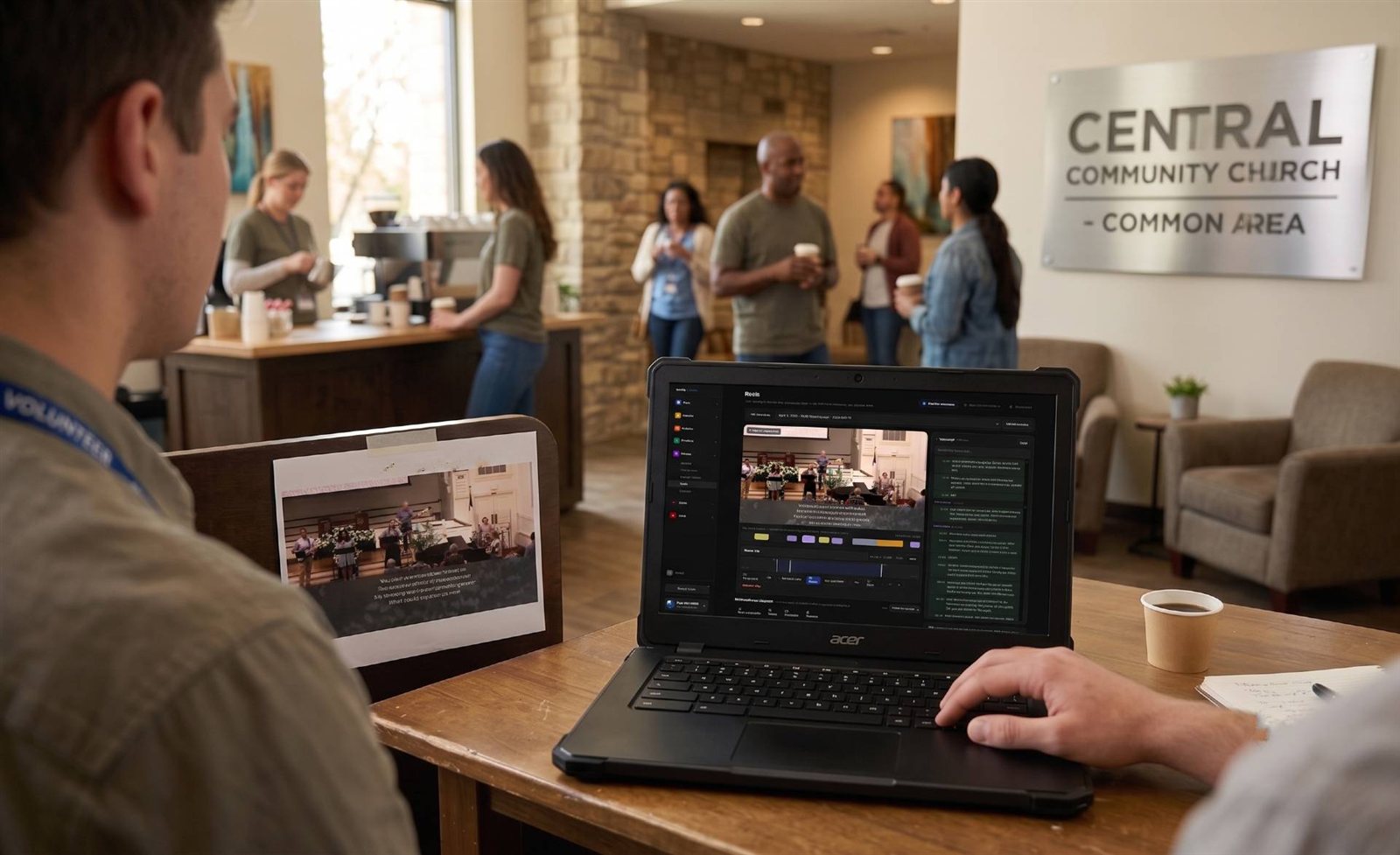
Most church media teams know the order of service but not the story of the service, so they capture everything evenly and emphasize nothing. A five-minute pre-service huddle with the pastor changes every camera angle, cut, and clip that follows.
Oct 3, 2026 • 6 min read
Operations beginner
For many online viewers, the barrier to visiting isn't interest. It's uncertainty: where to park, what to wear, what happens with the kids. A simple what-to-expect page and a 90-second pastor video answer those questions before anyone has to ask.
Oct 3, 2026 • 6 min read
Operations beginner
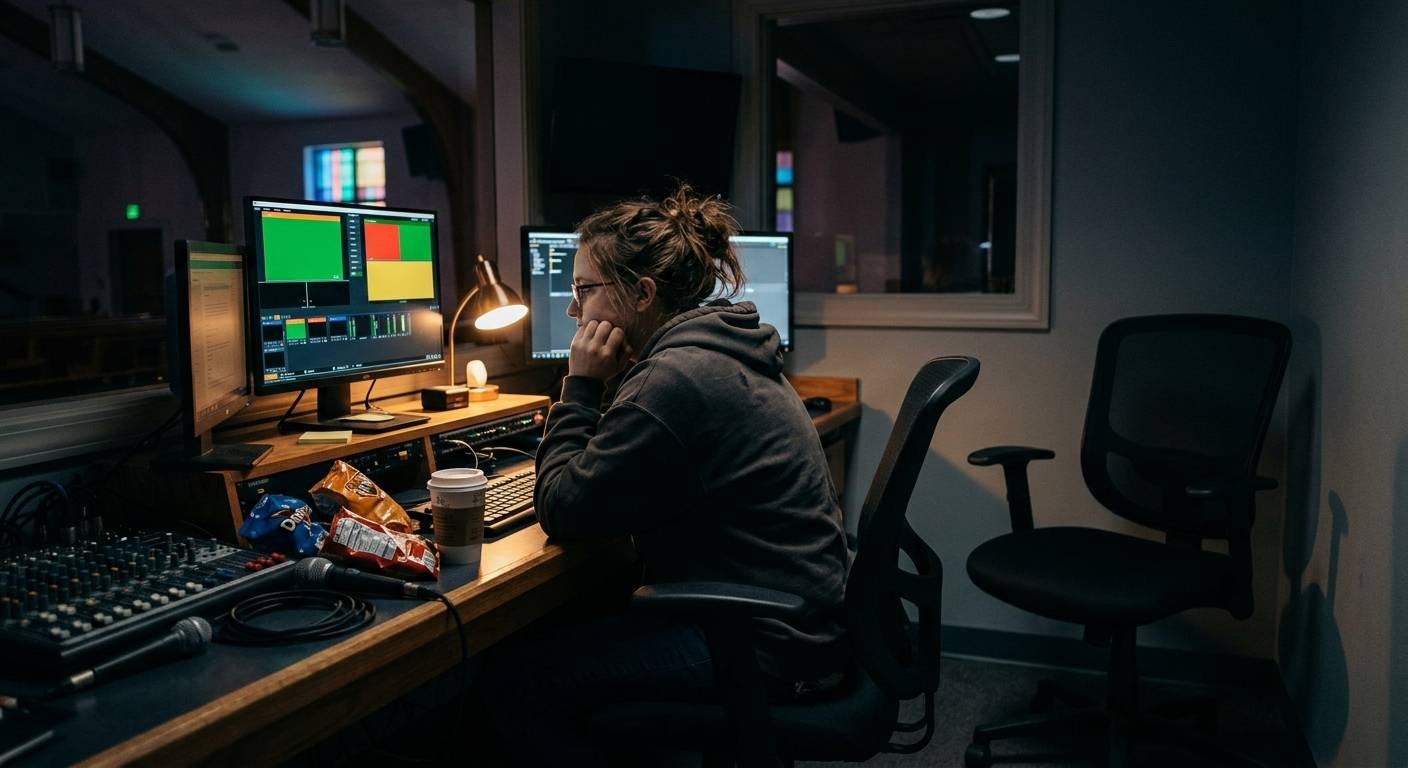
At some point volunteers can't carry the booth alone. Here's when a part-time tech director makes sense, what to hire for (hint: training ability over technical skill), how many hours to plan, who they should report to, and what to consider before or alongside a hire.
Oct 3, 2026 • 6 min read
Operations beginner
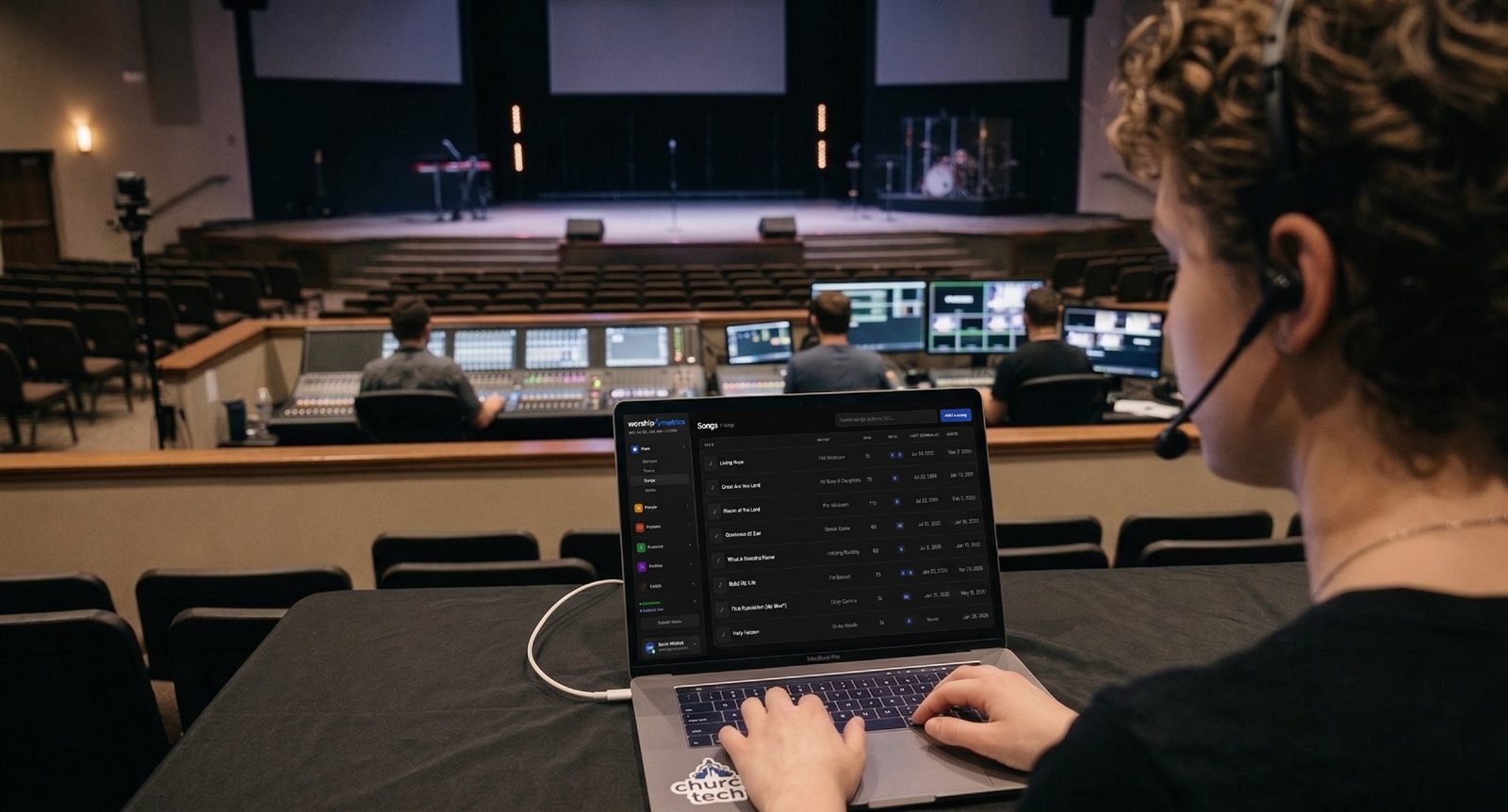
The chat host is the online greeter, usher, and prayer partner rolled into one seat. Here's what the role is, what to say in the first thirty seconds, response templates for common moments, and the crisis escalation path every host needs before the service starts.
Oct 2, 2026 • 6 min read
Operations beginner
A view count can't tell you whether anyone was cared for. This one-page weekly report covers in-person attendance, online reach, replay views, prayer requests answered, community activity, and follow-up completed, and it takes about fifteen minutes to fill in.
Oct 2, 2026 • 6 min read
Operations beginner
Most online viewers stay anonymous for months, and many never become known at all. A simple four-step framework, Capture, Acknowledge, Connect, Invite, helps a church make room for online visitors to be seen without pressuring them.
Oct 2, 2026 • 6 min read
Operations beginner
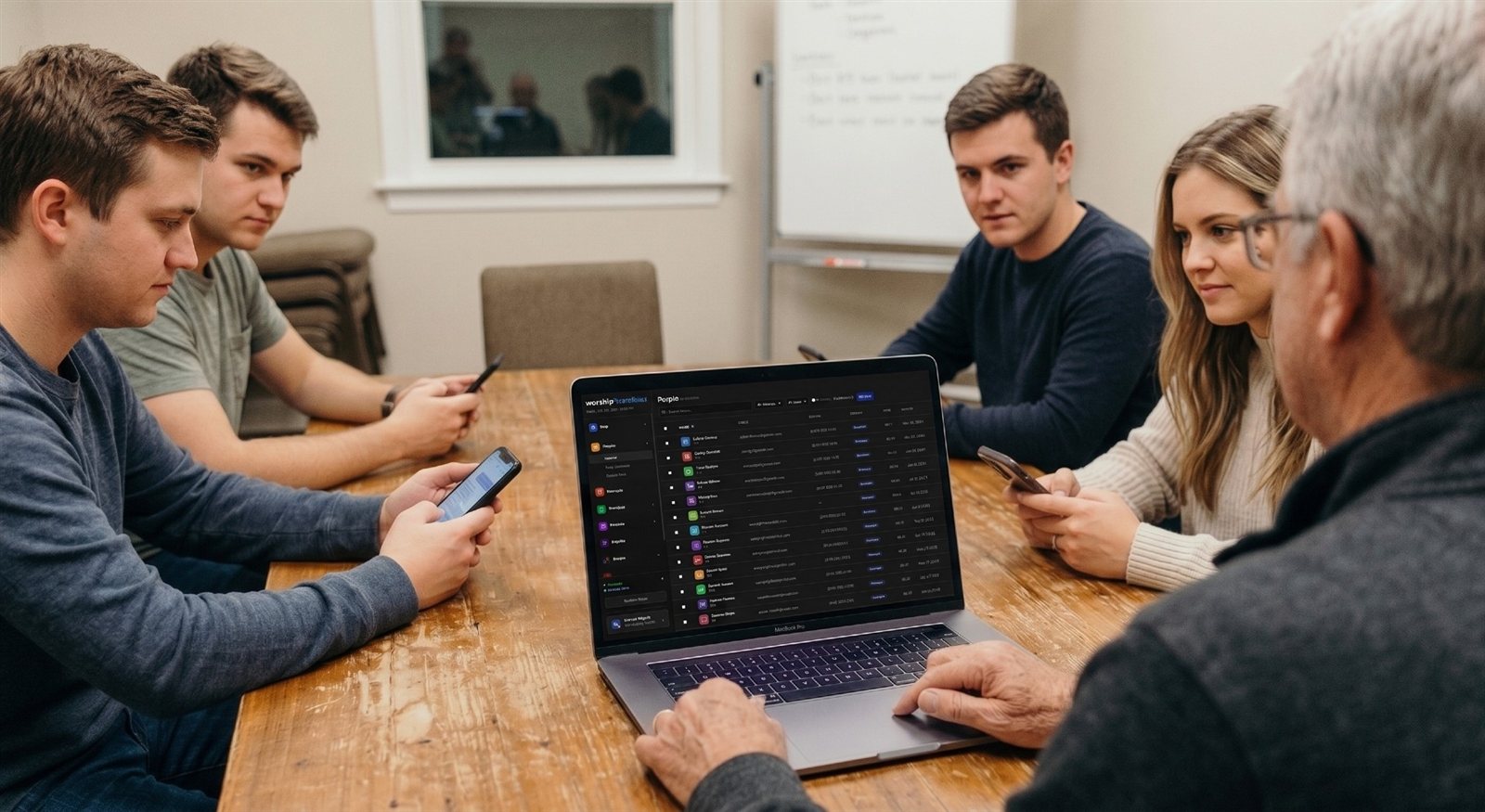
Inviting prayer on the live stream is easy. Making sure every request reaches a person who answers, quickly and privately, is the real test. Here's an end-to-end online prayer request workflow any church can set up this month.
Oct 2, 2026 • 6 min read
Operations beginner
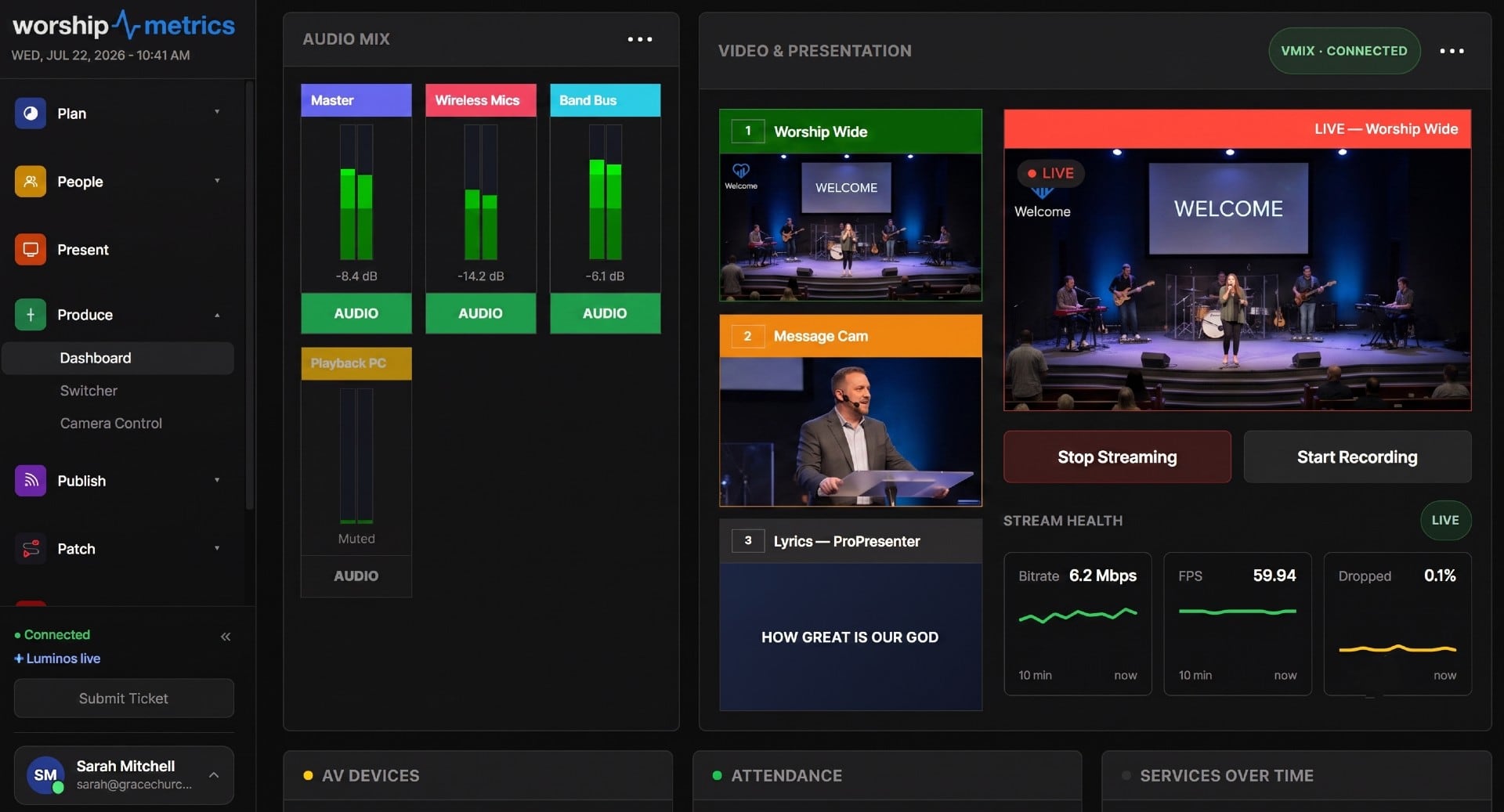
Streaming service, clipping tool, presentation software, scheduling app, chat, and a monitoring gap you're just living with — six logins, six bills, six things that don't talk. Here's the case for bringing your church production stack into one platform.
Sep 5, 2026 • 6 min read
Operations beginner
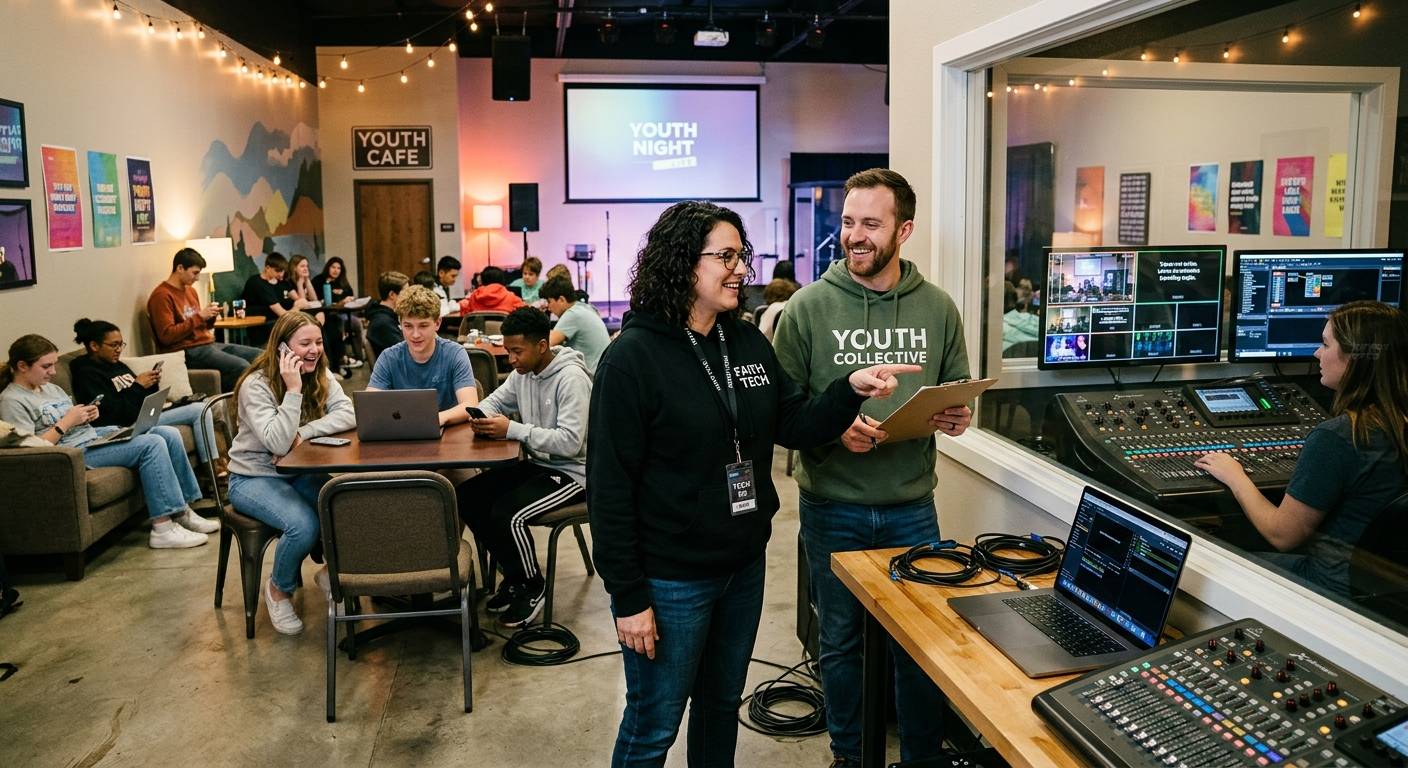
A straight answer for parents: what the AI in a church tech booth actually does, where your teen's data goes, the line it doesn't cross, and why the assistant that knows the system makes their serving safer — not stranger.
Sep 4, 2026 • 6 min read
Operations beginner
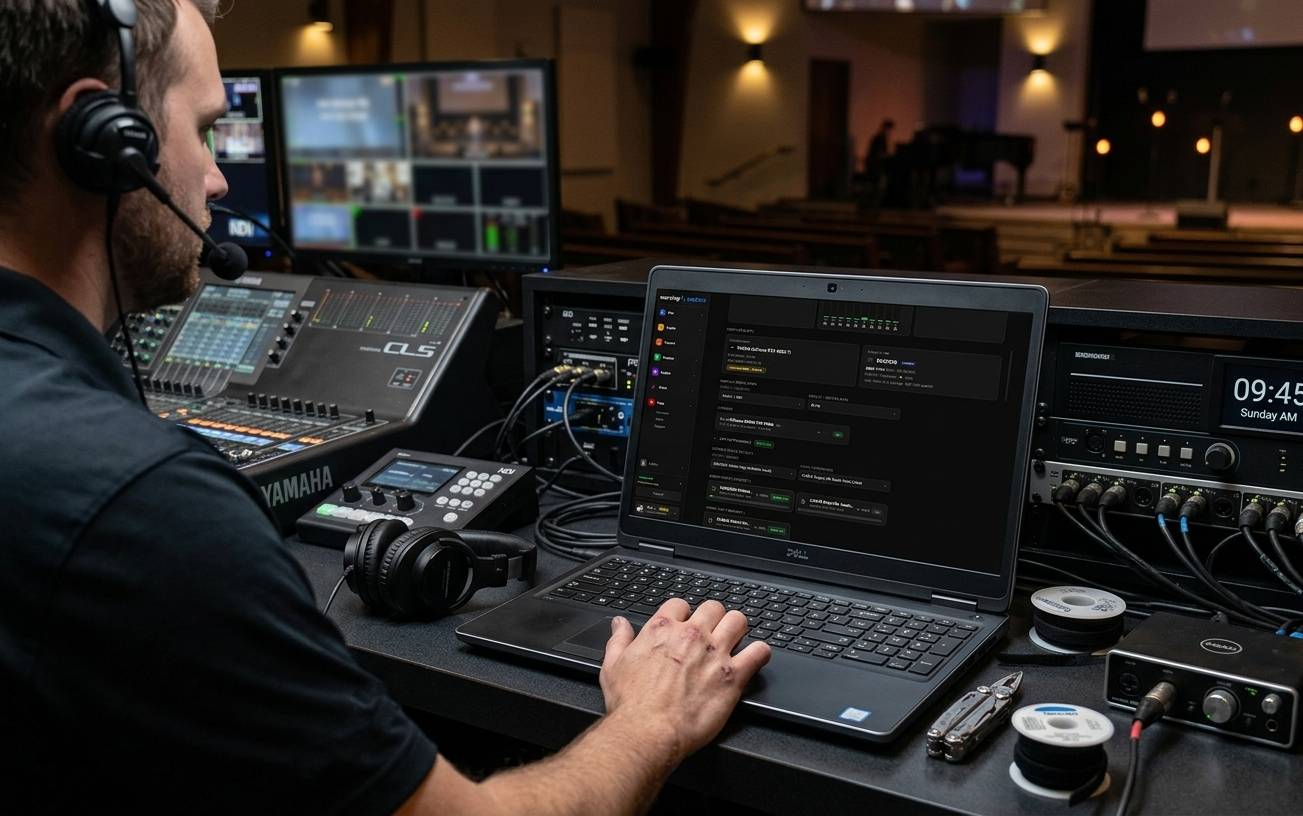
Most pastors already use AI and most feel conflicted about it — because the debate keeps blurring two different questions. Here's the line that resolves it, and how AI with real context is quietly changing church tech support forever.
Sep 4, 2026 • 6 min read
Operations beginner
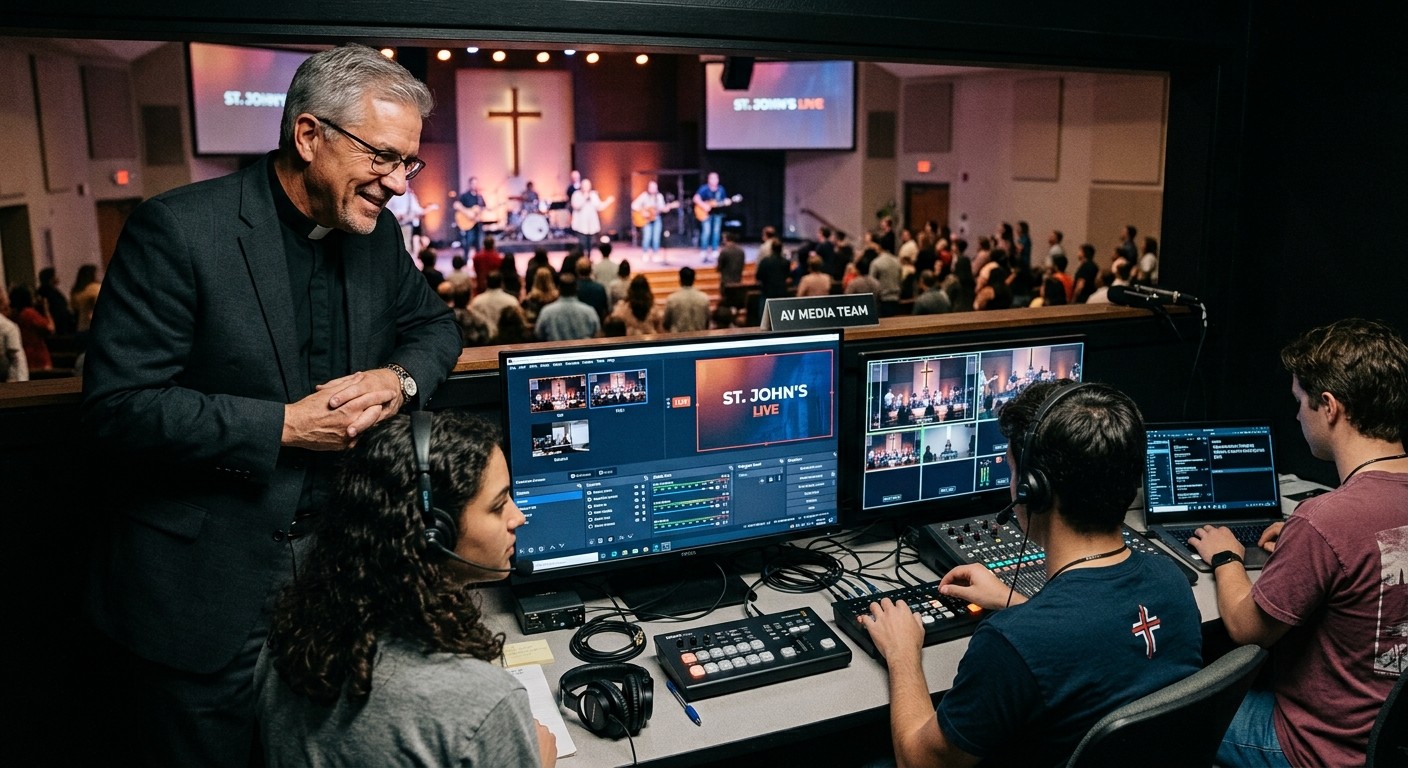
A youth pastor's read on AI and the tech booth — why an assistant that knows your system makes it safer, not scarier, to hand students real responsibility, and how it turns every volunteer shift into mentored learning.
Sep 4, 2026 • 6 min read
Operations beginner
The honest map of every support option a church actually has — community forums, manufacturers, integrators, the volunteer expert, automation, AI, and humans who can see your system — and how to stack them so Sunday never depends on luck.
Sep 4, 2026 • 6 min read
Operations beginner
Stop recruiting for 'tech help' and start recruiting the generation that already uses OBS for fun. The ask that works, where the candidates actually are, and the cloud visibility that lets you say yes to them safely.
Sep 4, 2026 • 6 min read
Operations beginner
For design and installation, often yes — a good integrator is worth every dollar. For the weekly operation your searches are probably really about, no company visit fixes it: that layer needs monitoring, training, and support that lives with the system.
Sep 4, 2026 • 6 min read
Operations beginner
Remote support used to mean describing your screen to a stranger. With telemetry, a live signal map, and control that reaches the booth, remote help now starts at diagnosis — here's what it can genuinely do, and the honest cases where on-site still wins.
Sep 4, 2026 • 6 min read
Operations beginner
A three-zone framework boards and elder teams can actually use — where AI clearly serves, where it needs guardrails, where conviction draws lines — plus the five questions to ask any vendor before AI touches your ministry.
Sep 4, 2026 • 6 min read
Operations beginner
The support stack a small church can build for zero dollars — automation, monitoring, documentation, smart alerts, and free AI support — plus the honest order to spend in when a little budget appears, and the sponsor who might cover it.
Sep 4, 2026 • 6 min read
Operations beginner
Every church tech support plan has one test: the pre-service failure. Forums are asleep, integrators open Monday, and the volunteer expert is at a wedding — here's the support that actually answers when Sunday is on the line.
Sep 4, 2026 • 6 min read
Operations beginner
The streaming generation arrives half-trained — so stop teaching software and start teaching Sunday. The one-seat method, rehearsals that can't pollute your records, mentors who watch the real controls, and debriefs built from telemetry.
Sep 4, 2026 • 6 min read
Operations beginner
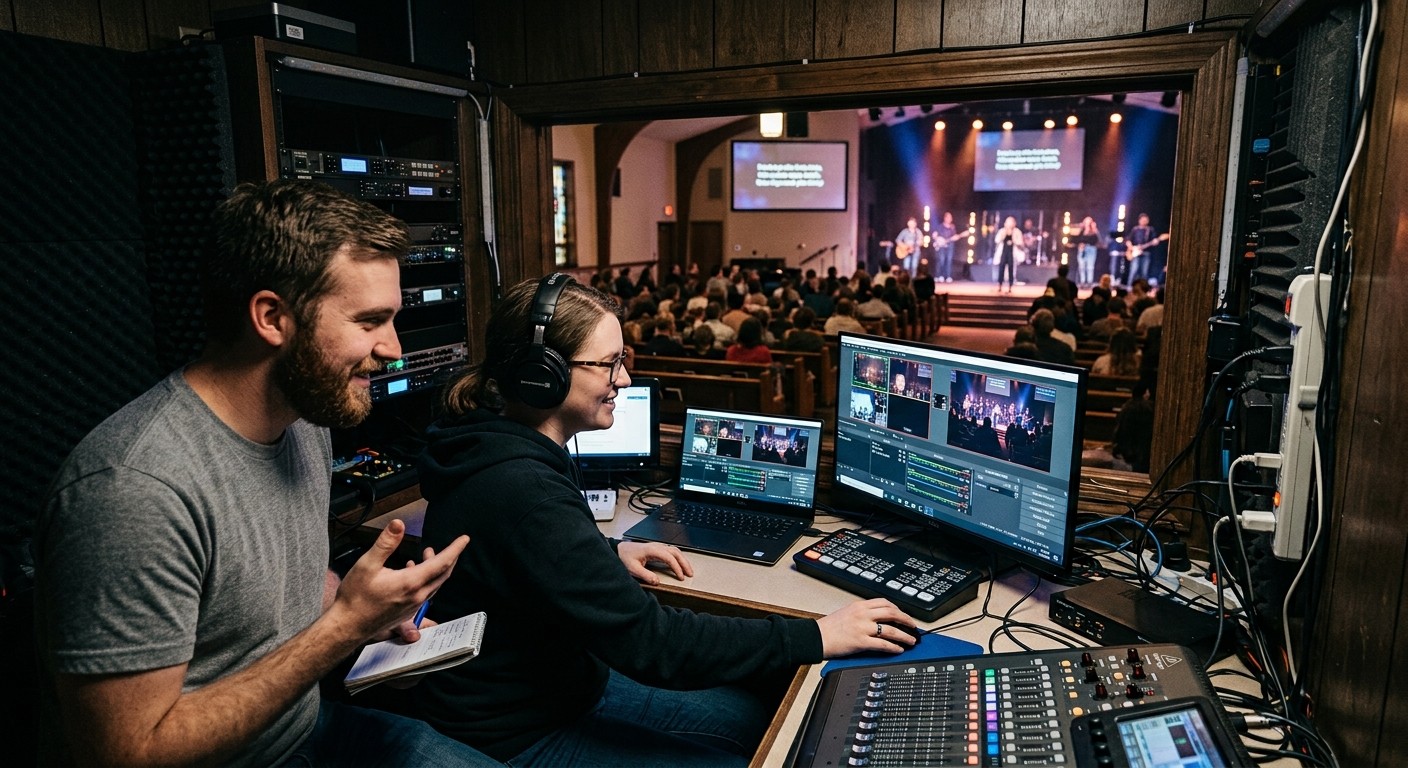
The honest answer for the volunteer who's wondering: no — it replaces the lonely part of the job, not the person. What AI takes off your plate, what stays gloriously human, and why this is rescue, not redundancy.
Sep 4, 2026 • 6 min read
Operations beginner
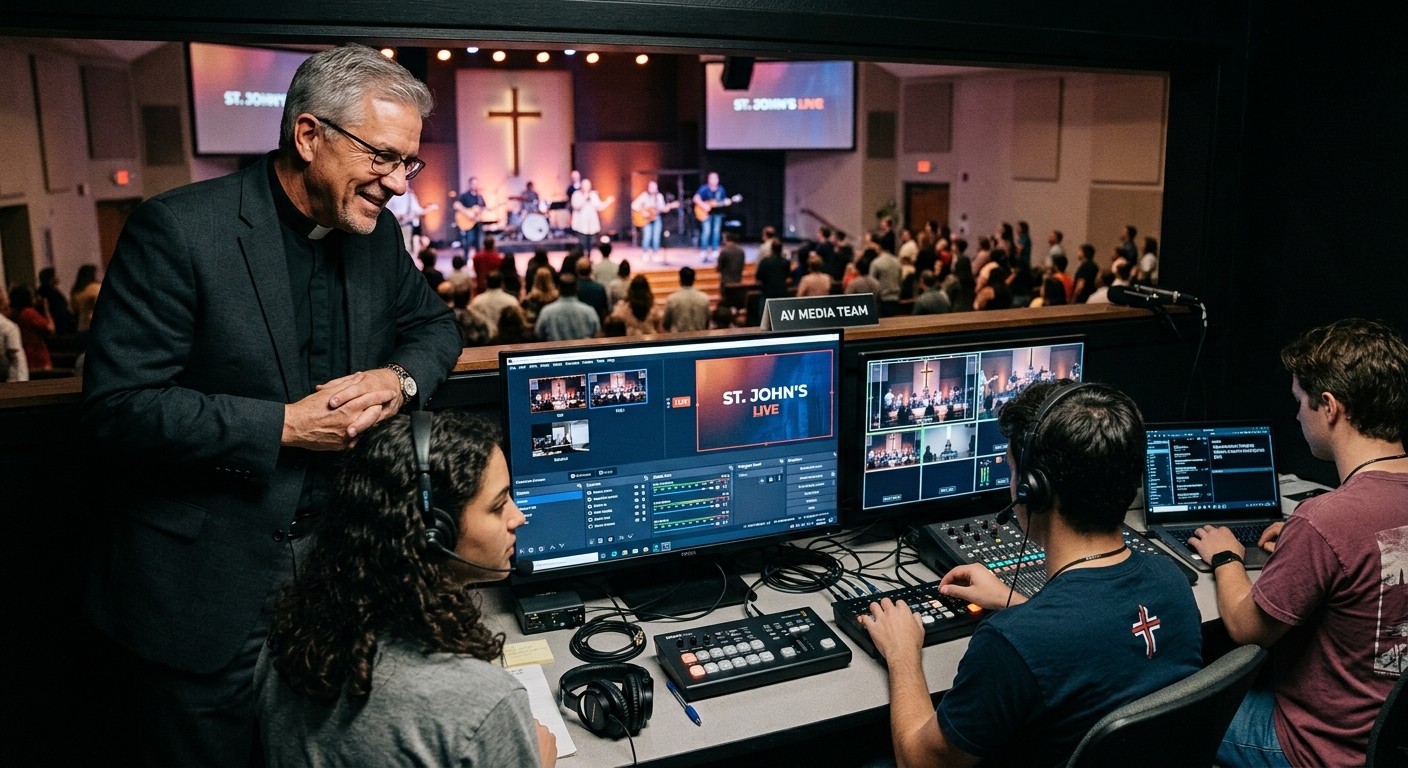
85% of teens play video games, and the streaming generation grew up on the same free software running your church's livestream. The fluency your booth needs is sitting in the youth room — and cloud monitoring is what makes handing them the keys safe.
Sep 4, 2026 • 6 min read
Operations beginner
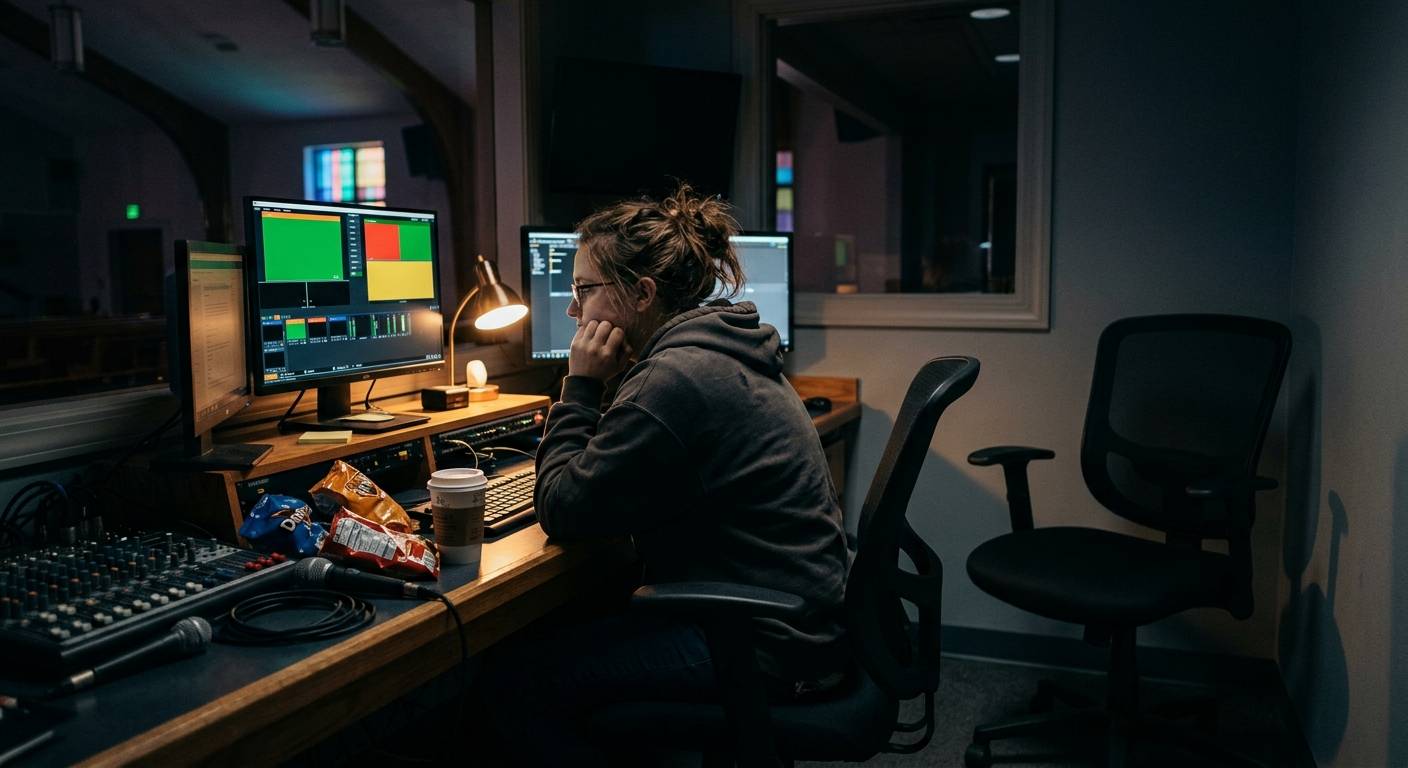
You can't train help because you have no margin, and you have no margin because you have no help. The cycle doesn't break with more effort — it breaks with automation that buys back your margin, then a pipeline that spends it on people.
Sep 3, 2026 • 6 min read
Operations beginner
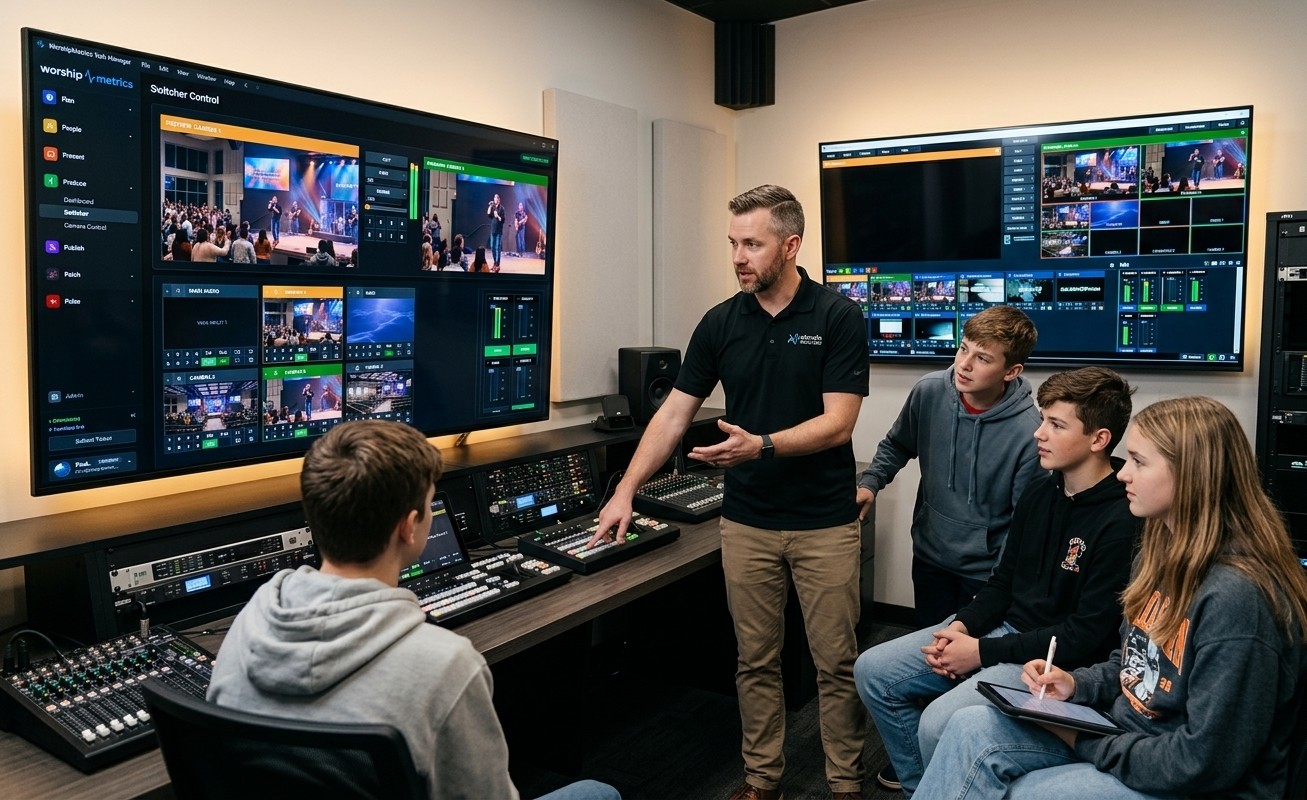
Churches work hard to engineer moments where generations actually connect — while overlooking the one room where a 15-year-old and a 55-year-old already collaborate as peers every single week, on work they both care about.
Sep 3, 2026 • 6 min read
Operations beginner
Two ministries, two chronic problems, one structure: the media team needs people and the youth ministry needs real responsibility to disciple with. Run them as a pipeline and each one solves the other — permanently.
Sep 3, 2026 • 6 min read
Operations beginner
Most youth ministry flows one direction: adults produce, students consume. The tech booth reverses the arrow — students producing the service the whole church receives — and that reversal changes what they believe about their place in the body.
Sep 3, 2026 • 6 min read
Operations beginner
The volunteers you can't find are already in your building. What's missing isn't people — it's a pipeline: real seats sized for beginners, a training system that doesn't consume your margin, and a youth ministry that's been waiting to be asked.
Sep 3, 2026 • 6 min read
Operations beginner
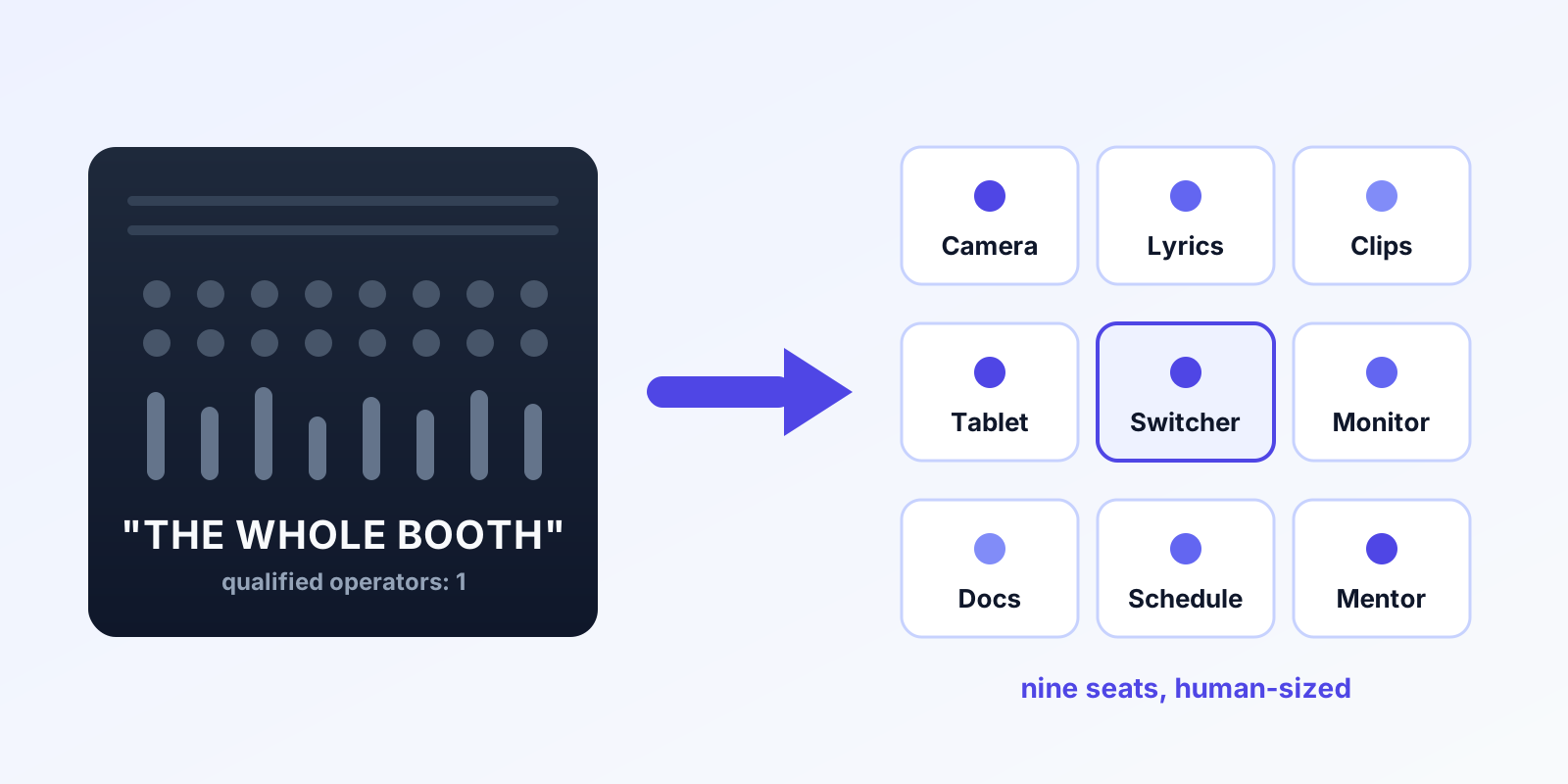
It feels like humility and sounds like fact, but it's neither: nobody is qualified to run the whole booth — including, once, you. Decompose the booth into seats and the qualification bar drops to where real people can clear it.
Sep 3, 2026 • 6 min read
Operations beginner
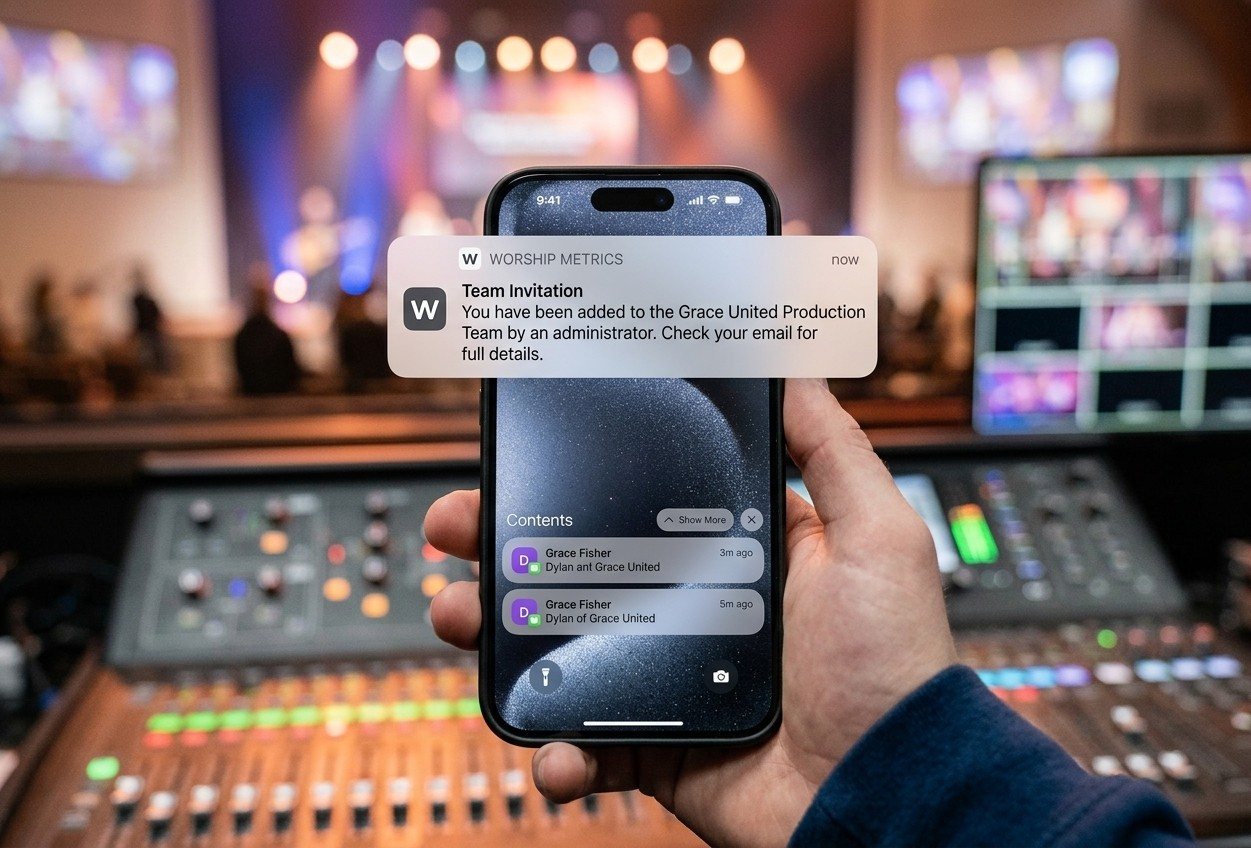
The pulpit announcement recruits nobody because it asks for everything from anyone. The ask that works is specific, personal, and backed by a system — one seat, one name, a real training path, and scheduling that respects people's lives.
Sep 3, 2026 • 6 min read
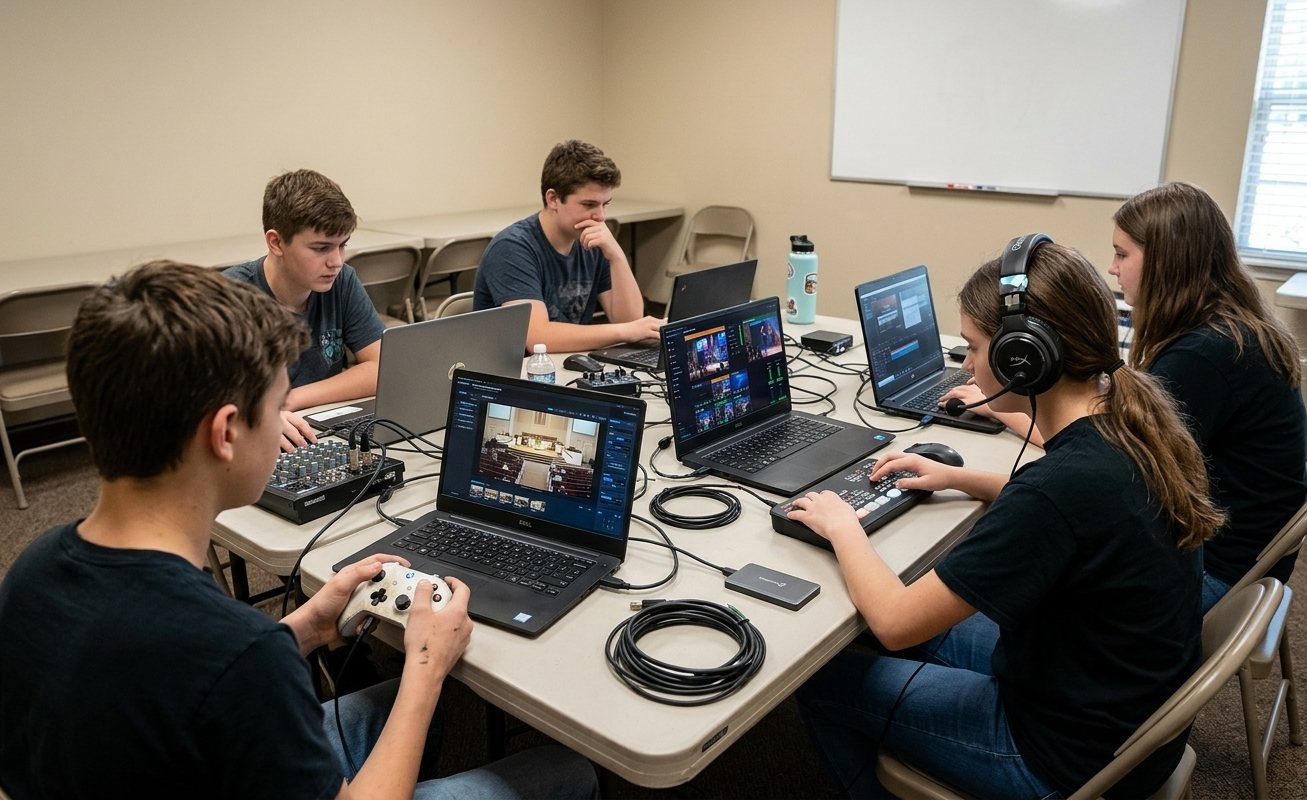
Operations beginner
Every youth ministry has students whose gifts point away from the spotlight — toward screens, sound, detail, and craft. The tech booth holds seven real seats for them, each one a place to serve the whole congregation without standing in front of it.
Sep 3, 2026 • 6 min read
Operations beginner
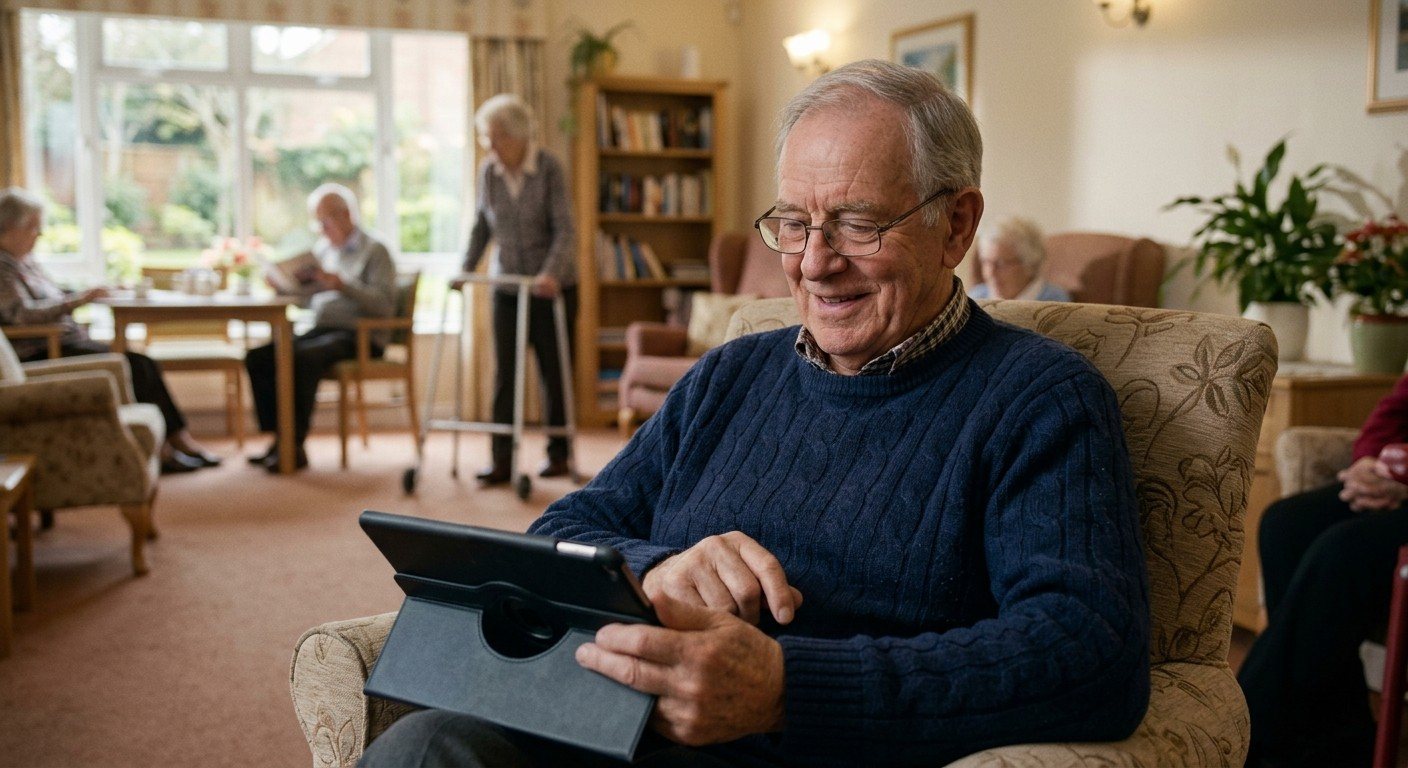
For the member who ran sound for twenty years, wired the fellowship hall, or simply wants their giving to reach young people directly: a designated, tax-deductible gift that hands the next generation real tools — and, if you're willing, your experience with them.
Sep 3, 2026 • 6 min read
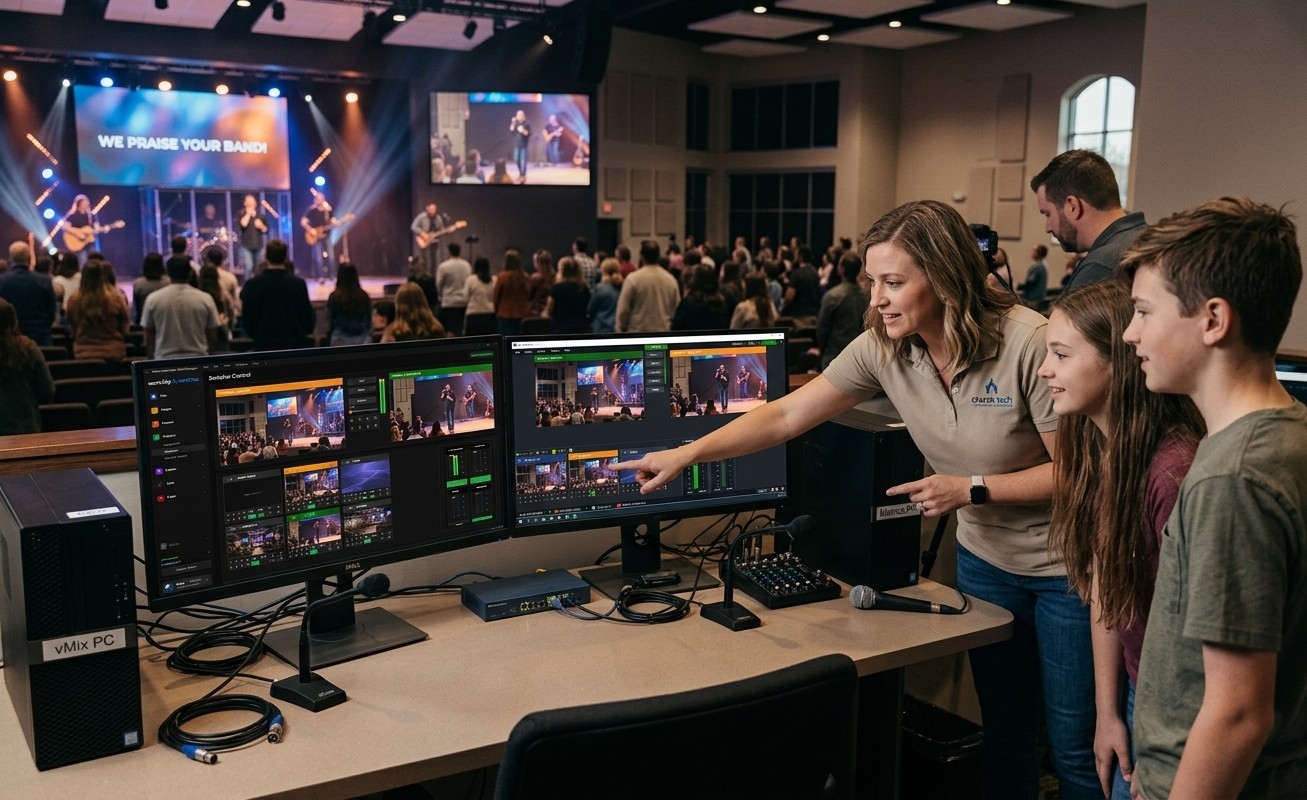
Operations beginner
A practical launch plan: recruit where interest already exists, give every student one seat with one clear job, let the vMix booth be the clubhouse, and build the mentoring ladder that grows the team without growing the tech director's load.
Sep 3, 2026 • 6 min read
Operations beginner
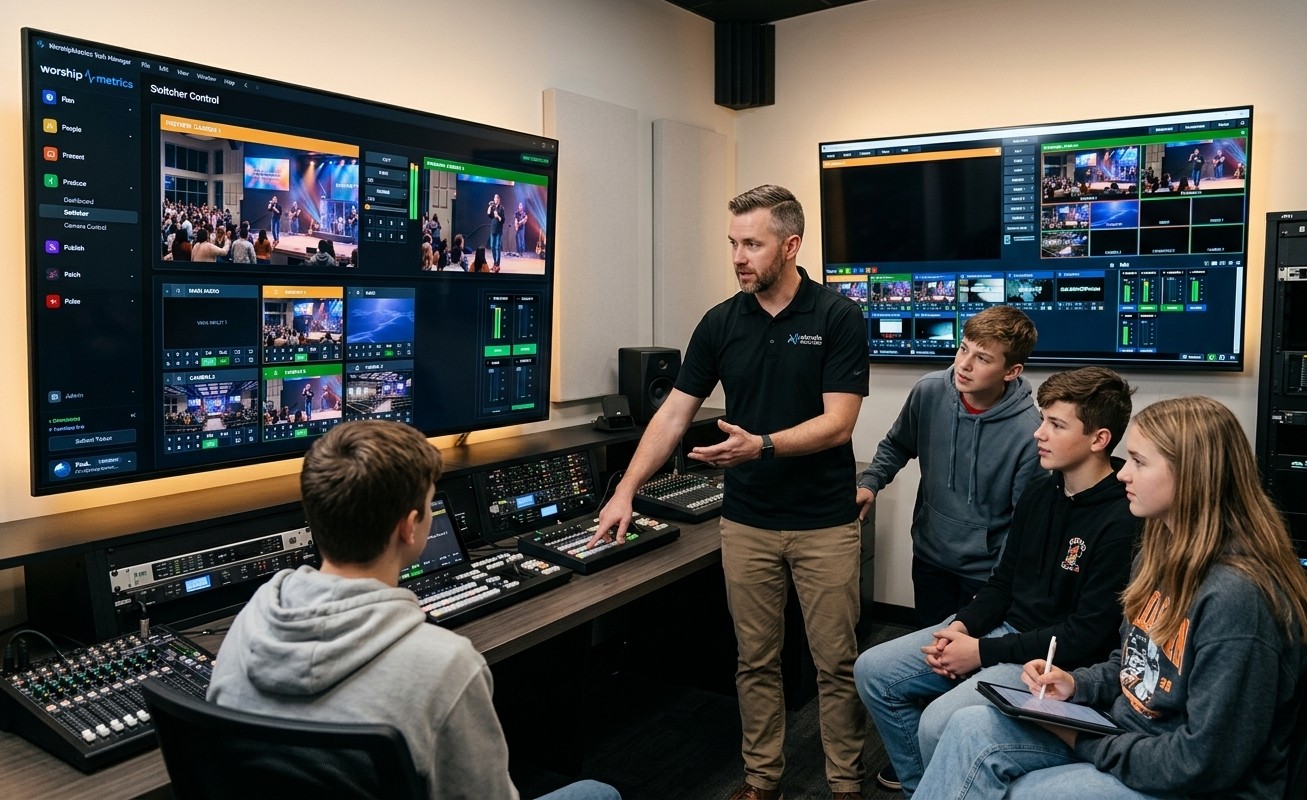
Yes — when the booth has guardrails instead of gatekeepers: instant one-tap restarts for the routine failures, a mentor watching preview and program from anywhere, mistakes caught in preview where they belong, and every action logged. Here's the safety case, honestly made.
Sep 3, 2026 • 6 min read
Operations beginner
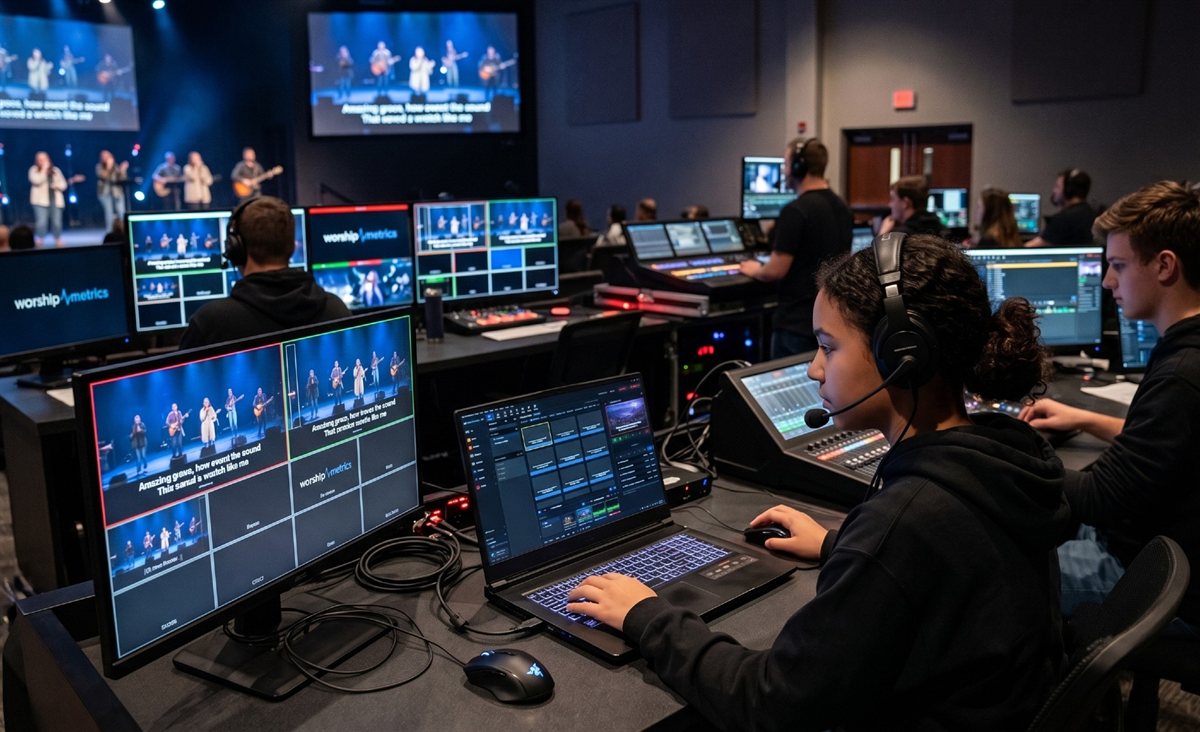
Most church-attending teens drop out as young adults — and most say it wasn't a decision, it just happened. The pattern that resists the drift isn't better programming. It's responsibility: students who hold a real role have something habit-proof.
Sep 3, 2026 • 6 min read
Operations beginner
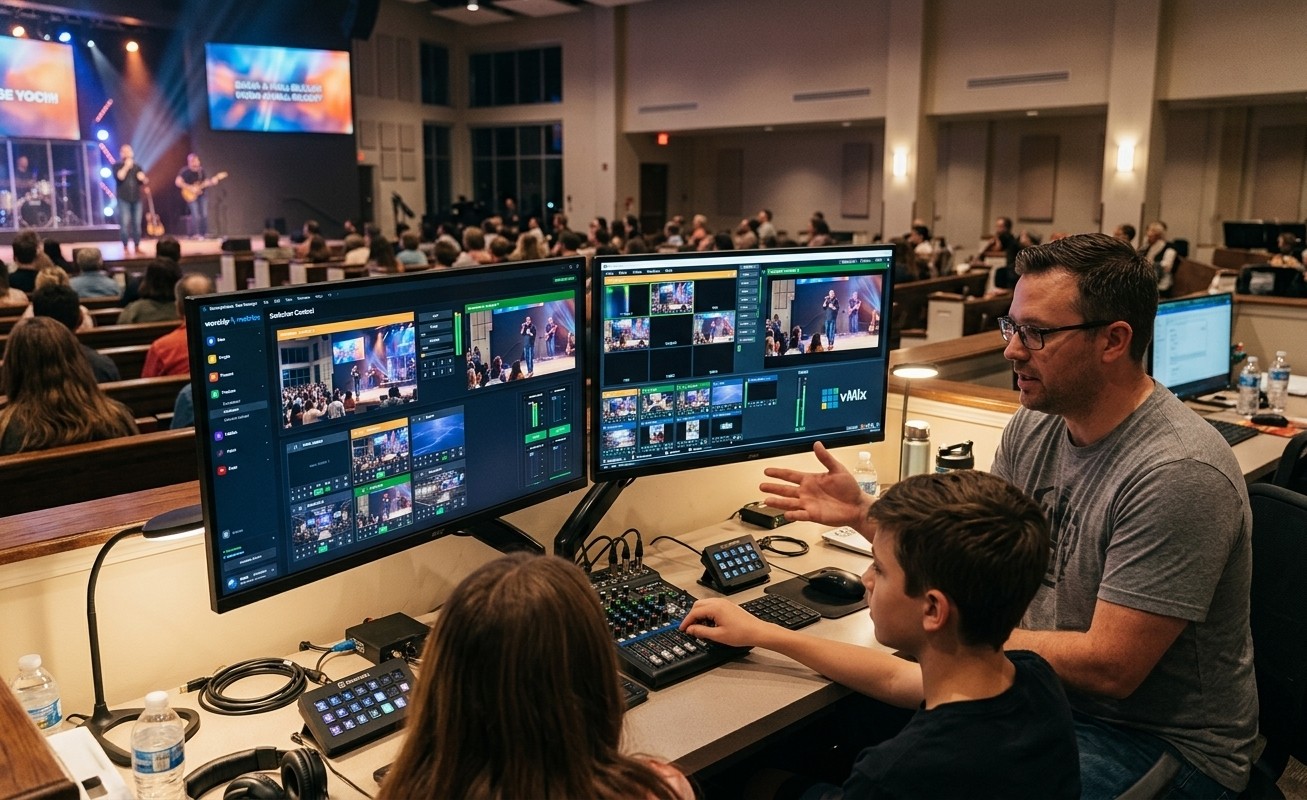
Not every kid will sing on stage, teach a class, or greet at the door. Some of them belong behind two monitors with a headset on — and the church that builds real seats for them isn't staffing a booth. It's discipling people.
Sep 3, 2026 • 6 min read
Operations beginner
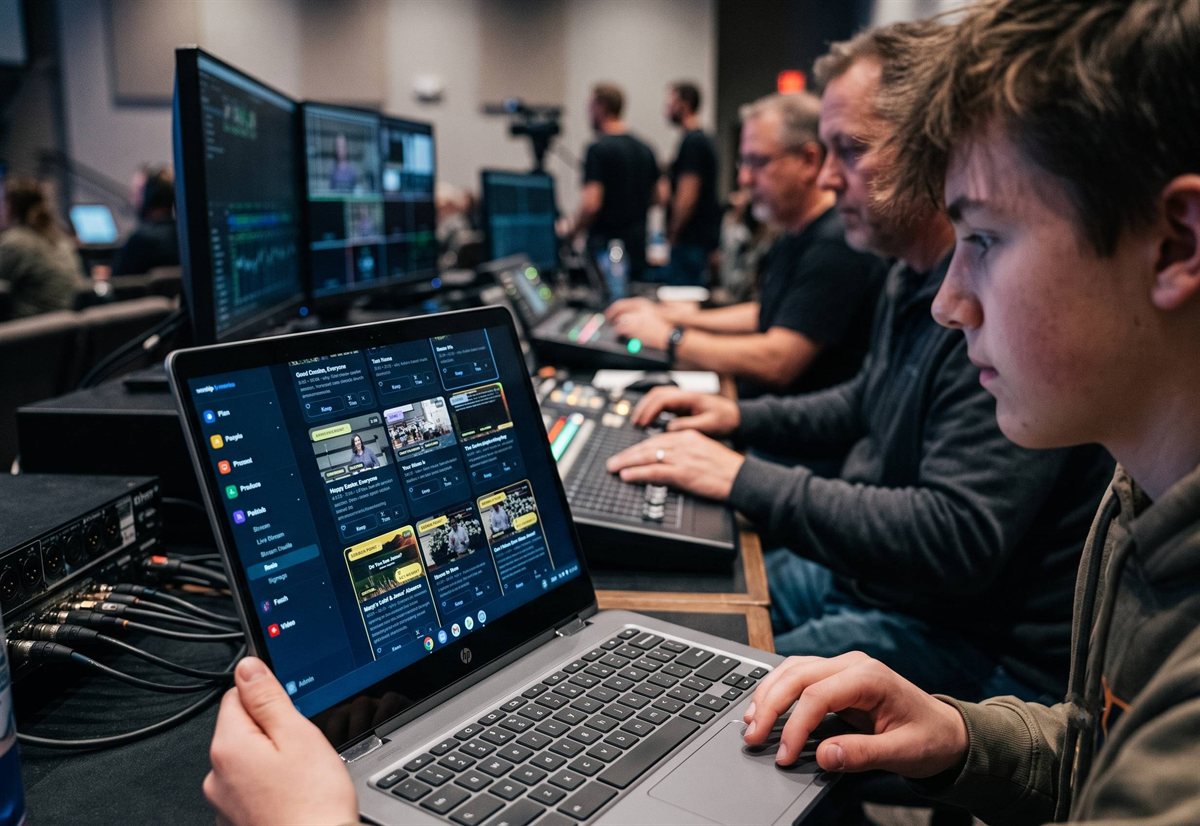
A letter to the parent watching a screen-loving teenager drift at church: the hours that look like wasted screen time have been building real skills — and there's a seat on Sunday morning where those exact skills become a place to belong.
Sep 3, 2026 • 6 min read
Operations beginner
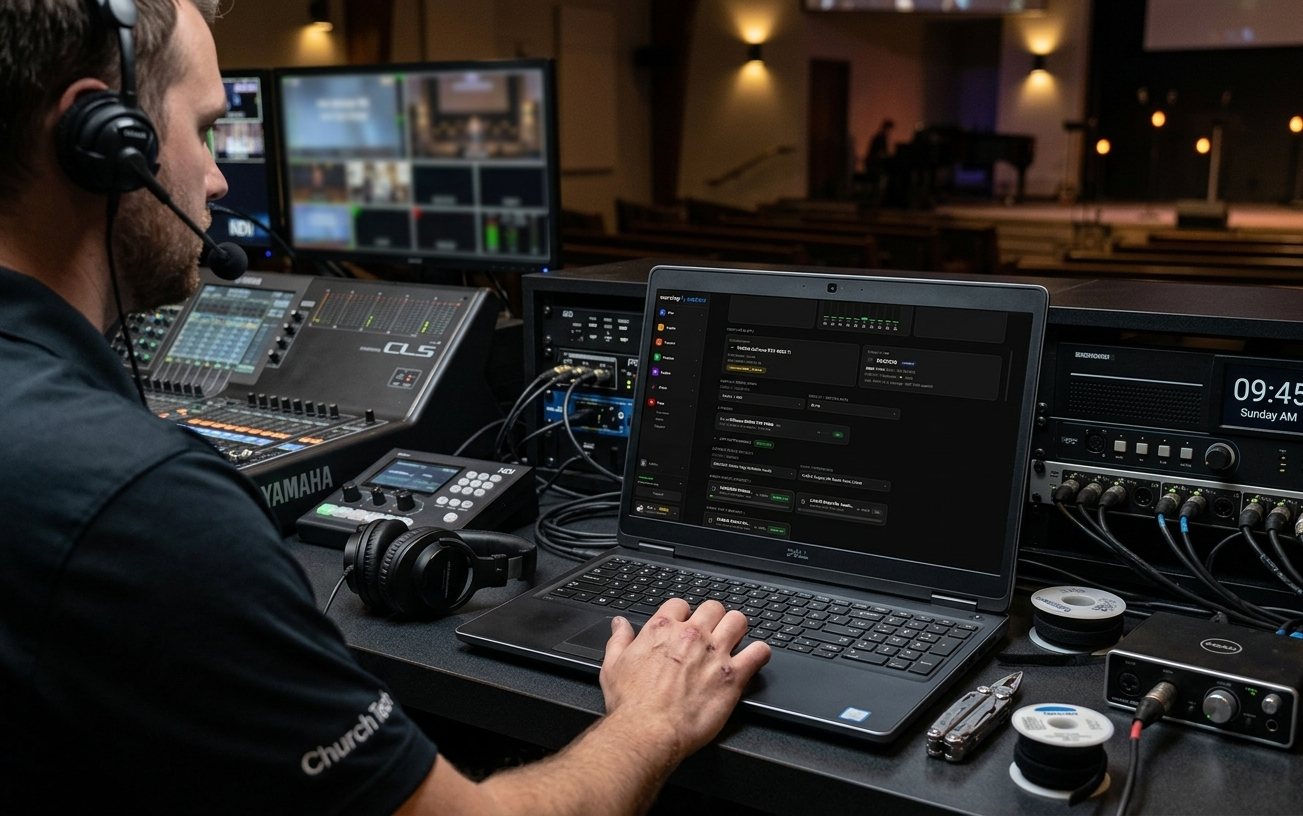
Rehearse for real without polluting your records, split the training between the keyboard and the panel, let automation hold the floor, and debrief from telemetry — the four practices that turn live services into a safe classroom.
Sep 3, 2026 • 6 min read
Operations beginner
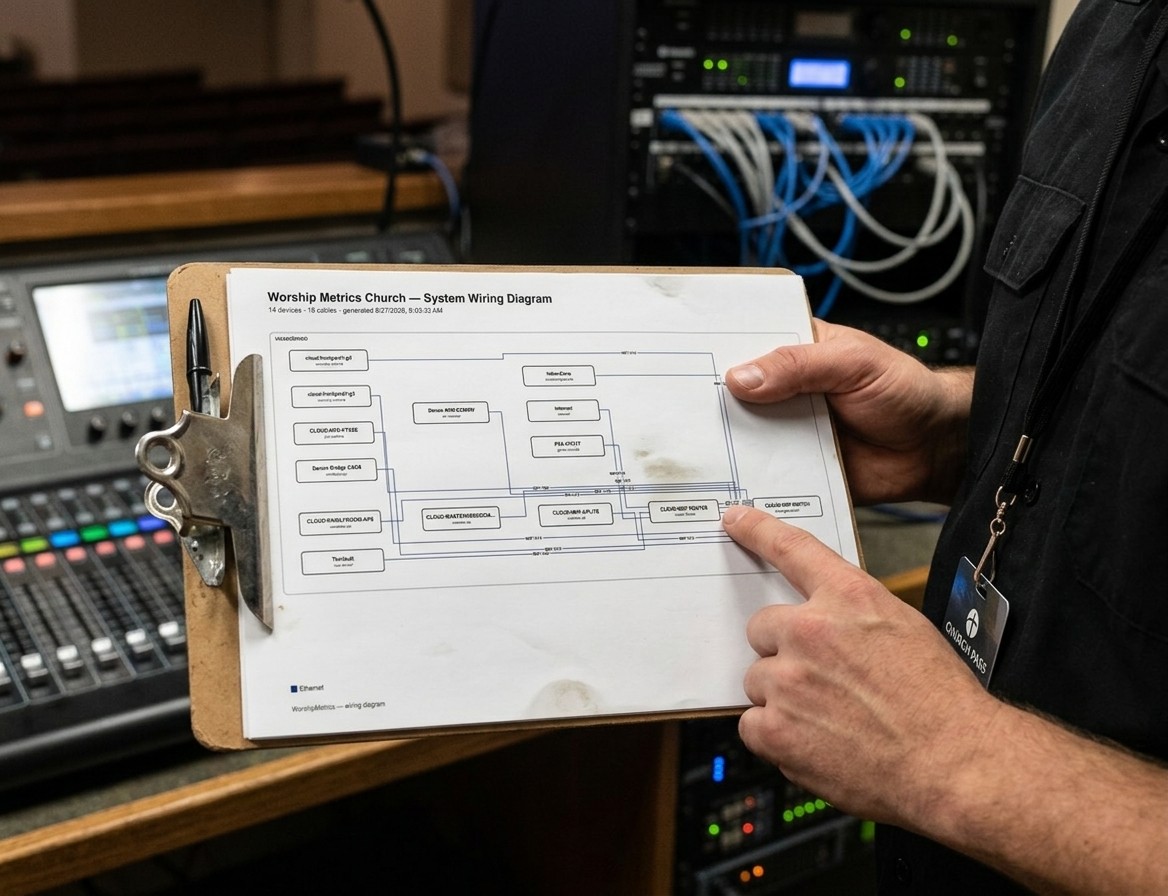
Every solo-operator church is one job change away from silence — because what walks out the door isn't the gear, it's the knowledge. Here's the succession plan that starts working before anyone resigns, and keeps working after.
Sep 3, 2026 • 6 min read
Operations beginner
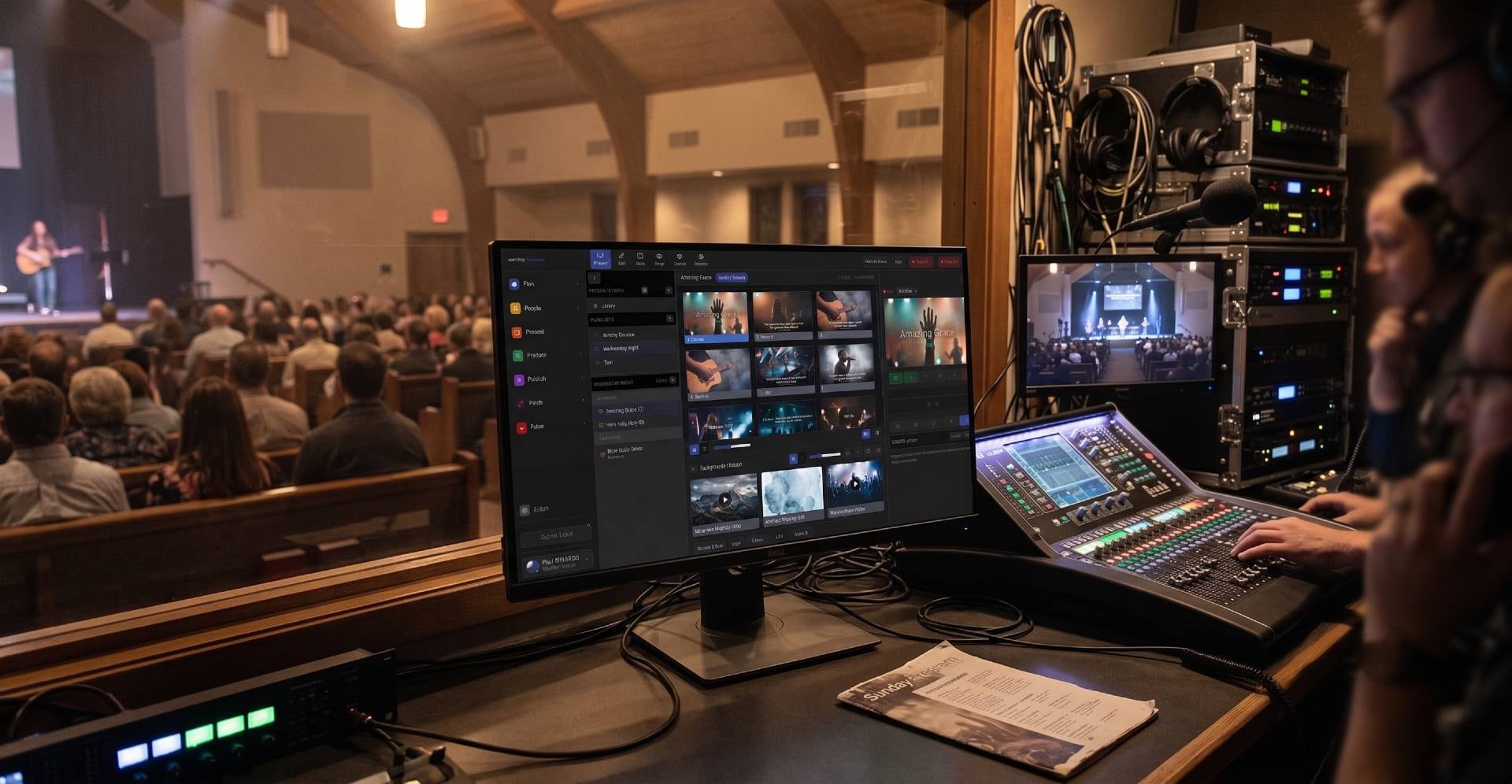
For the parent watching a child hover at the edges of church life: fit is usually a matching problem, not a faith problem. Here's how to read your kid's wiring — and the serving paths, including some most churches forget to mention, where that wiring belongs.
Sep 3, 2026 • 6 min read
Operations beginner
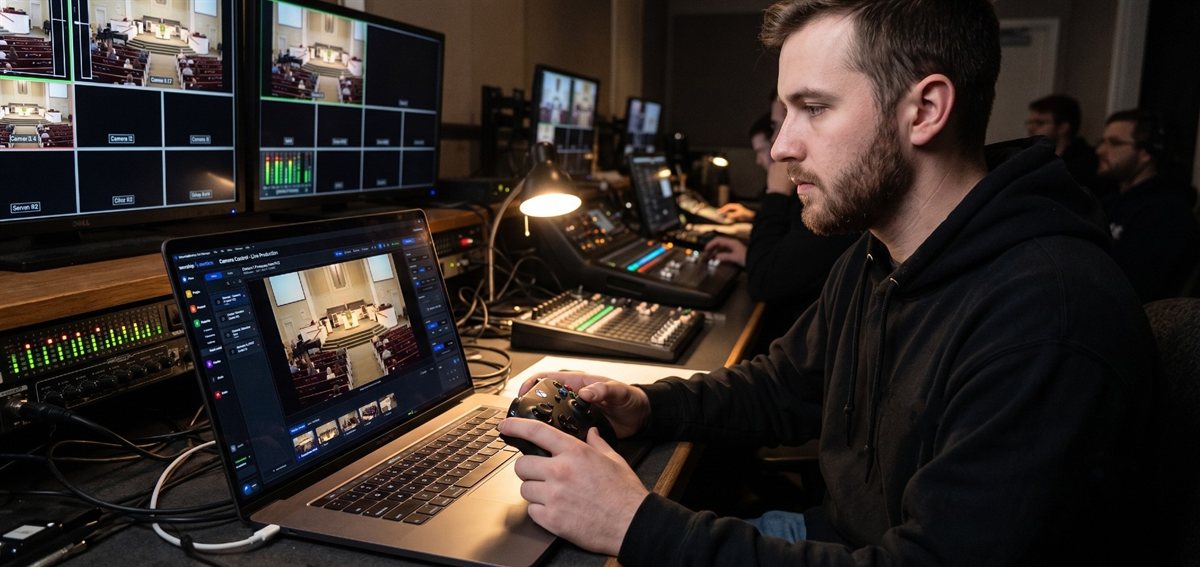
Games gather students; they don't keep them. What keeps them is being needed — and the churches quietly winning at engagement have discovered that a real job on the tech crew out-retains another round of dodgeball every time.
Sep 3, 2026 • 6 min read
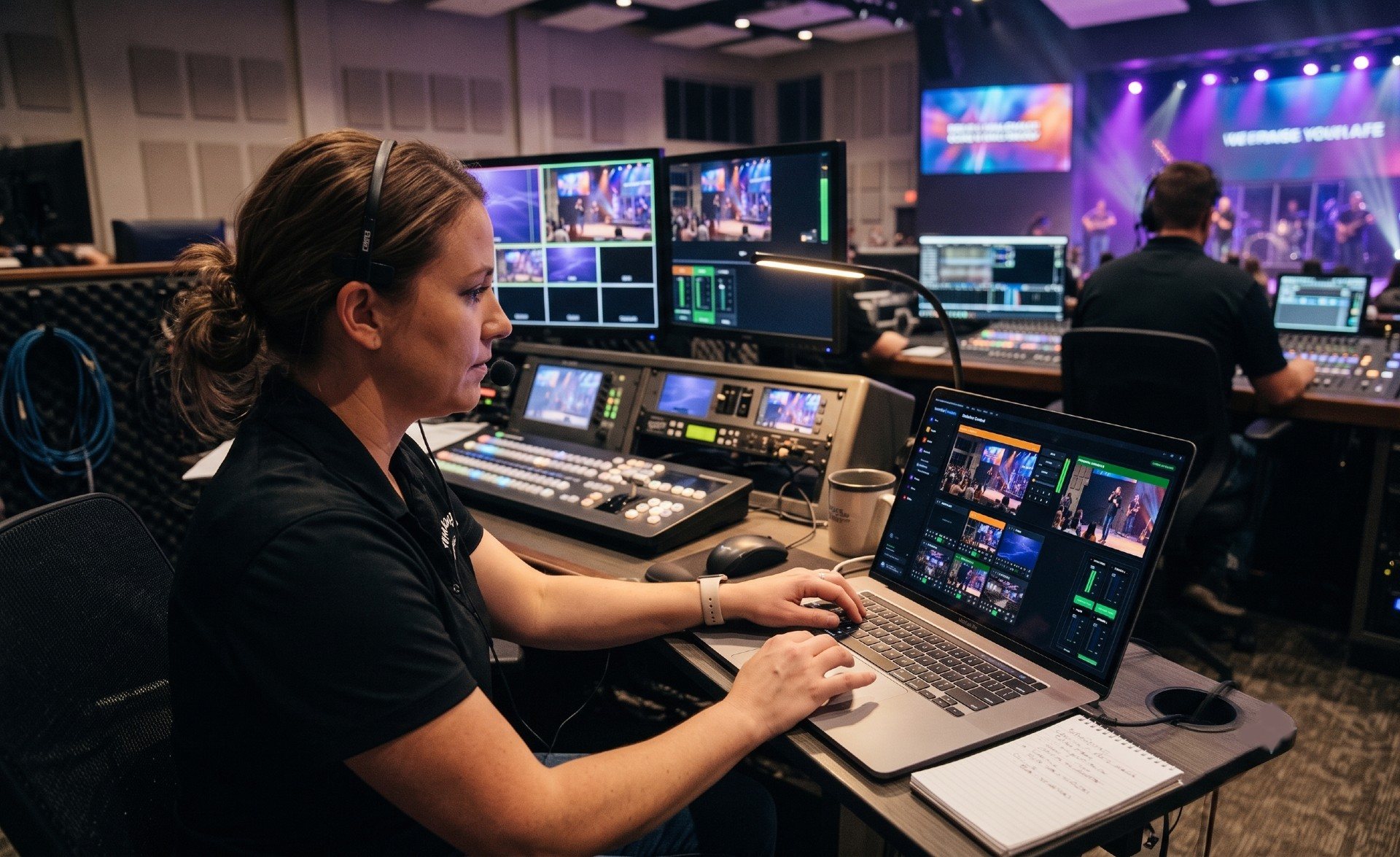
Operations beginner
A nervous volunteer's first solo Sunday on the stream seat, hour by hour — what the booth actually asked of her, what the booth caught for her, and why the scariest moment of the morning turned out to be a non-event.
Sep 2, 2026 • 6 min read
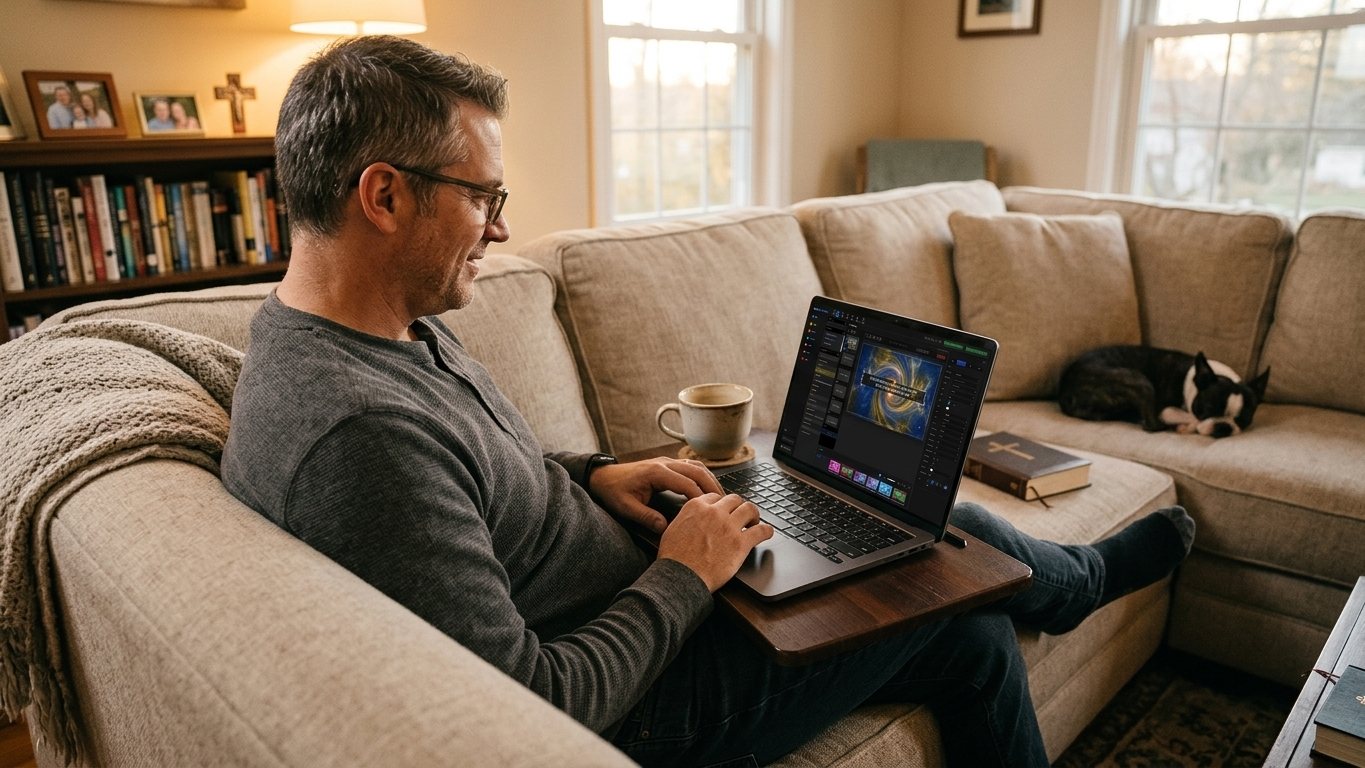
Operations beginner
Monday's ninety-second dashboard check, Wednesday's guest follow-up list, Thursday's sermon clip, and a board meeting armed with real year-over-year attendance — one pastor's week, told through the numbers that used to be guesses.
Sep 2, 2026 • 6 min read
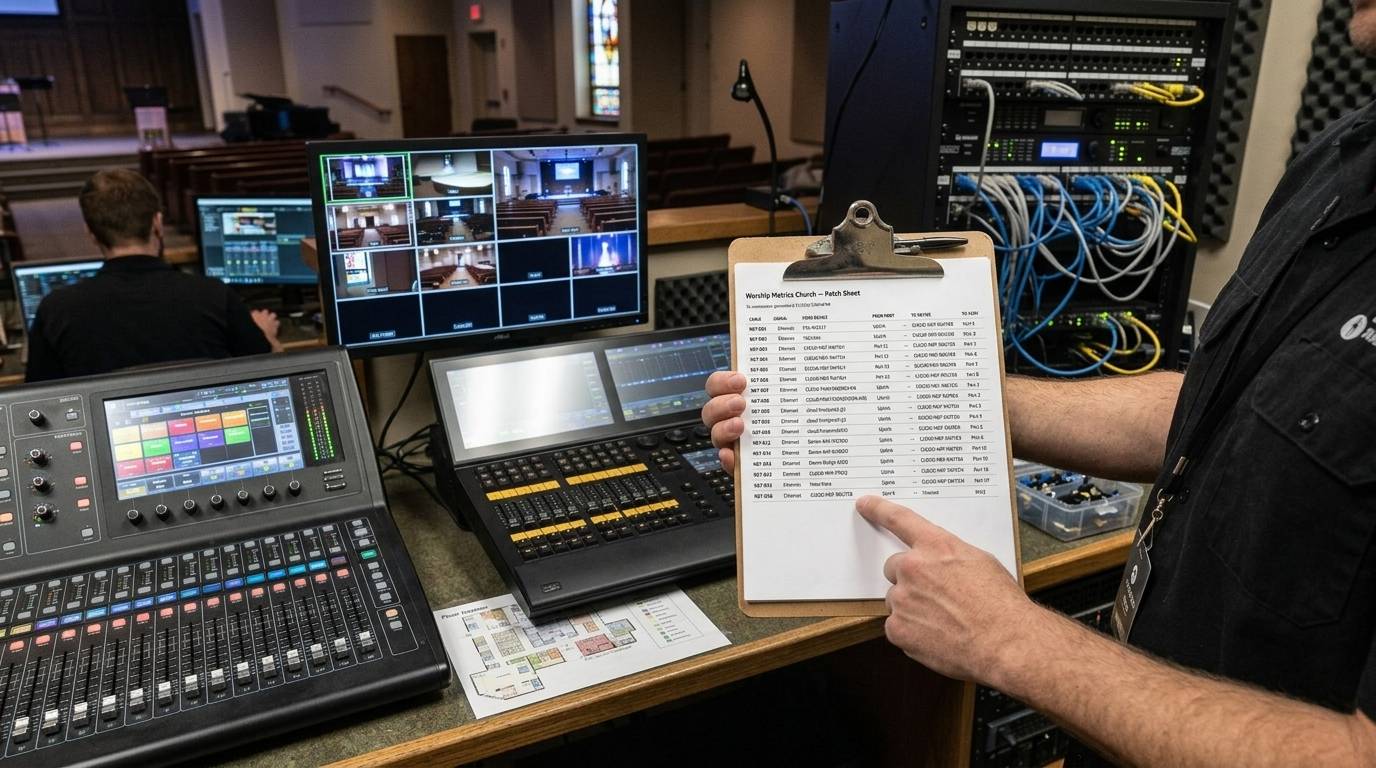
Operations beginner
Ninety minutes on a quiet Tuesday — alert history, the self-healing log, link speeds, disk trends, and next month's volunteer grid — told as one tech director's actual routine. Sundays are won on Tuesdays.
Sep 2, 2026 • 6 min read
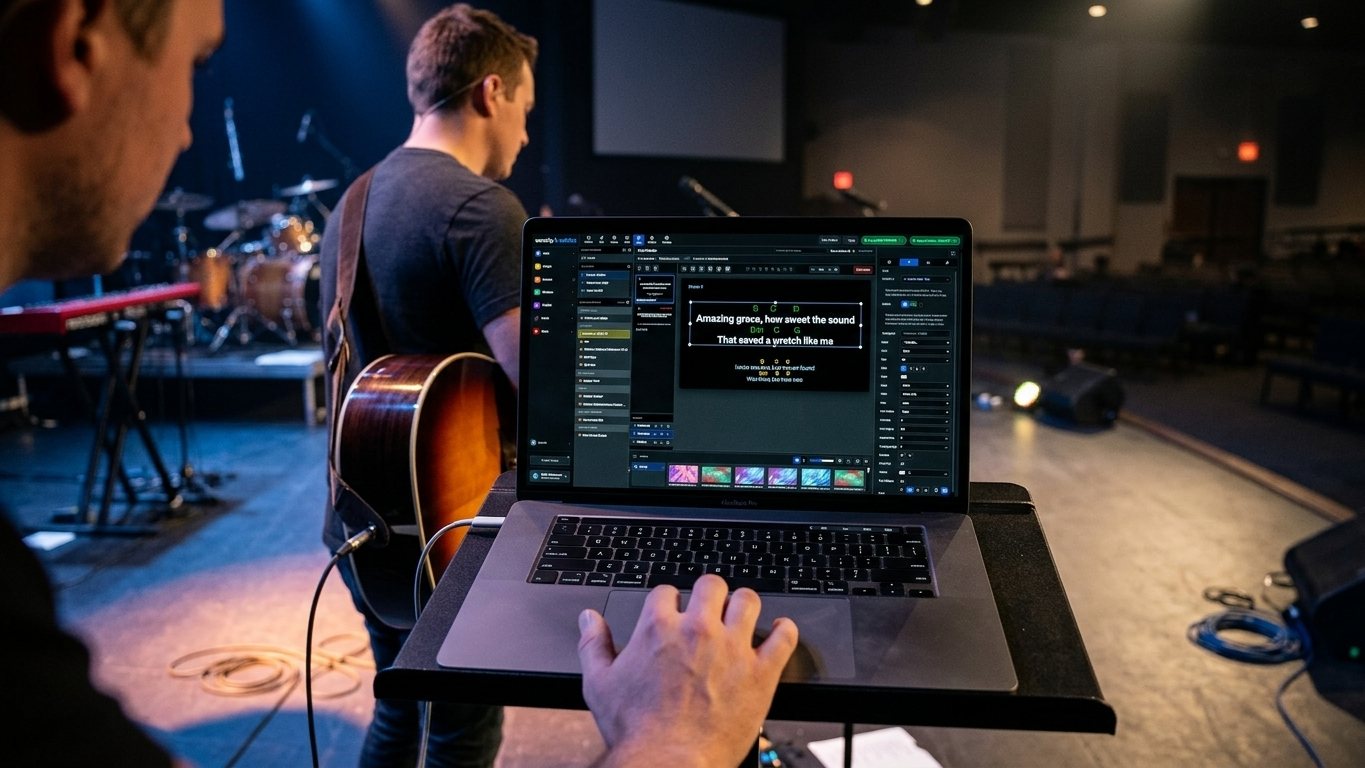
Operations beginner
Setlist, keys, charts, and a staffed team for the month — one worship leader's Thursday planning hour, told step by step, ending with the part nobody sees: a copyright report that files itself.
Sep 2, 2026 • 6 min read
Operations beginner
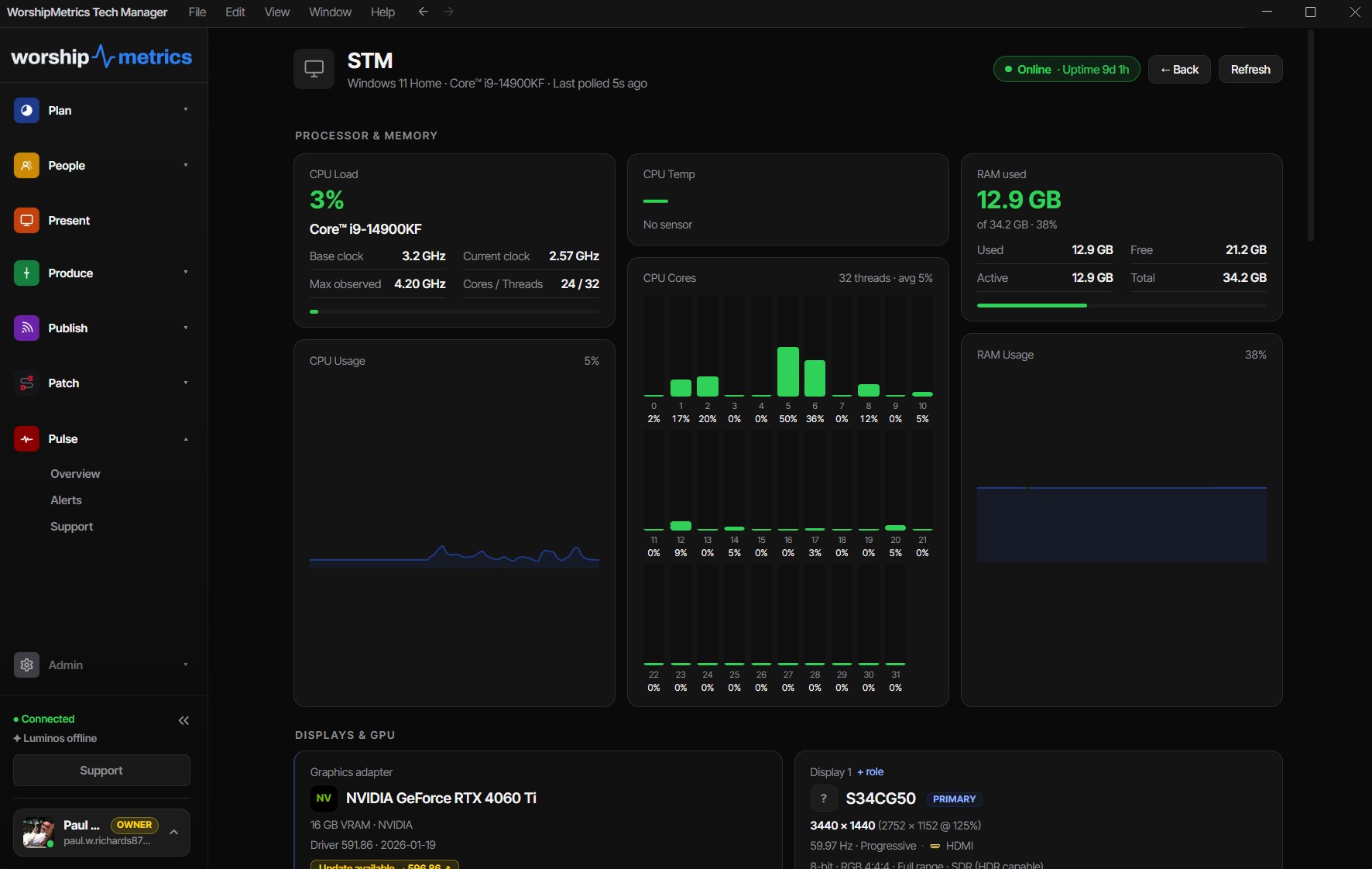
The worship service continues — that's the design principle. What happens next depends on preparation: which failures get a one-tap fix, which page a human, and the small list of things to set up on a calm Tuesday.
Sep 1, 2026 • 6 min read
Operations beginner
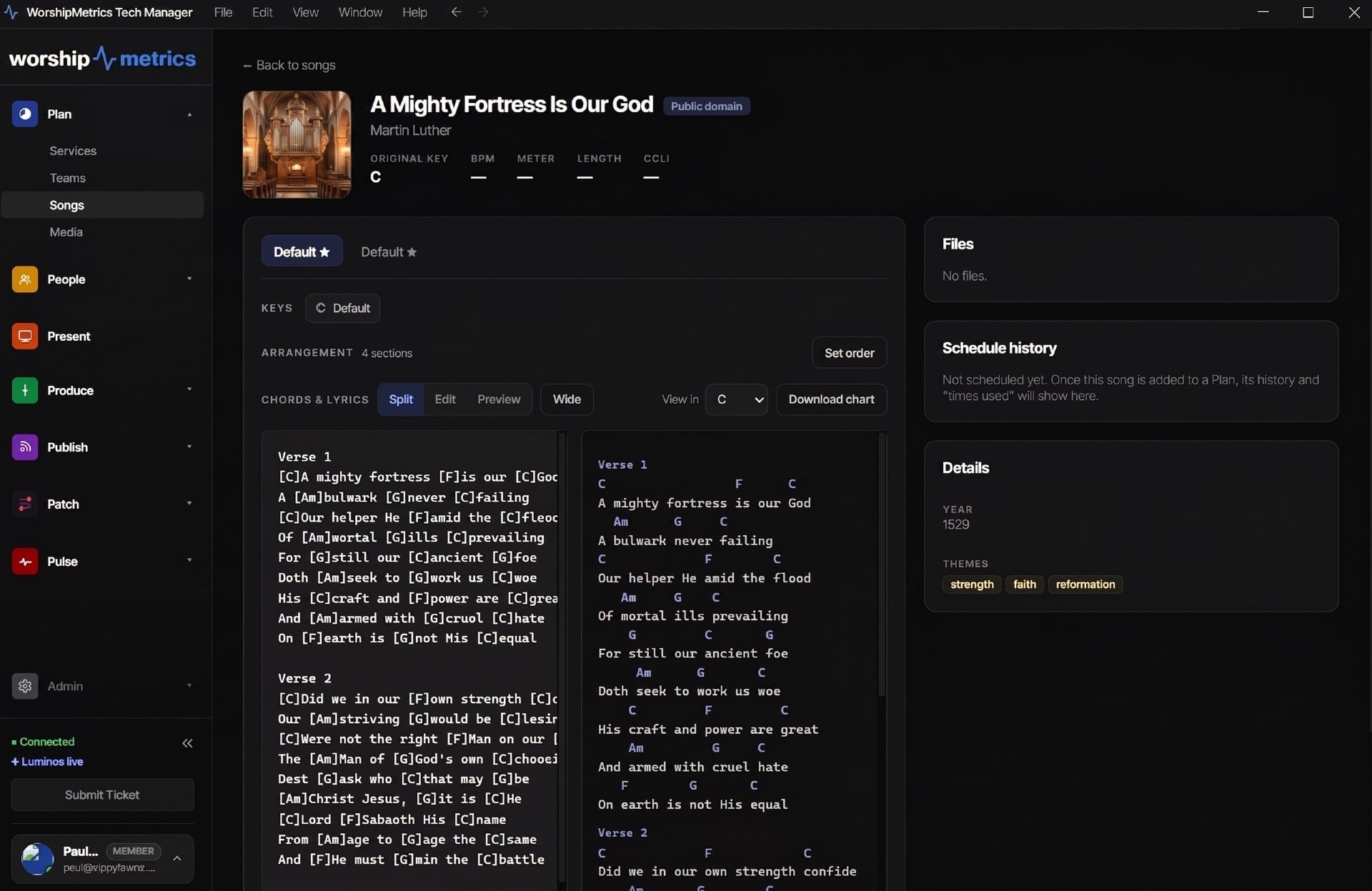
Yes — the license still asks for your usage. But if your software records what was actually sung (not just what was planned), the report becomes a download instead of a year-end archaeology project.
Sep 1, 2026 • 6 min read
Operations beginner
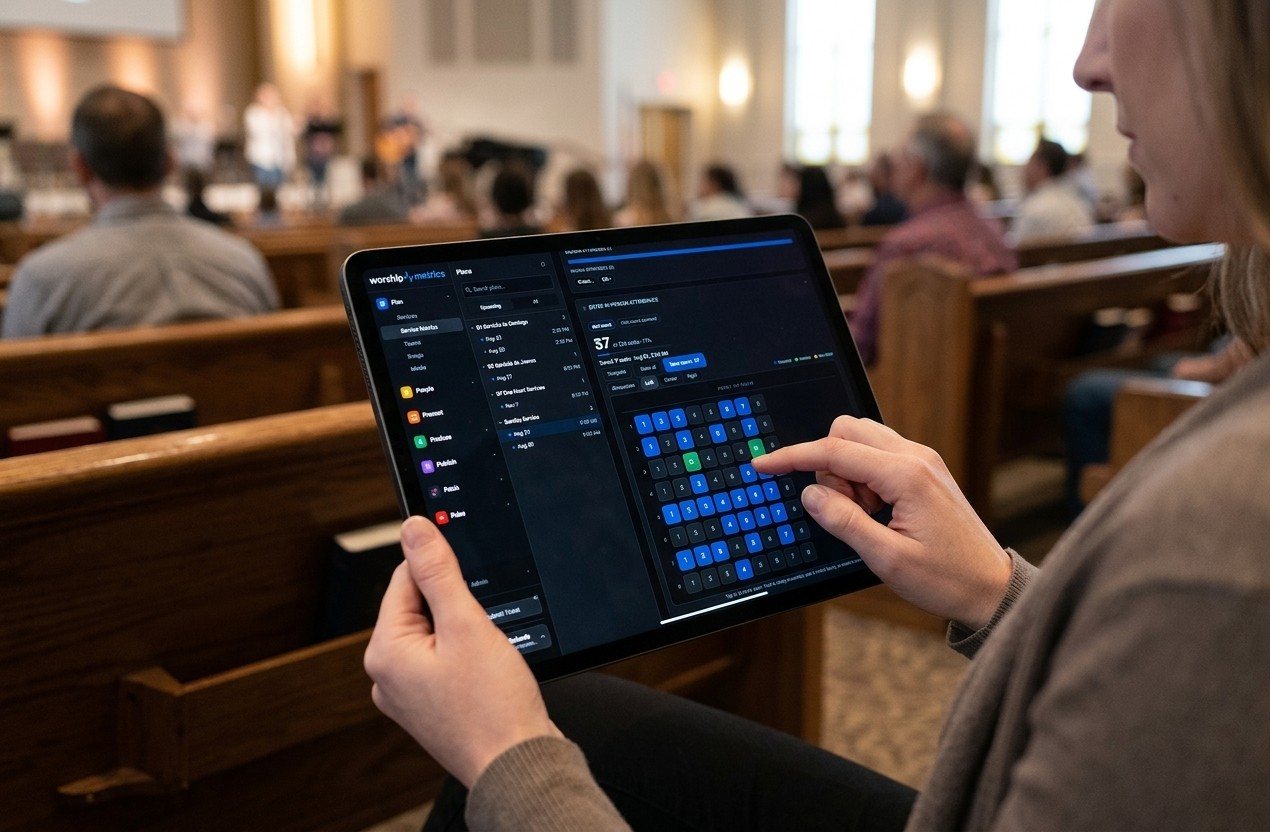
A practical counting policy for hybrid churches: count the room and the stream separately, measure both the same way every week, and report one Total Reach — so 'are we growing?' finally has an honest answer.
Sep 1, 2026 • 6 min read
Operations beginner
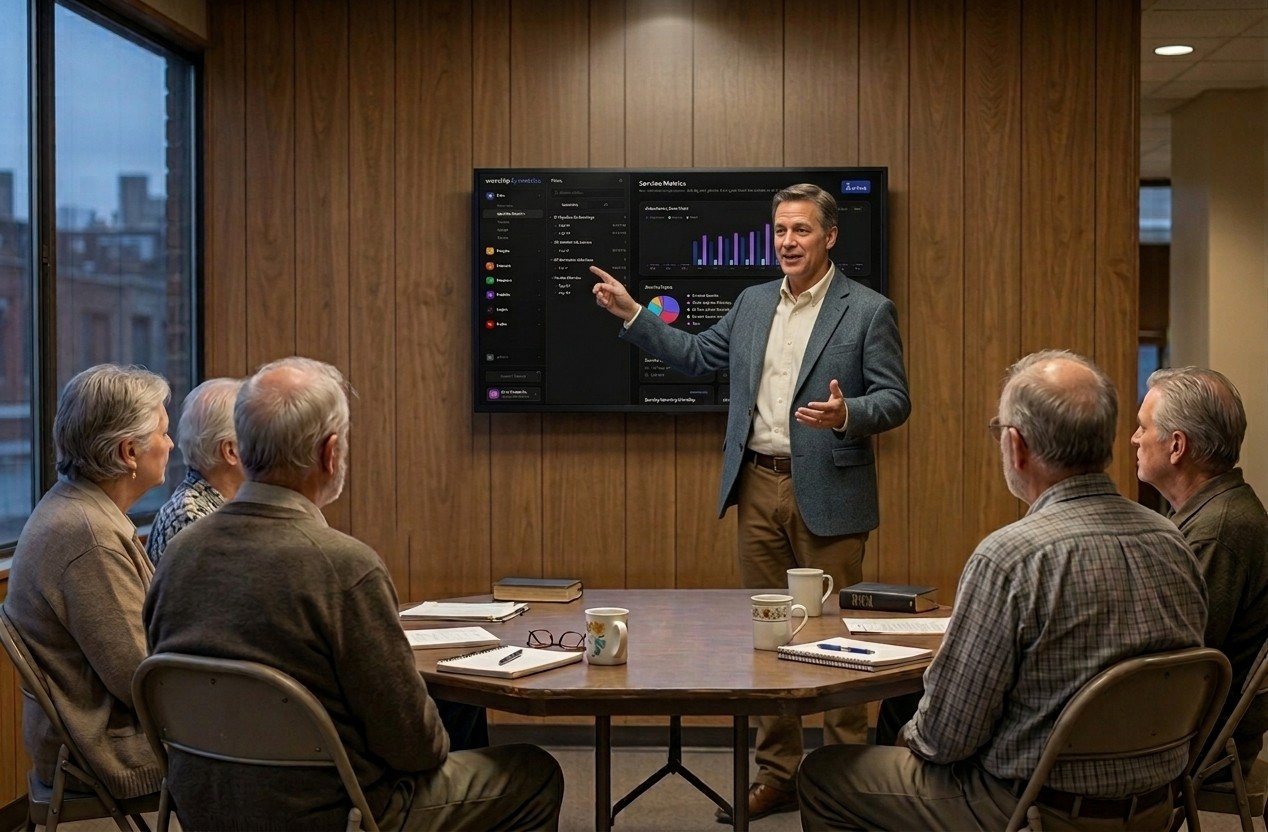
Open one dashboard on Monday morning: total reach for the service, a 0-100 stream health score, and the alert history — the honest answers to 'did it work?' and 'are we growing?' without a single 'hey, how did the stream go?' text.
Sep 1, 2026 • 6 min read
Operations beginner
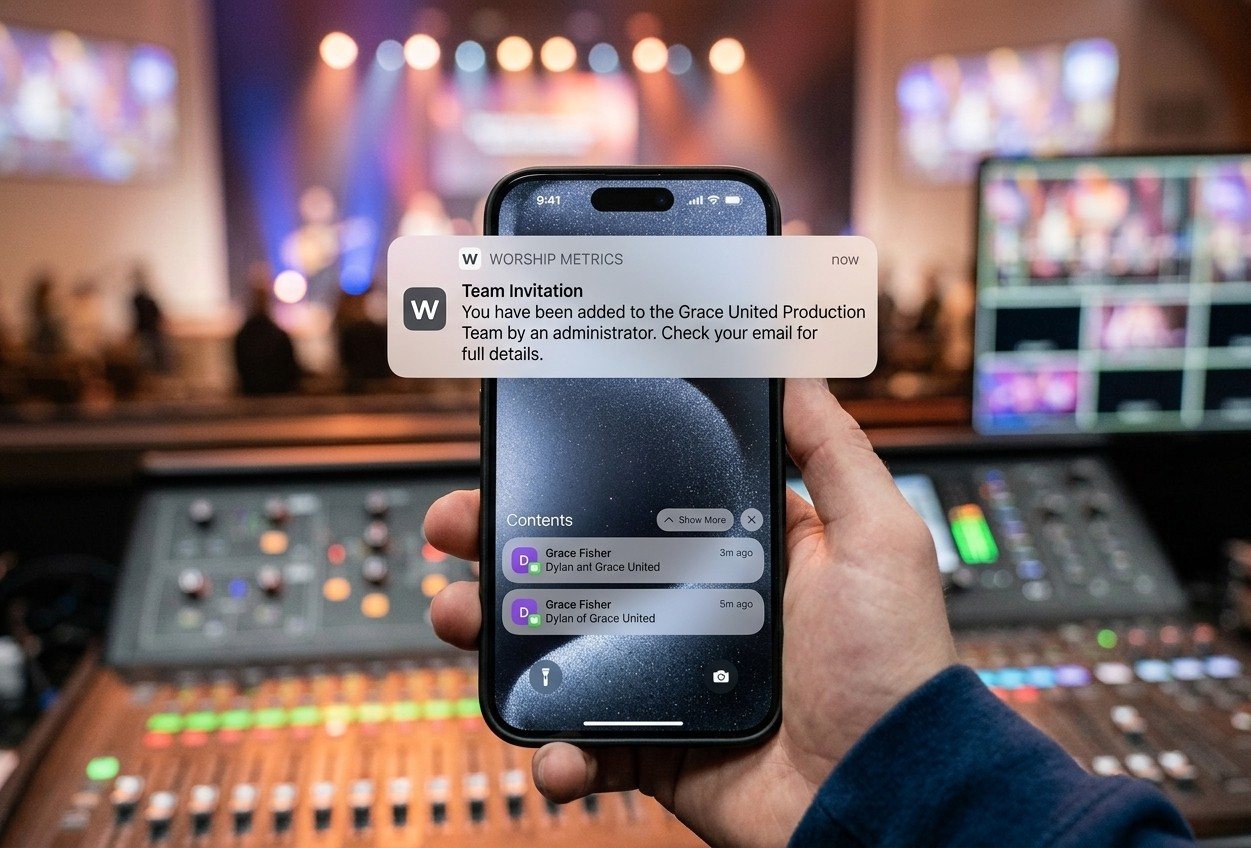
Schedule a month at a time: draft the whole grid silently, send every invite in one batch, and let one-tap responses, decline notifications, and automatic reminders run the follow-through. One hour a month replaces four Thursday-night scrambles.
Sep 1, 2026 • 6 min read
Operations beginner
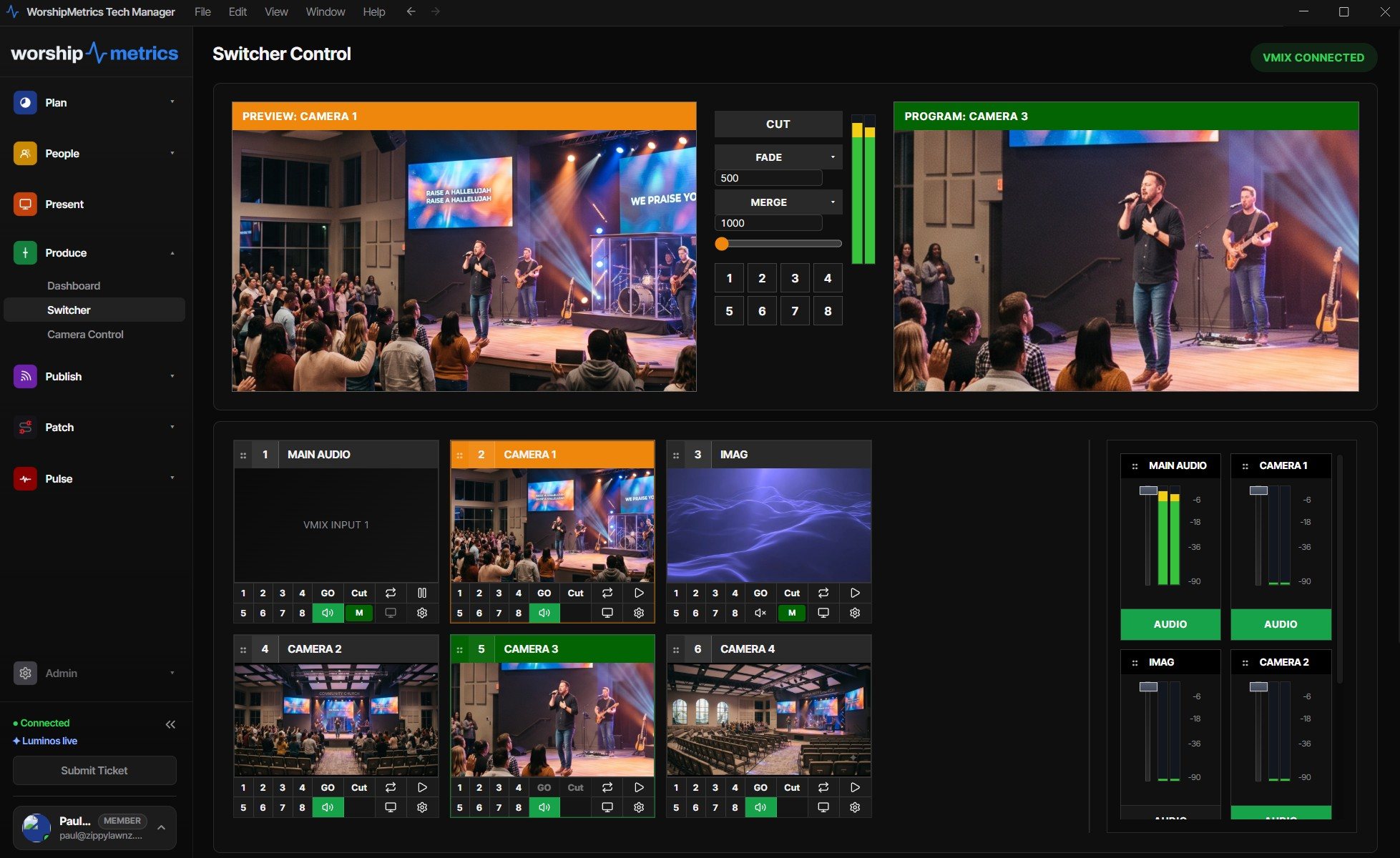
Yes — when the booth is set up so routine failures get caught instantly, help can see the system from anywhere, and knowledge lives in documentation instead of one person's head. Here's what that Sunday actually looks like.
Sep 1, 2026 • 6 min read
Operations intermediate
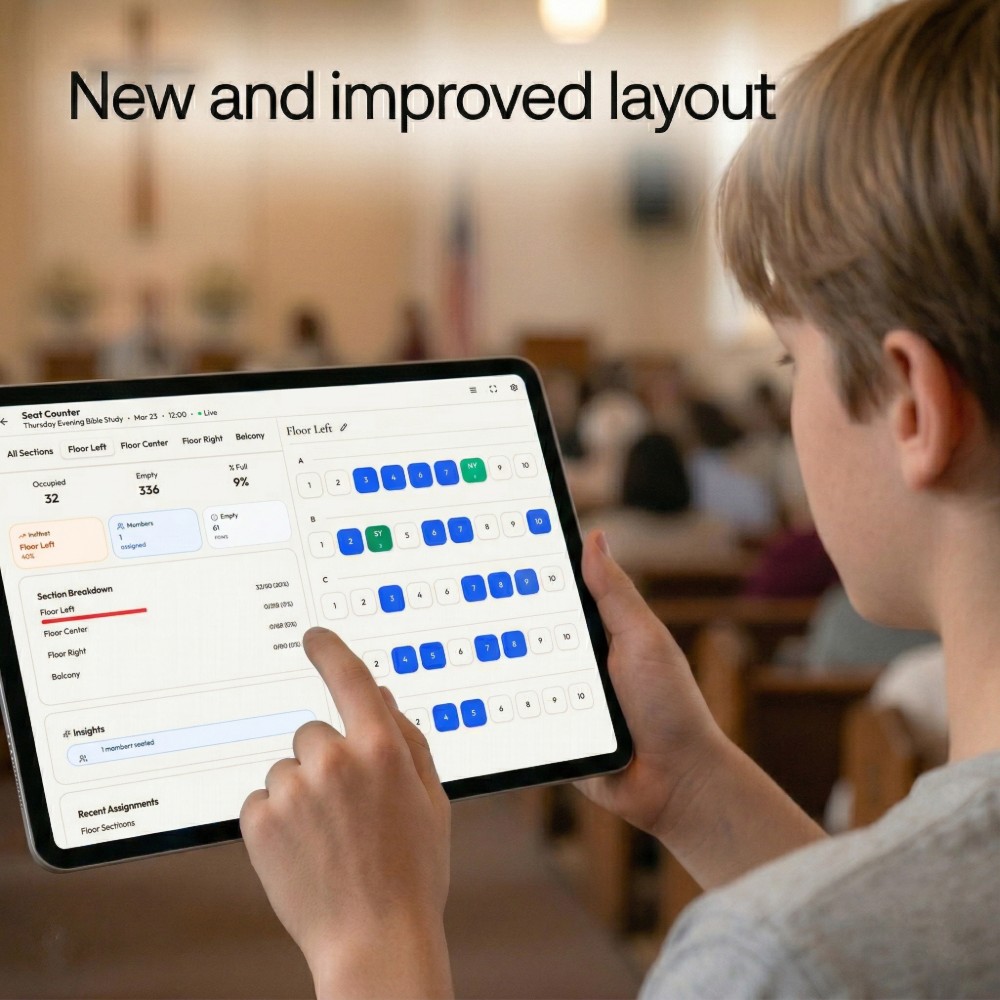
How to set up camera-based attendance counting — choosing between an RTSP camera and a webcam, building seat templates for manual counts, scheduling automatic counts, and triggering a count remotely from the web.
Aug 3, 2026 • 6 min read
Operations intermediate
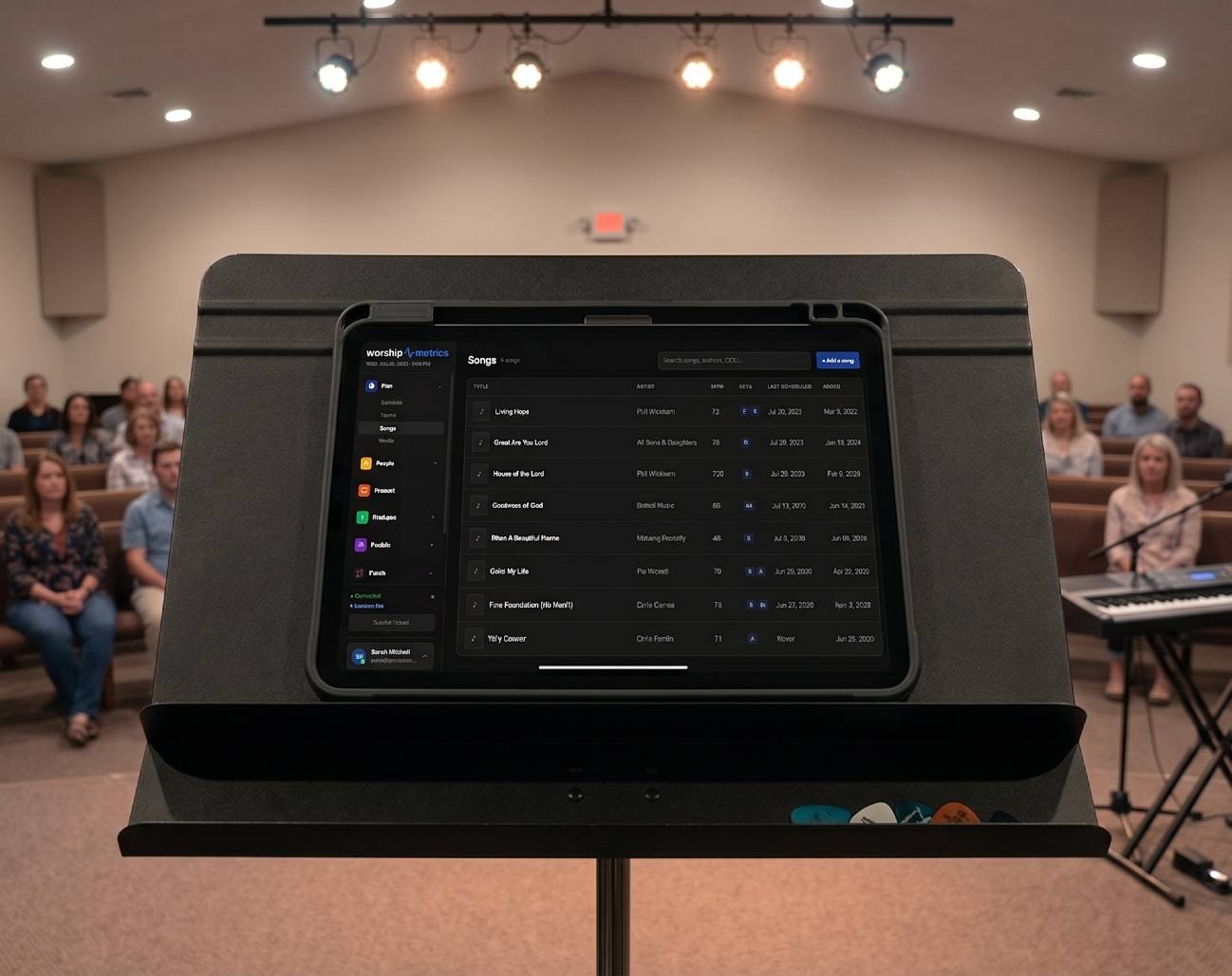
A practical guide to the ChordPro chart format — how non-destructive transpose renders any key from a single stored chart with correct flat and sharp spelling, plus named keys, capo renditions, and auto-generated per-key PDFs.
Aug 3, 2026 • 6 min read
Operations beginner
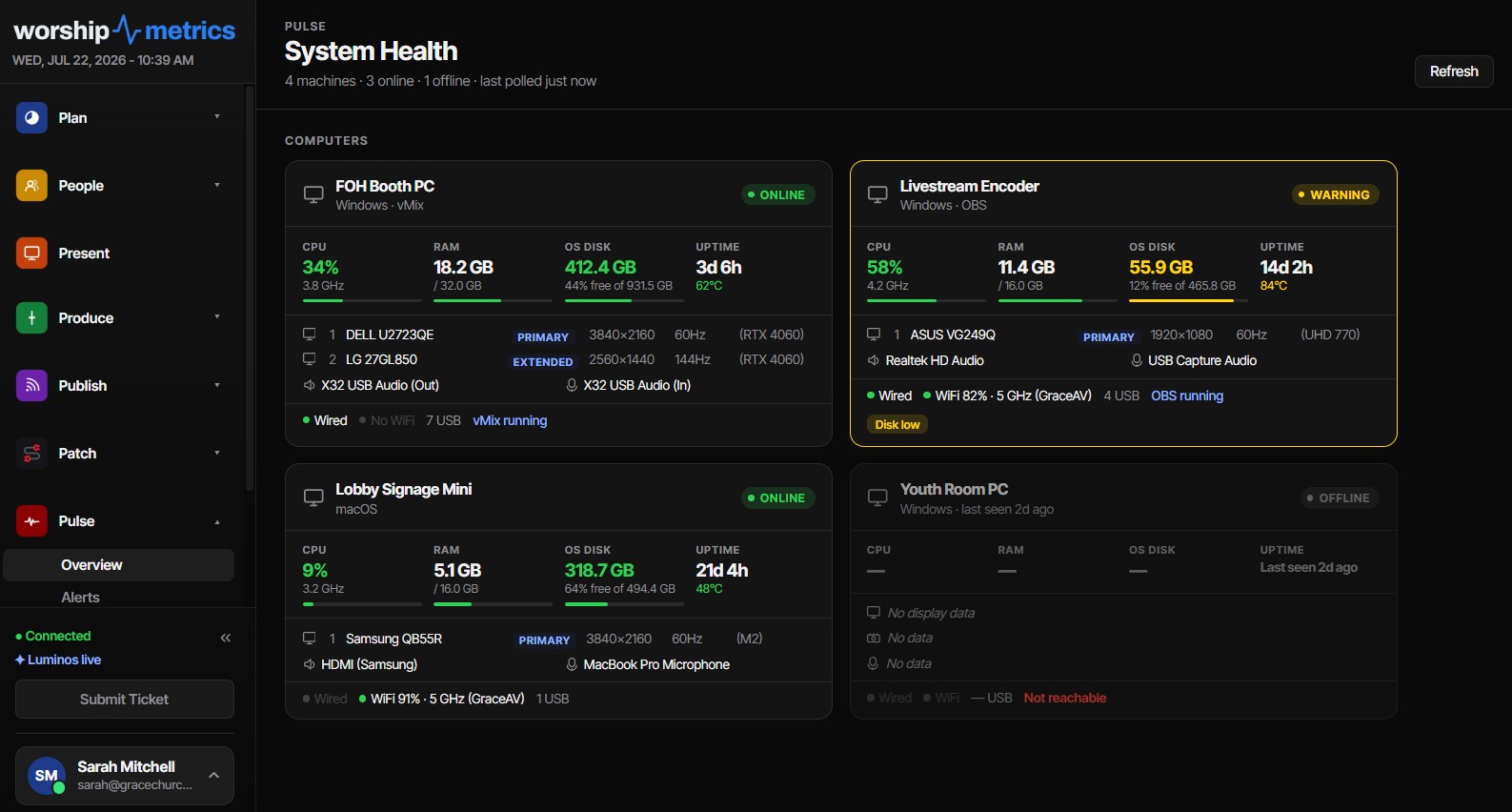
How to get church AV alerts on your phone by text message and email: confirm your number, turn on Text in Pulse > Alerts, choose which alerts reach you, and why email always goes out.
Aug 3, 2026 • 6 min read
Operations intermediate
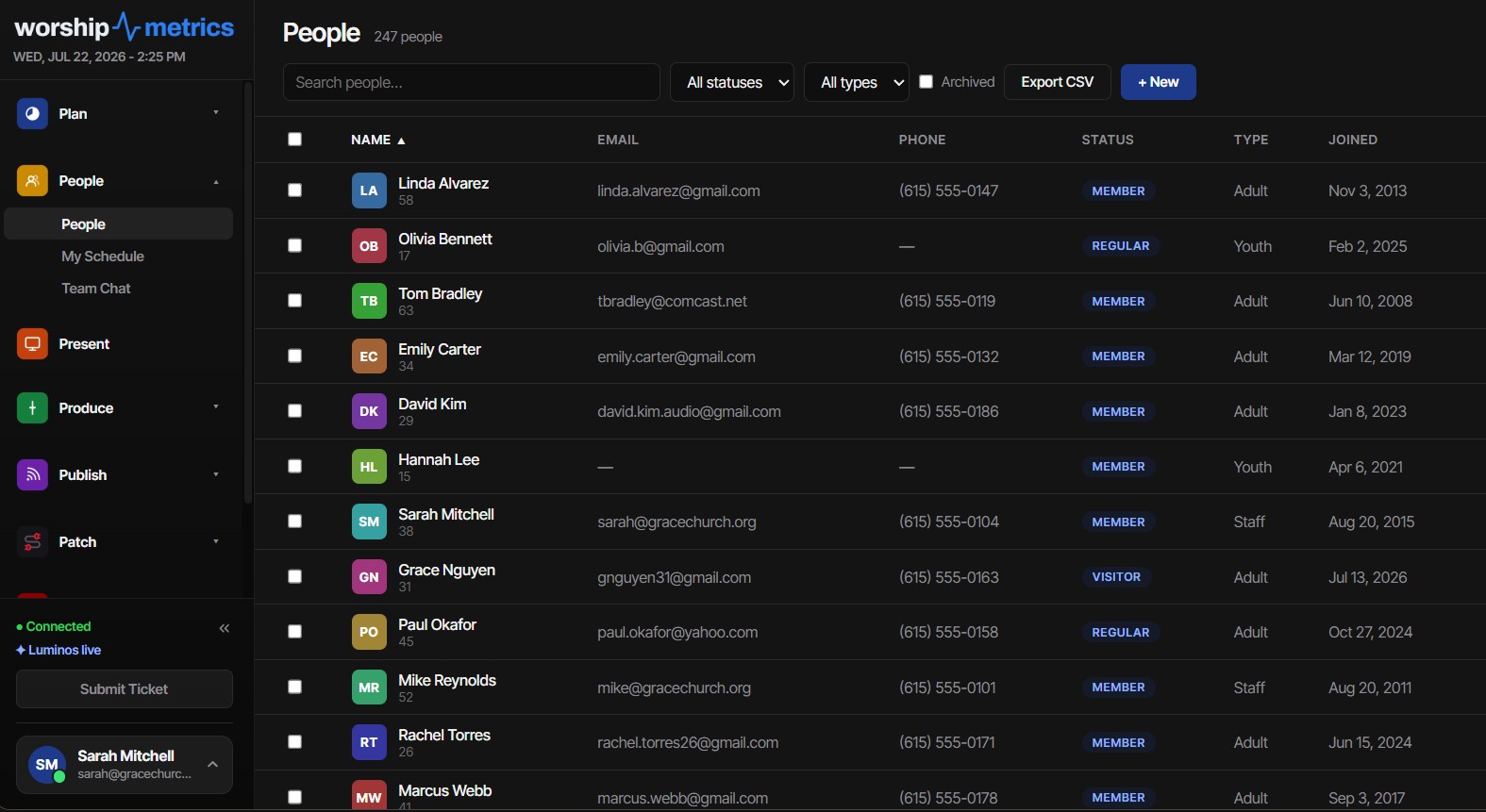
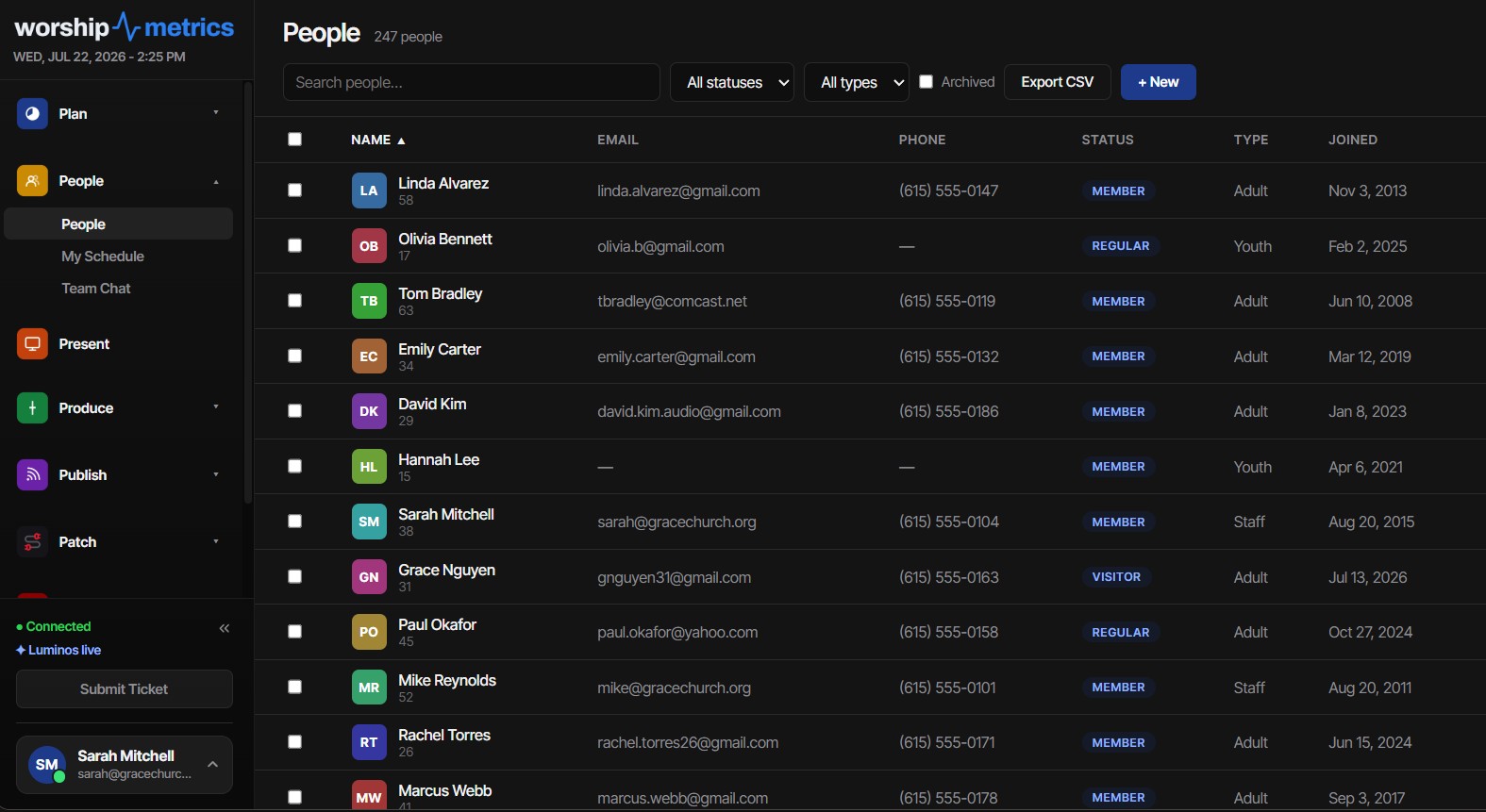
How WorshipMetrics connects each sign-in account to the right directory profile — deterministic invites, the unambiguous-email-match rule, shared household emails, and how to correct a wrong link.
Aug 3, 2026 • 6 min read
Operations beginner
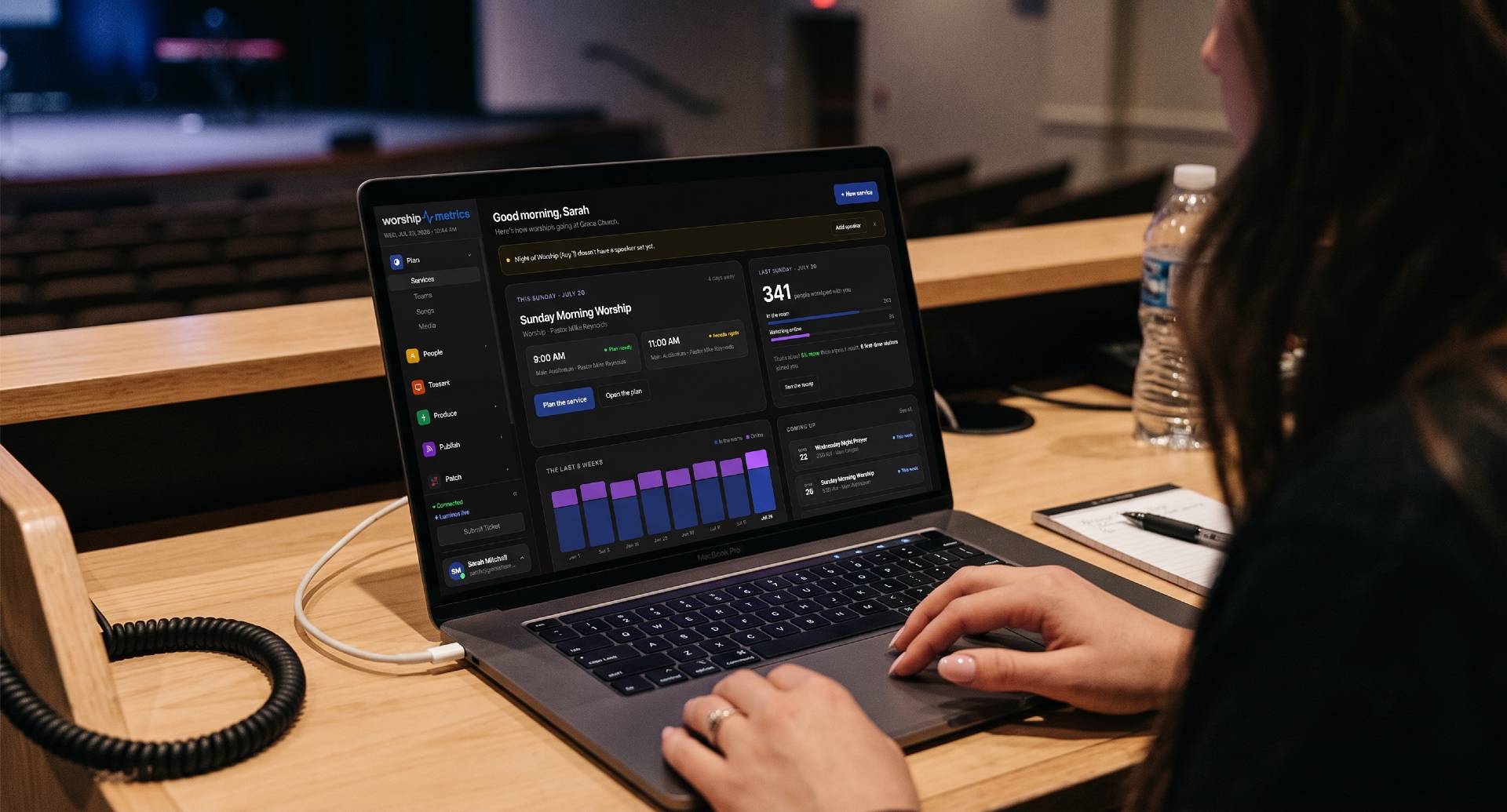
How the live plan runner tells a Thursday walkthrough from a Sunday service — draft vs committed runs, the 12-hour auto-classification window, locked timings, and how to recover from an accidental start.
Aug 3, 2026 • 6 min read
Operations beginner
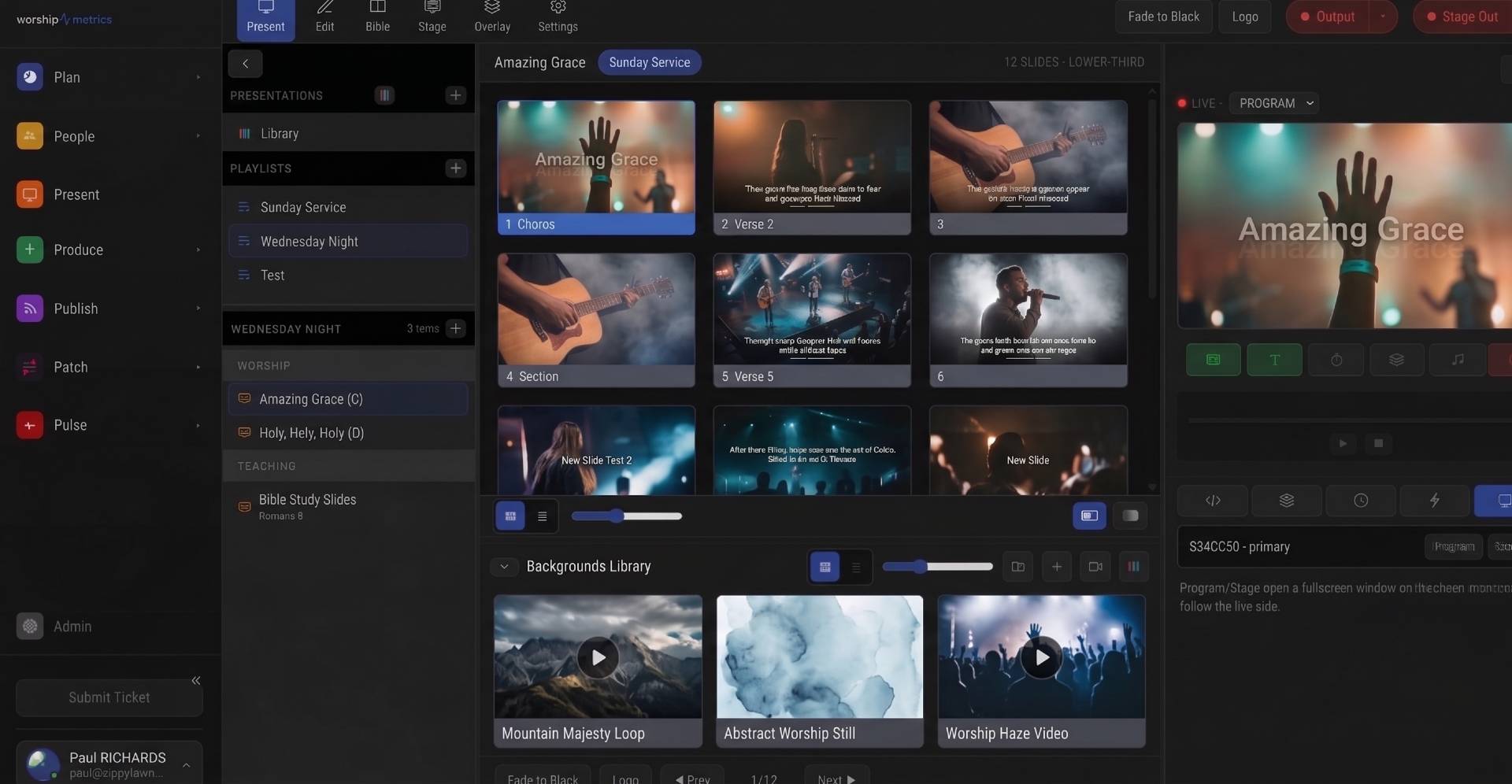
How ProPresenter .pro4, .pro5, .pro6, and ProPresenter 7 files import into WorshipMetrics — what carries over, the MultiTracks licensing exception, and a checklist for a clean migration weekend.
Aug 3, 2026 • 6 min read
Operations intermediate
How to plan a multi-site church directory — a real time zone for each campus, who belongs where, and patterns for shared versus campus-specific teams. Separate campus support in WorshipMetrics is coming soon.
Aug 3, 2026 • 6 min read
Operations beginner
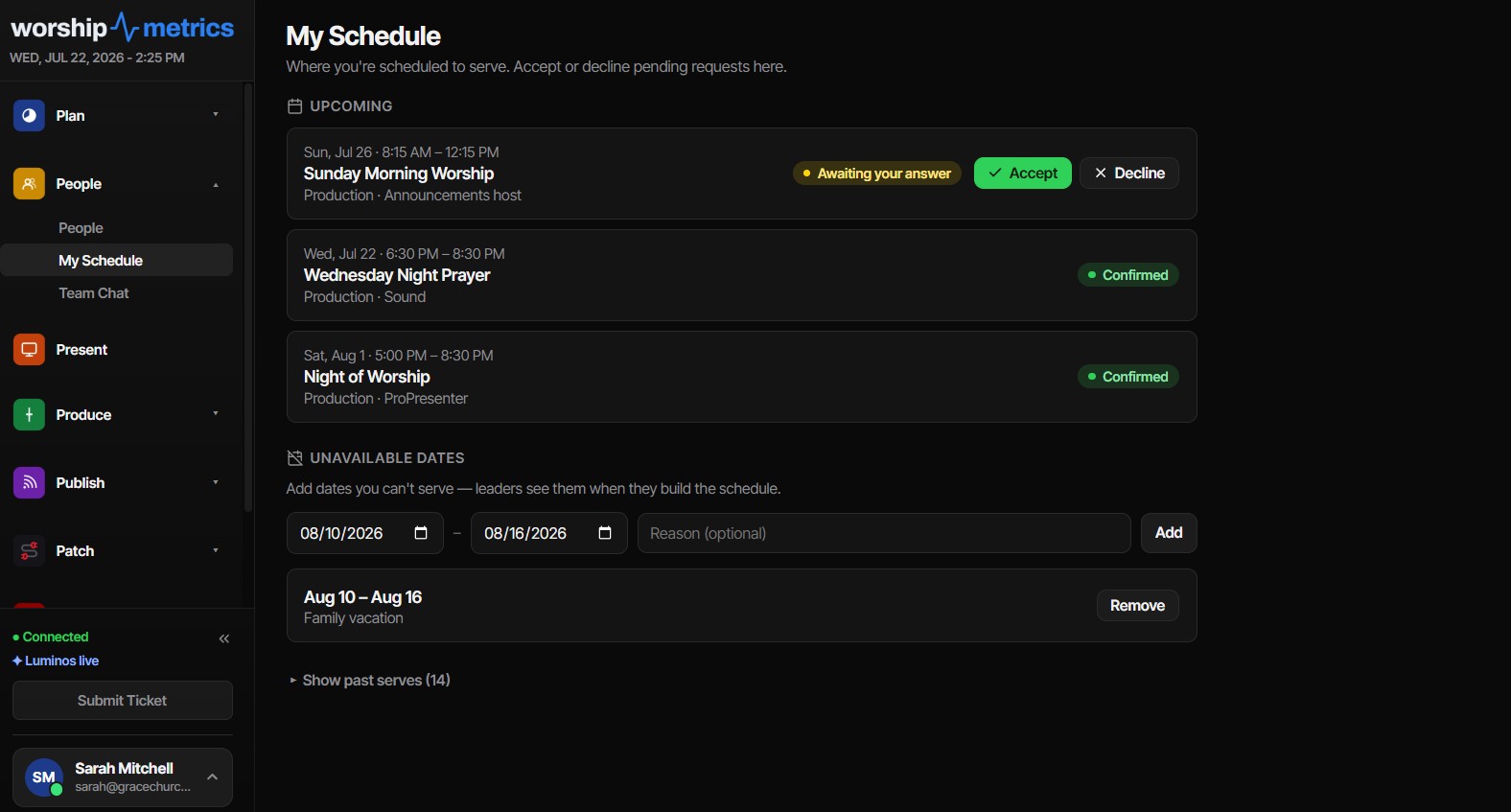
How to draft a full month of serving-team assignments in a positions-by-dates grid — quietly, with blockout and double-booking warnings — then send every invite in one batch.
Aug 3, 2026 • 6 min read
Operations beginner
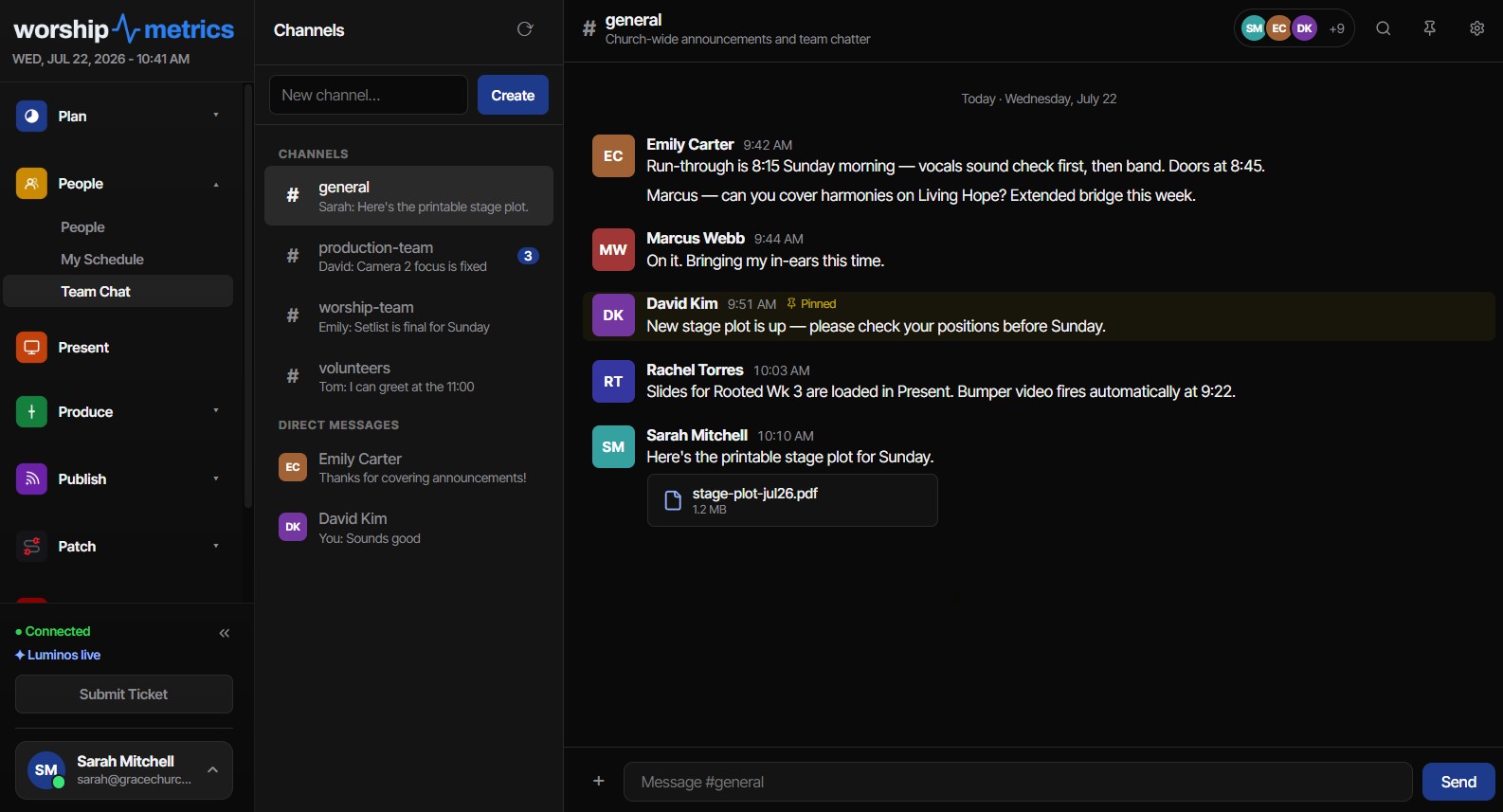
A plain-language reference for sharing files in WorshipMetrics Team Chat — the supported format families, the 25 MB limit, why SVG and HTML are blocked, and how private storage with expiring links keeps church files safe.
Aug 3, 2026 • 6 min read
Operations beginner
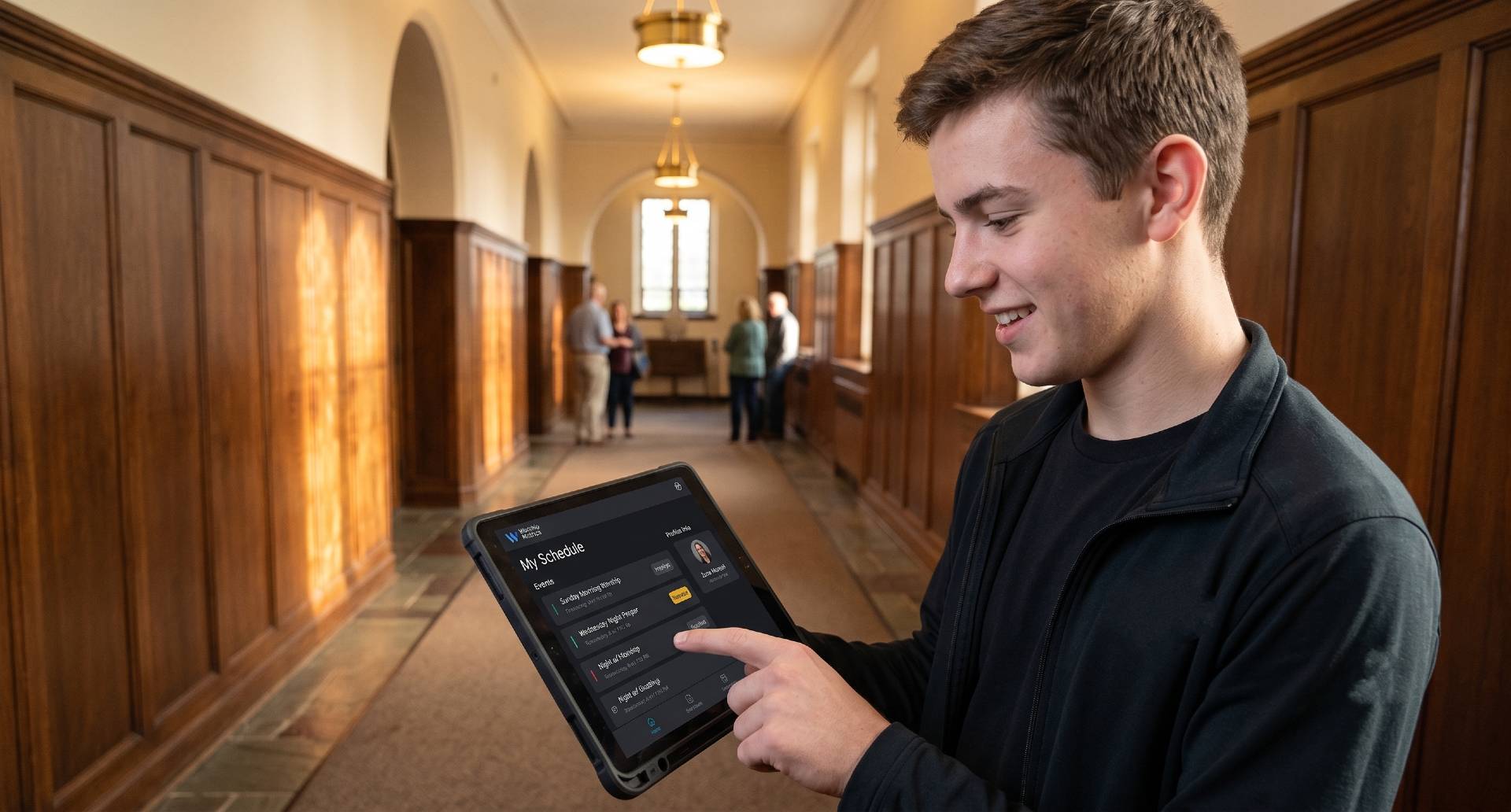
How volunteer scheduling emails work end to end — tokenized accept/decline links that need no login, what a decline triggers, day-before reminders that cannot double-send, unfilled-position nudges, and cancellation notices.
Aug 3, 2026 • 6 min read
Operations beginner
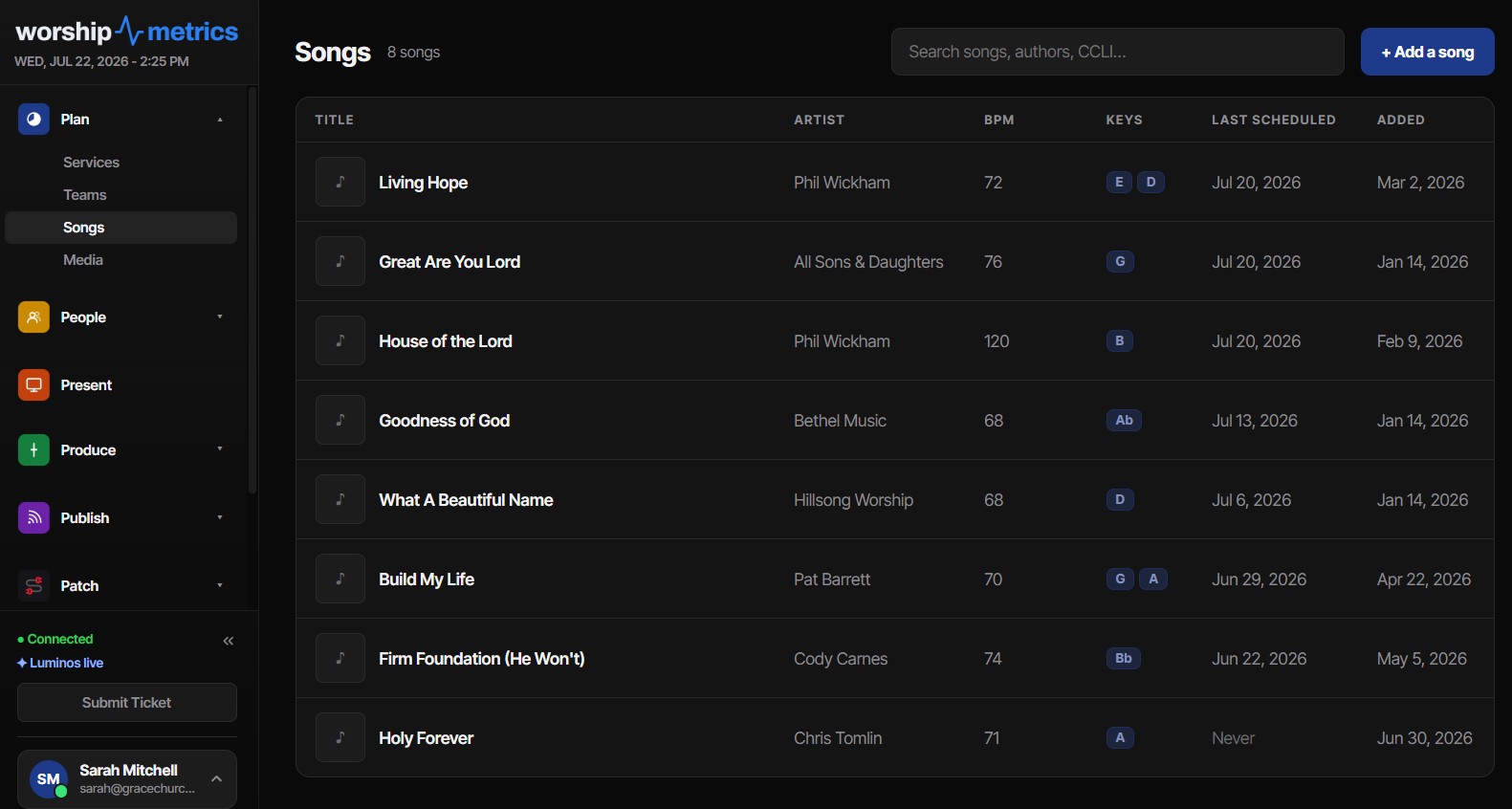
How to build a CCLI usage report from real service evidence — performed, scheduled, and logged songs — and export the trailing-year CSV your renewal asks for.
Aug 2, 2026 • 6 min read
Operations beginner
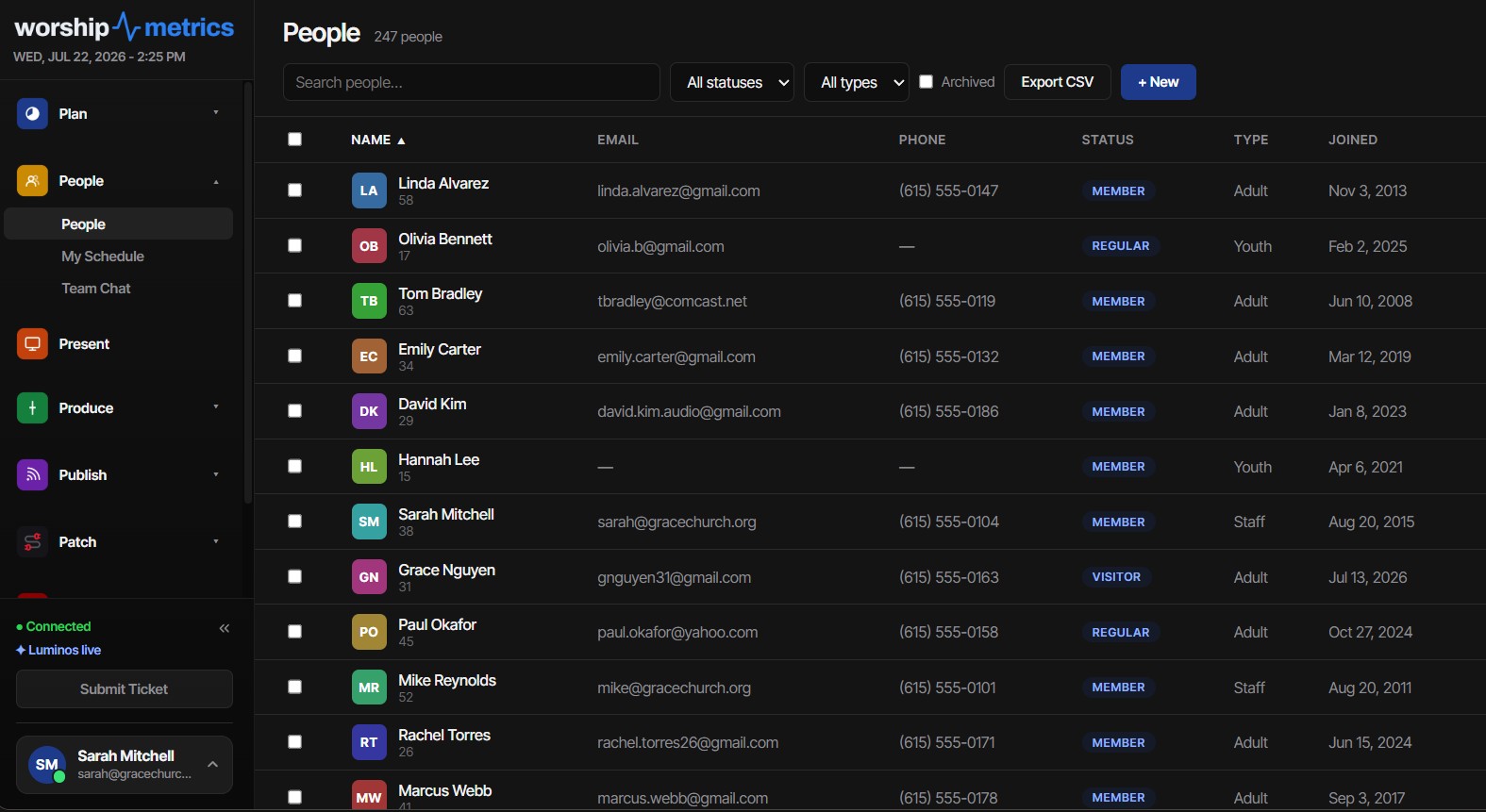
A step-by-step guide to importing your church directory from a CSV file — field mapping, duplicate strategies, round-tripping exports from other systems, and post-import cleanup.
Aug 2, 2026 • 6 min read
Operations beginner
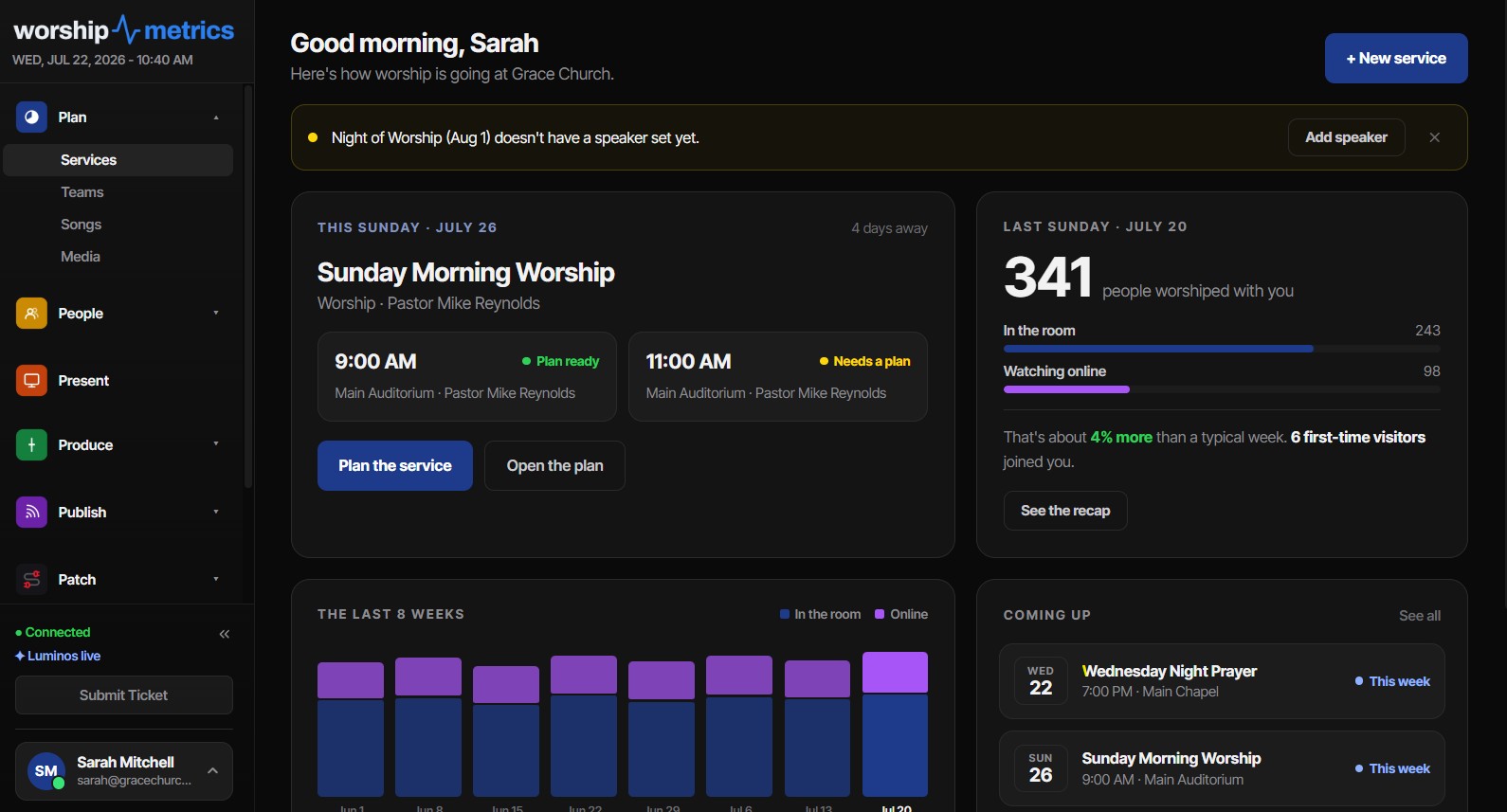
A step-by-step guide to linking Planning Center Services with WorshipMetrics — creating a Personal Access Token, understanding what imports, and how the 5-minute sync keeps plans current.
Aug 2, 2026 • 6 min read
Operations intermediate
The complete reference to every Pulse alert threshold — CPU, RAM, disk, and temperature red lines, hysteresis recovery, offline timing, cooldowns, and how alerts reach your phone.
Aug 2, 2026 • 6 min read
Operations beginner
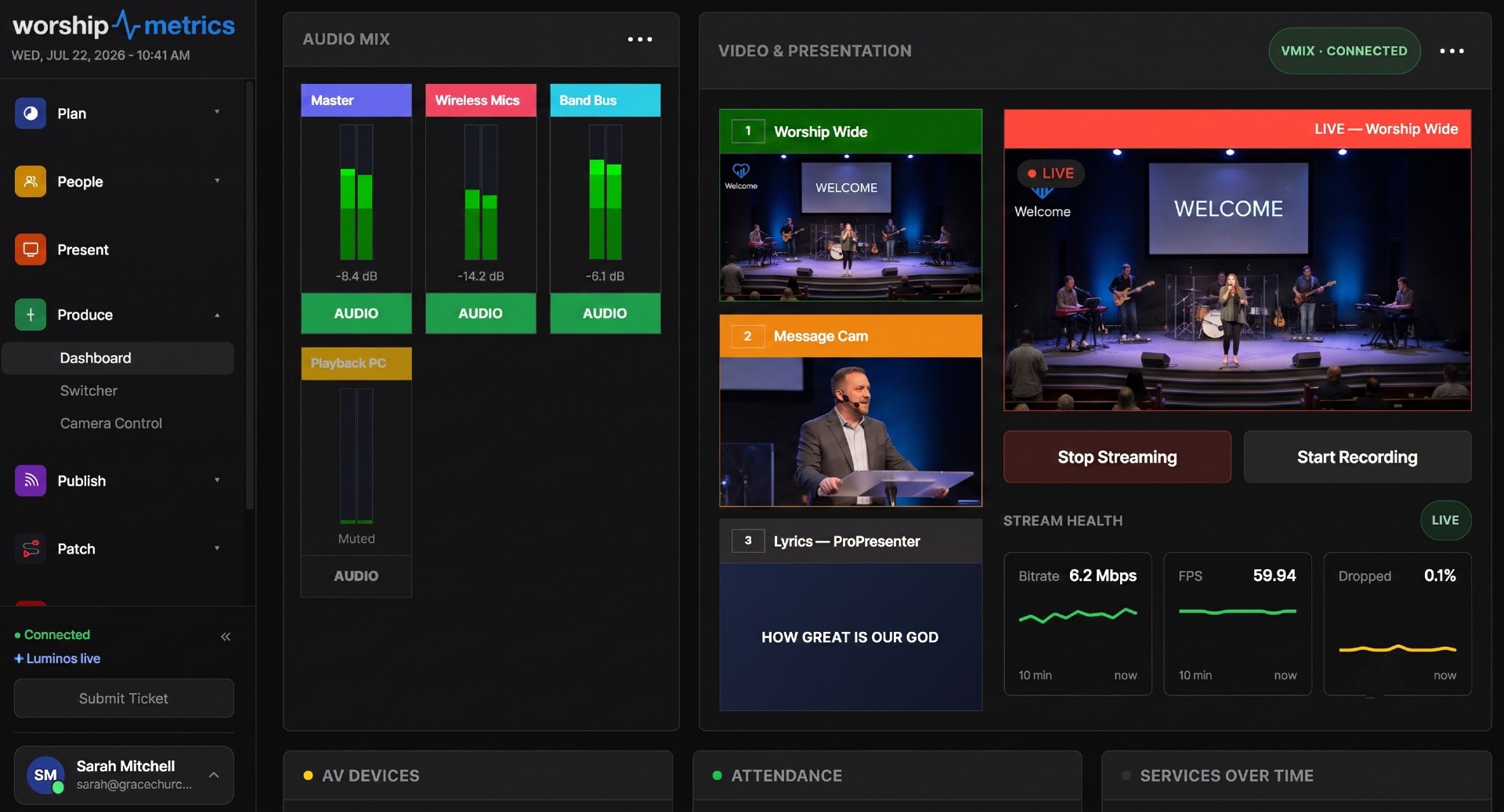
A plain-language tour of Tech Manager's Self Healing — what it watches, the instant prompt when a stream or recording stops unexpectedly, one-tap restart from the booth or your phone, what it deliberately won't do, and why every offer and answer lands in your history.
Aug 2, 2026 • 6 min read
Operations beginner
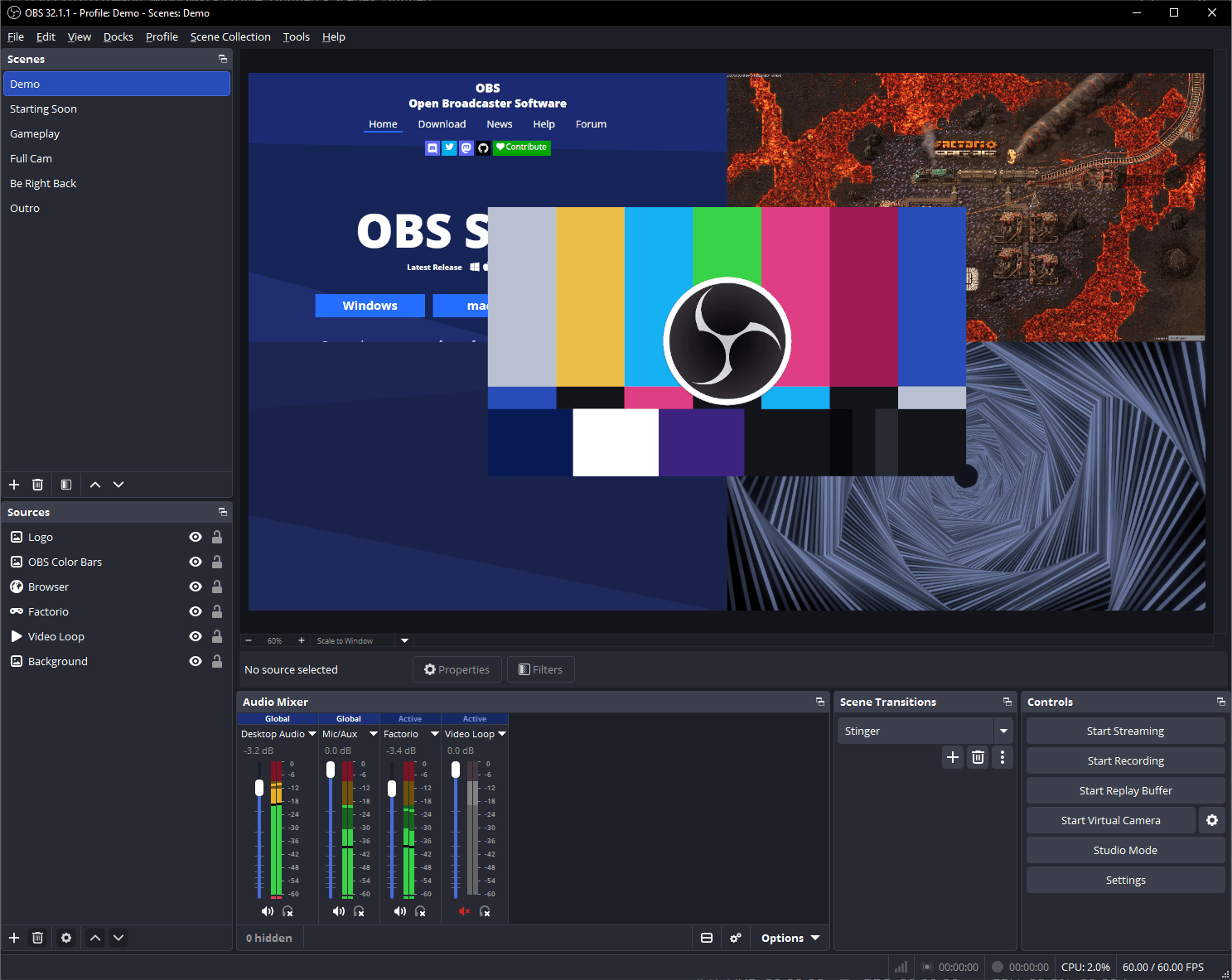
How to prioritize AV spending, plan upgrades, and avoid gear purchases that create more complexity than value.
Apr 10, 2024 • 6 min read
Operations beginner
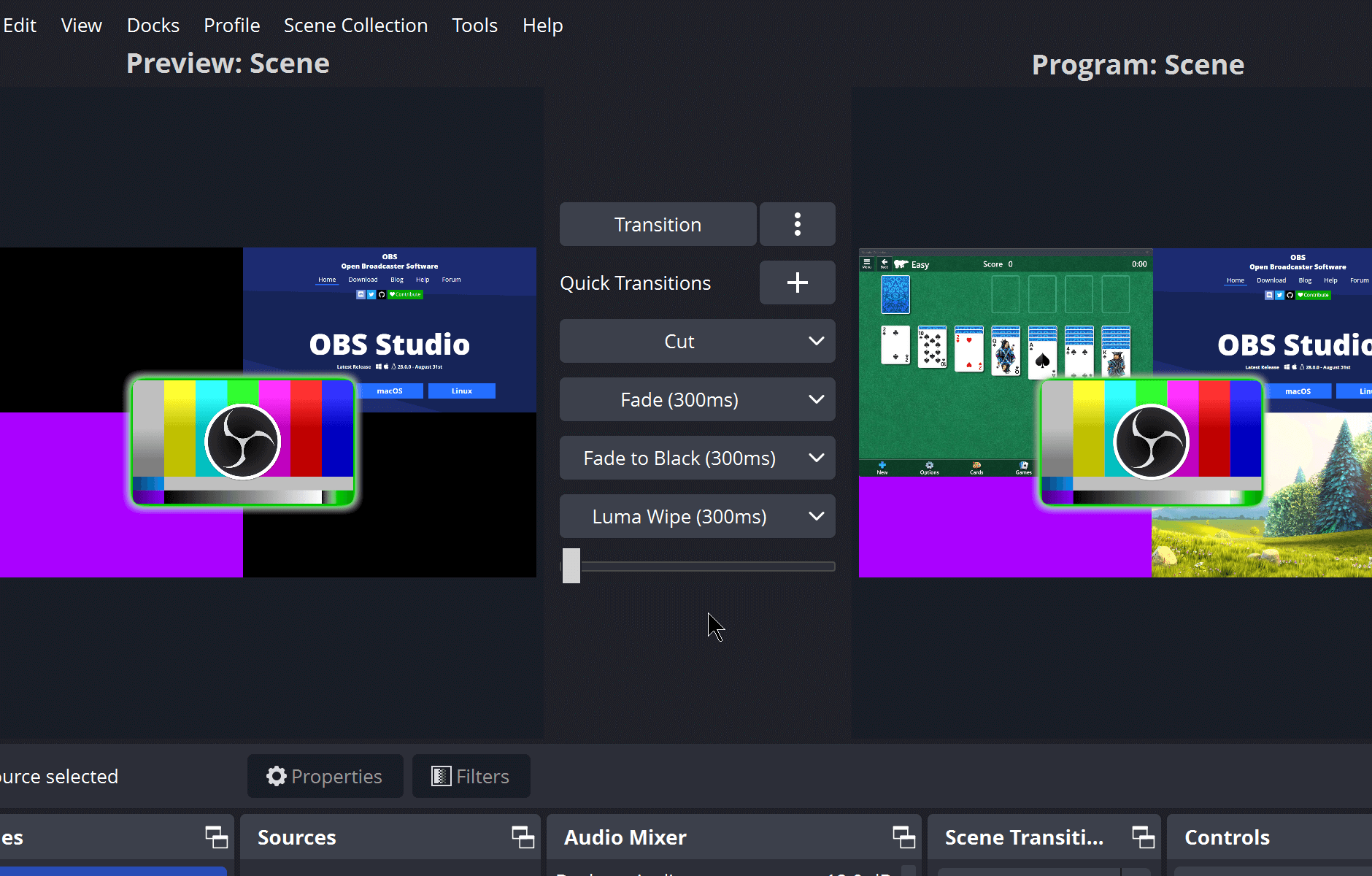
How to train volunteer AV teams with clear runsheets, role clarity, and repeatable service workflows.
Mar 25, 2024 • 6 min read