Why churches ask
TikTok comes up in almost every church conversation about young people. Students are on it. Young adults are on it. Increasingly, so are their parents. And unlike many platforms, TikTok can show a brand-new account’s video to thousands of people who have never heard of it.
It also comes with real questions. Here’s an honest look at both sides.
What TikTok does well
It reaches people beyond your followers. TikTok’s feed is built largely on interest rather than who you follow. A good 45-second clip can be shown to people who would never search for a church. (See how social media algorithms work.)
It’s where many young people spend time. Pew Research Center surveys have found that a majority of U.S. teens use TikTok. If your church wants to reach students and young adults, it’s hard to ignore.
It rewards authenticity. Polished production matters less than something genuine. A pastor speaking honestly often does better than a slick promo.
It’s free, and you already have the content. Your sermon clips work on TikTok as they are: vertical, captioned, under a minute or two.
The real concerns
Content and culture. TikTok is full of everything, including content your church would never endorse. Your clips will appear next to it.
Young users. TikTok requires users to be at least 13, and many younger children use it anyway. Your church must be careful about how it engages with minors there.
Privacy and policy. TikTok’s data practices and ownership have been the subject of government scrutiny and changing rules in the U.S. and other countries. Check the platform’s current status and your denomination’s guidance before you start.
Time and attention. Like any platform, it can become a time sink if there’s no plan.
None of these are automatic deal-breakers. They’re reasons to start with clear rules.
How to decide
Ask your leadership team three questions:
- Who are we trying to reach? If the answer includes students, young adults, or people far from church, TikTok is worth considering.
- Can we do it consistently? Two or three clips a week, every week. If not, a platform you can keep up with is better.
- Can we keep adults in oversight? If you can’t, wait.
If the answers are yes, try it for three months and then decide.
How to start safely
- An adult owns the account. Register it to a church email, store the password in the church’s password manager, and turn on two-factor authentication.
- An adult approves every post. Students and volunteers can prepare clips, but an adult publishes. (See the guardrails pastors need.)
- No minors without consent. Never post children without written parental consent, and don’t tag or name minors.
- Watch the comments. Reply kindly, move prayer requests to private care, and remove abuse.
- No private messages with minors. Staff and volunteers don’t DM students. Use group channels or go through parents.
- Write it down. Add TikTok to your church social media policy.
What to post
- Sermon clips that make sense to a stranger, with captions and a strong first line (see sermon clip hooks)
- Scripture readings and short prayers
- Real church life: setting up for Sunday, the band rehearsing, a baptism with consent
- Answers to real questions people ask about faith
You don’t need to dance or follow every trend. Honest, clear messages are enough.
Making clips for TikTok
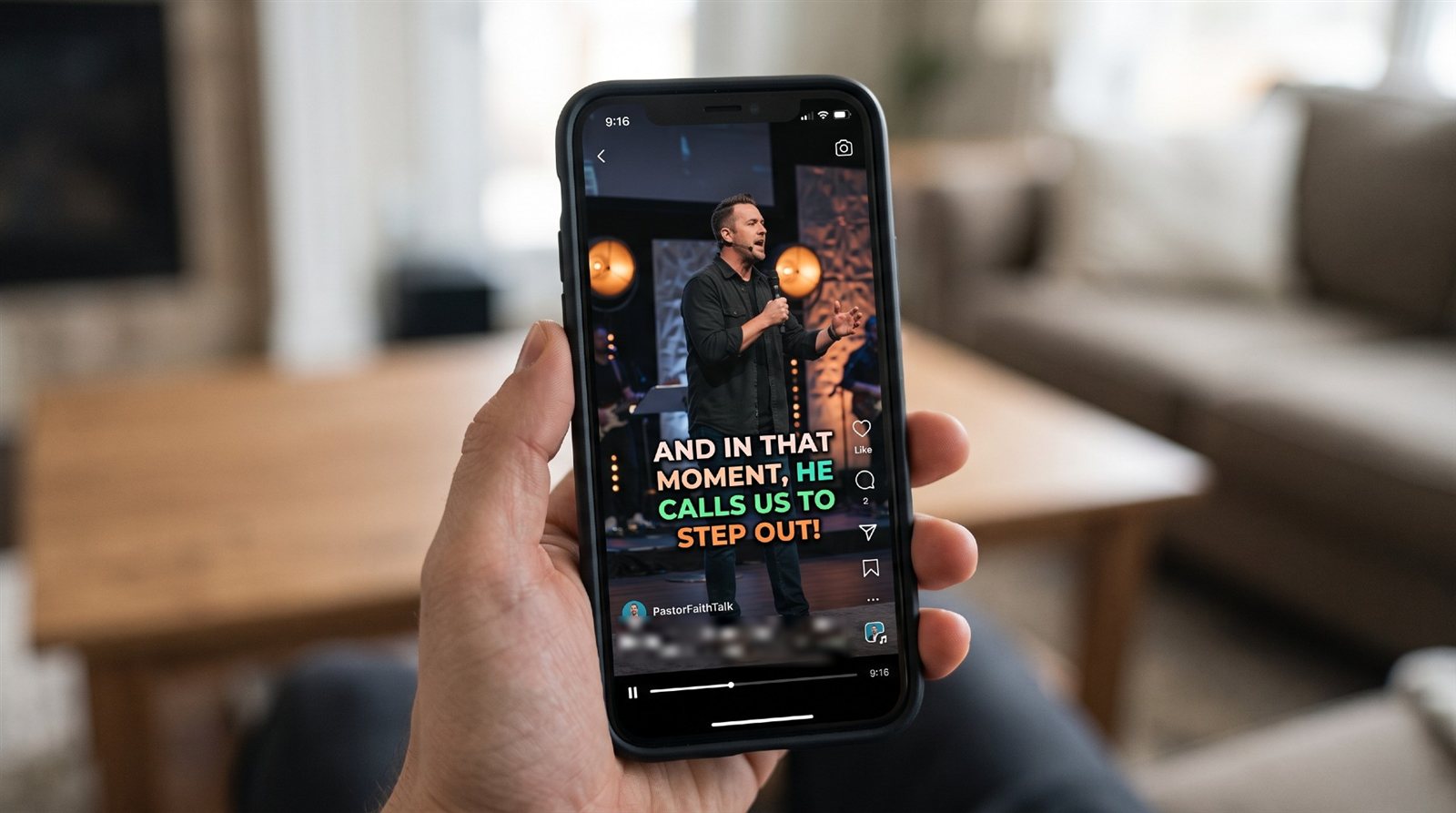
TikTok needs vertical video with captions. Reels (formerly Worship Clips) in WorshipMetrics connects to your YouTube livestream, suggests the strongest sermon moments, and renders captioned, branded clips in vertical format, ready to download and post on TikTok. It’s free and unlimited in Tech Manager, and cloud Reels on the Pro or Max plan lets volunteers, often the students who know TikTok best, work from home. (See the Youth Clip Team.)
See more on the social media for churches page.
Related questions
- Should churches be on TikTok?
- It depends on who you want to reach and whether you can do it well. TikTok is strong for reaching young people and people who would never follow a church account, because it shows short videos to people based on interest, not just followers. If your church can post a few honest clips a week with adult oversight, it can be worth it.
- Is TikTok safe for churches to use?
- A church account can be run safely with clear rules: adults control the account and approve posts, no children are shown without parental consent, comments are monitored, and staff don't privately message minors. Leaders should also weigh privacy and policy concerns and check the platform's current status in their country.
- What should a church post on TikTok?
- Short, captioned sermon clips with a strong opening line, scripture readings, prayers, and genuine moments of church life. Keep it honest and simple. Trends and dances are optional; real messages often do better than imitation.
Shooting Your Church Service for Vertical Clips
NextA Social Media Strategy for Small Churches: One Sermon, Three Clips, One Volunteer
Related Articles

Making a Complicated Church AV System Easy to Run, Without Hiring an AV Company
Many church AV systems aren't too old or too small. They're too complicated for a volunteer. A simple button panel built with Bitfocus Companion can hide that complexity behind plain-word buttons, and a church can often build it themselves. Here's when that works, when to call a professional, and how to start.

Your Church Livestream Team, Connected Even When They're Not at Church
A three-person livestream team only works if everyone shares the same plan, the same wiring diagram, and the same news when something breaks. Here's how WorshipMetrics connects the director, slides, and camera volunteers through the week: chat, alerts, documentation, AI help, scheduling, and cloud control for OBS and vMix.

The Three-Person Church Livestream Team: Director, Slides, and Cameras
A church livestream runs best with three clear jobs: a director on OBS or vMix, a slides operator, and a camera operator. Here's what each role does before, during, and after the service, what skills it takes, and how the three talk to each other.