 Plan Services, songs, and attendance, with the team scheduled.
 People Your directory, volunteers, and team chat in one place.
 Present Lyrics, scripture, slides, and stage display, free in any browser.
 Produce One dashboard for the switcher, PTZ cameras, and the stream.
 Publish Stream Sunday, keep every sermon on your watch page, clip it.
 Patch Every device, cable, and signal path, mapped and printable.
 Pulse Know the moment the stream or a device drops.
Social media for churches
The printing press of our time.
The printing press put scripture and sermons into ordinary hands. Social media is a revolution of the same scale: free, global, and two-way. Your church has a message worth hearing. Here's how to carry it into the places people already are, with wisdom, oversight, and tools built for church teams.
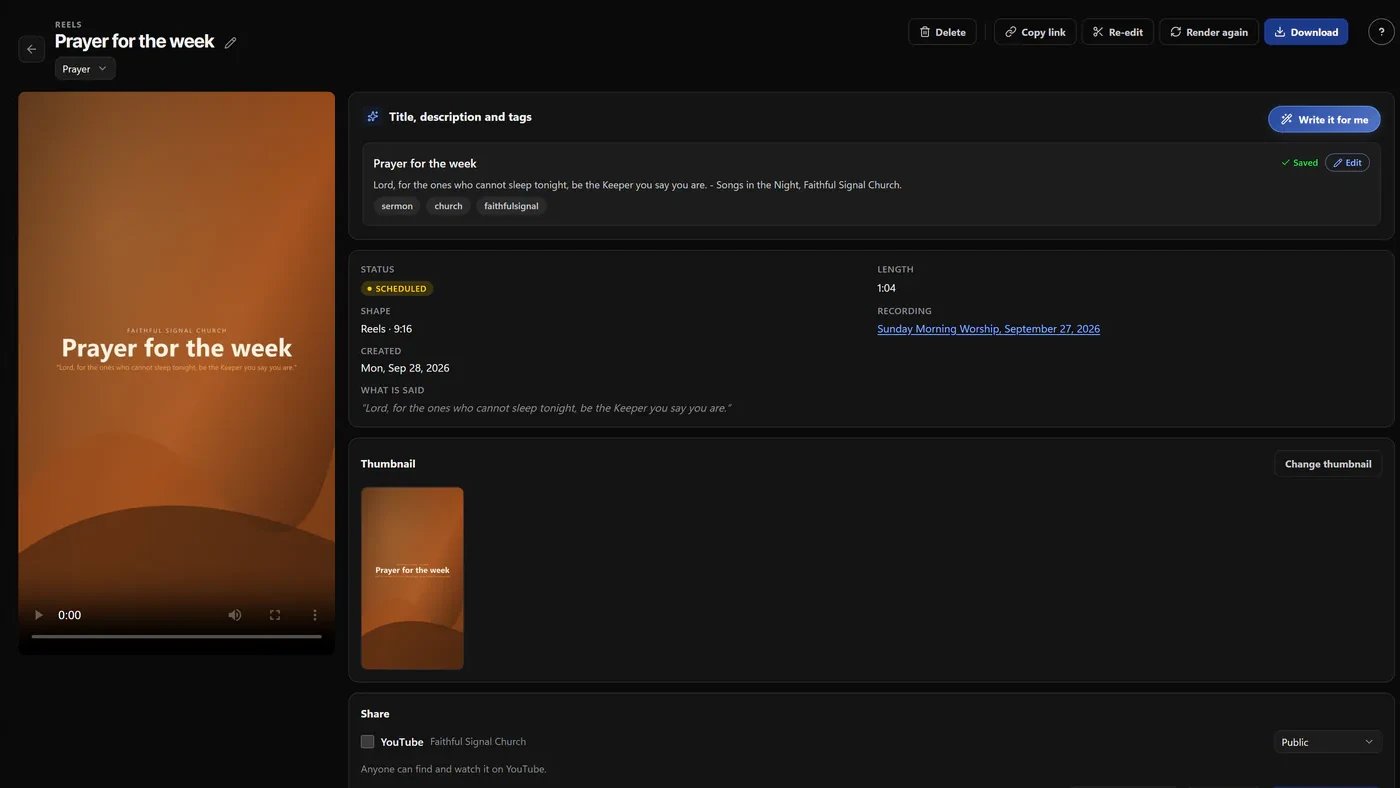
A communication revolution
What printing did for the page, social media does for the message.
Free
No press, no paper, no postage. A phone and a willing volunteer are enough.
Global
A clip filmed in a small-town sanctuary can be watched on the other side of the world tonight.
Two-way
People can respond, ask questions, and request prayer. A pamphlet never could.
Relational
The posts that travel furthest are the ones one person sends to another.
The honest part
Yes, social media has real problems.
Outrage spreads fast. Comparison wears people down. And there are serious concerns about young people's mental health. The printing press spread slander alongside scripture, too. The answer then wasn't to stay away from print. It was to use it well.
Using it well
Six principles for church social media.
Share what you already have
Your Sunday sermon is full of moments worth sharing. Short, captioned clips reach people a 75-minute video never will.
Livestream to Shorts →Lead with oversight
A one-page policy tells everyone who posts, who approves, and what never goes online.
Policy template →Involve young people
Students often understand these platforms best. With adult mentors, it becomes a way for them to serve.
Youth Clip Team →Be consistent, not loud
Two or three honest posts a week build more trust than a burst that fades.
Posting schedule →Make it two-way
Answer comments, invite prayer, and move personal conversations into real pastoral care.
Comment section ministry →Point to something real
Every post should lead somewhere: the full message, a prayer link, or a page for first-time visitors.
Livestream to front door →See it live
Be your own social media platform.
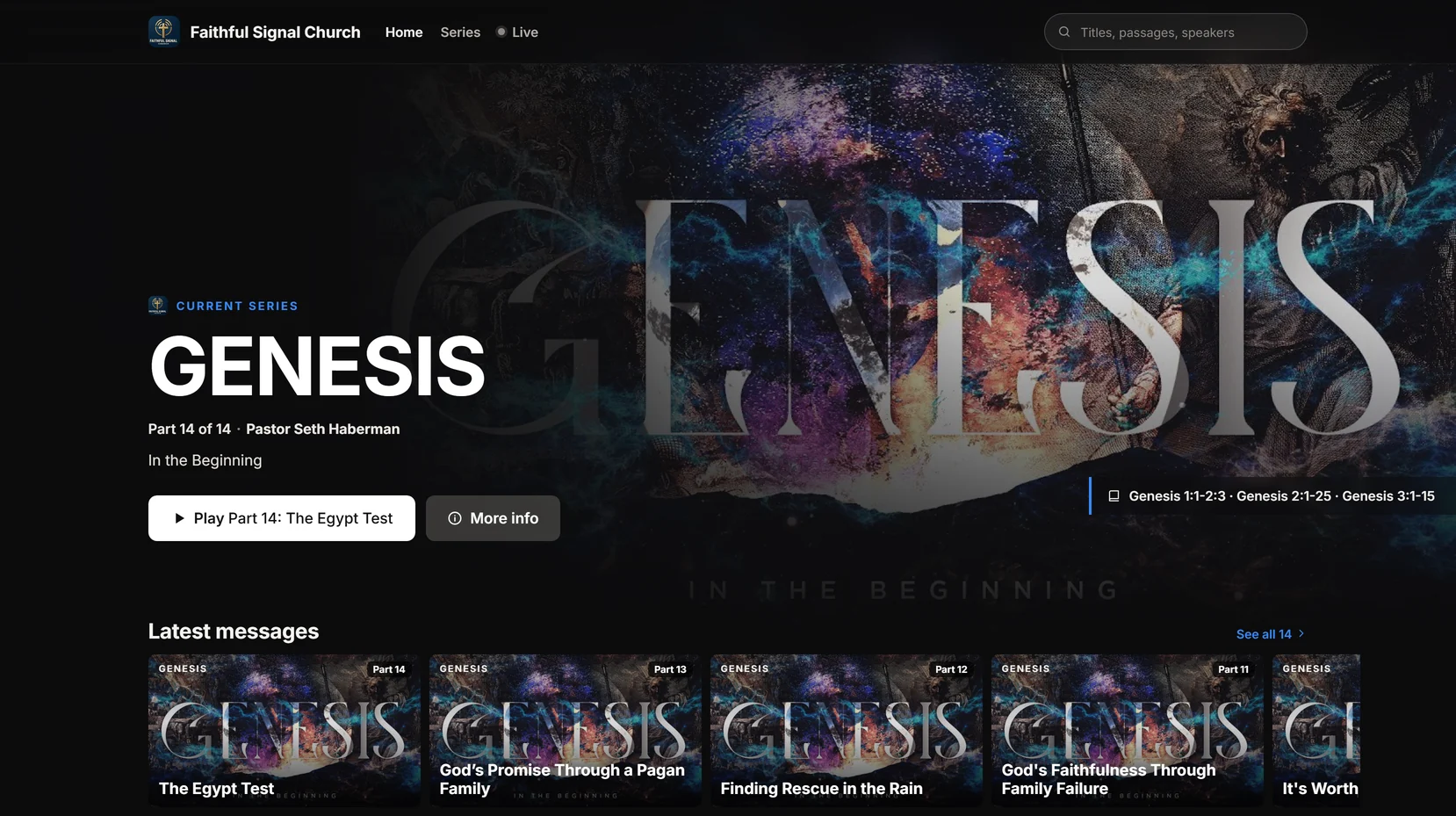
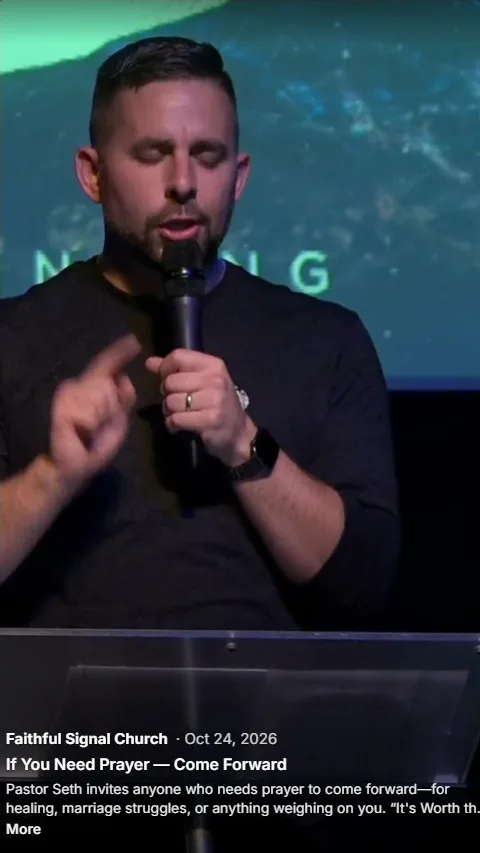
Post your clips where people scroll, and give them a home of your own. Faithful Signal Church, our demo church, keeps every clip on its own watch page as a Highlight, next to the full message. Swipe through it like a feed, with no stranger's thumbnail pulling anyone away.
Coming up
Christmas Eve is your biggest invitation of the year.
Six weeks of posts from mid-November to Thursday, December 24, plus the invite video your congregation can share.
The tools
Built for church teams.
- ✓ Reels: AI-suggested sermon moments, captioned and branded clips, free in Tech Manager
- ✓ Content Library: every message and clip on your own watch page, with no algorithm deciding who sees it
- ✓ Tech Manager and monitoring, so Sunday gets captured
- ✓ Present for lyrics, slides, and countdowns
- ✓ People for the guests who find you online
- ✓ Service Metrics for in-person and online attendance together (online on Max)
From the Knowledge Base
The church social media playbook.
FAQ
Questions churches ask about social media
Should churches be on social media?
Most people spend part of every day there, including many who will never visit a church website or watch a full service. A steady, honest presence lets a church's message reach people where they already are, as long as it's done with care and oversight.
Isn't social media harmful?
It has real problems, including outrage, comparison, misinformation, and concerns about young people's mental health. It also connects people and carries hope. How a church uses it, with intention, oversight, and care for privacy, makes the difference.
How does WorshipMetrics help churches on social media?
Reels takes Sunday's recording, uploaded or from your WorshipMetrics live stream, and suggests the sermon moments worth sharing, then renders captioned, branded clips in vertical, square, and horizontal. It's free in Tech Manager on your church's computer, and cloud Reels with the Pro or Max plan lets volunteers work from home.
Where should a small church start?
With one sermon a week: two or three short clips, a simple written policy, and one person who approves posts. Add platforms and volunteers only when that rhythm is steady. See the small-church social media strategy for the full plan.