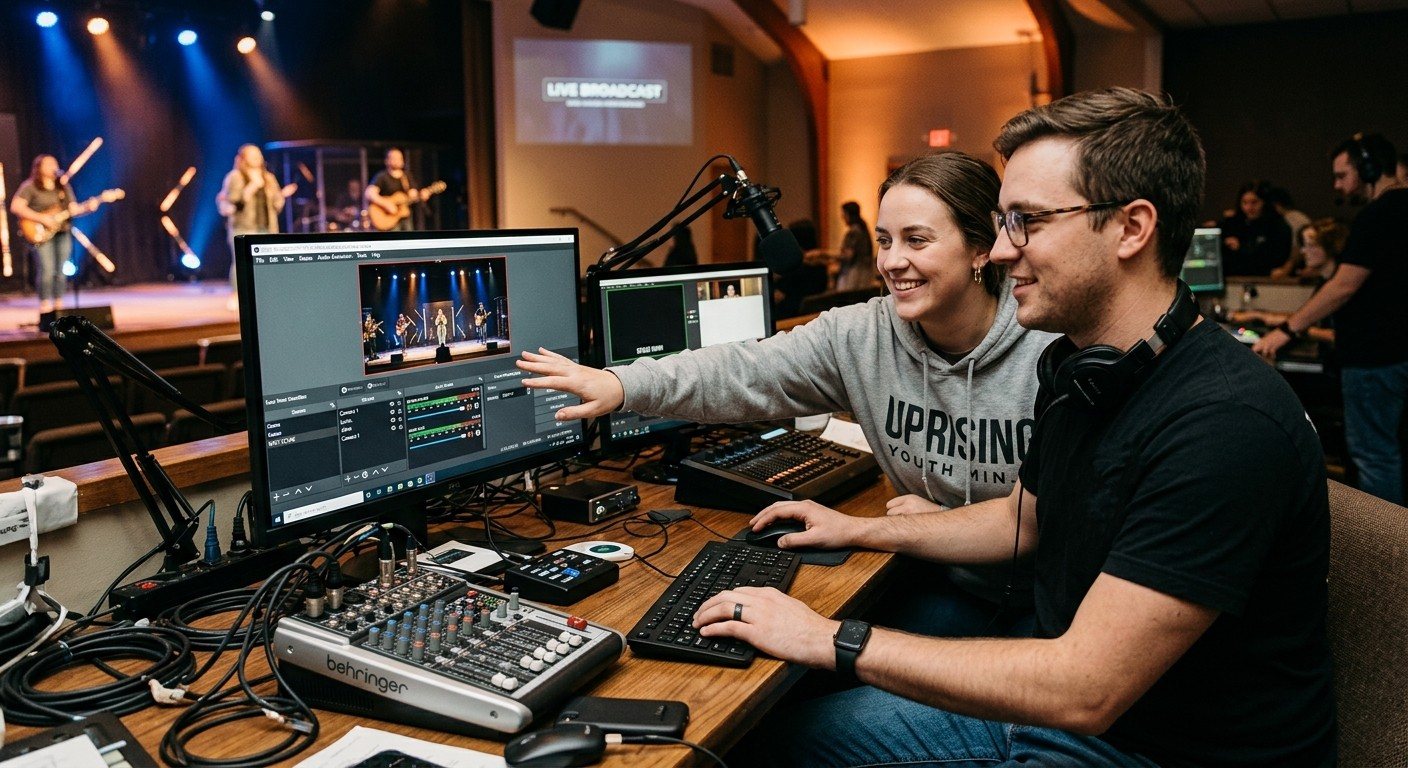
The tension every church media team feels
Churches want to give their best. “Whatever you do, work at it with all your heart, as working for the Lord” (Colossians 3:23). That’s a good and right instinct.
But in church media, that instinct can slide into perfectionism: clips that never get posted because they’re not quite right, volunteers afraid to touch the soundboard, a tech director who redoes everyone’s work, a team that dreads Sunday.
Perfectionism looks like high standards. It often produces the opposite: less work, done by fewer people, who are more tired.
Excellence vs. perfectionism
| Excellence | Perfectionism |
|---|---|
| Care and consistency | Flawlessness or nothing |
| ”Let’s improve one thing this week" | "Everything has to be fixed first” |
| Mistakes are how people learn | Mistakes are failures |
| Many people trained and trusted | One person does it all, because nobody else does it right |
| A good clip posted on time | A perfect clip posted never |
What excellence actually looks like
In church media, excellence is mostly unglamorous:
- Audio people can hear clearly. Viewers forgive soft video; they don’t forgive bad audio.
- Slides people can read, on time.
- A stream that starts on time and stays up. (See the Sunday morning checklist.)
- Clips that are captioned correctly and posted on a steady rhythm. (See a sermon clip posting schedule.)
- A consistent look across everything you make. (See one look everywhere.)
None of that requires a big budget. It requires care, preparation, and practice.
Grace for mistakes
Mistakes will happen. A slide will be late. A camera will cut at the wrong moment. A clip will have a typo. What matters is the culture around them:
- Expect mistakes, especially from new volunteers. They’re learning.
- Fix quietly, review kindly. After the service, talk about what happened without blame.
- Make mistakes cheap. Practice runs, checklists, and tools that catch problems early mean small mistakes don’t become big ones. (See the 90-day onboarding path.)
- Celebrate improvement, not just perfection.
Improve one thing at a time
Instead of trying to fix everything, pick one improvement each month:
- This month: captions on every clip
- Next month: cleaner audio for the stream mix
- After that: consistent lower thirds
Small, steady improvements add up to a team that’s genuinely excellent, and still enjoys serving.
Done is better than perfect, within limits
For social media especially, a good clip posted on Tuesday helps more people than a perfect clip that never goes up. But “done” still has standards:
- Accurate: the clip says what the pastor meant (see sermon clip hooks)
- Appropriate: nothing private or sensitive (see a church social media policy template)
- Captioned correctly: names and Bible books checked (see captions for sermon clips)
If it meets those, post it.
Let tools carry the routine
A lot of perfectionism comes from people holding too much in their heads. Good tools take routine work off their plate, so their care goes where it matters:
- WorshipMetrics monitoring alerts the team when the stream or recording stops, and offers a one-tap restart, so nobody has to stare at the encoder all service.
- Present keeps slides consistent with per-church themes.
- Reels (formerly Worship Clips) suggests sermon moments and renders captioned, branded clips, so the clip team spends its time choosing well instead of editing for hours.
The goal is faithfulness
Excellence in church media isn’t about impressing anyone. It’s about serving people well, and serving the volunteers who make it happen. A team that’s careful, consistent, and gracious with each other will produce better work over time than a perfectionist working alone. And they’ll still be serving next year.
See more on the social media for churches page.
Related questions
- What is excellence in church media?
- Doing the work carefully and consistently so it serves people well: clear audio, readable slides, a reliable stream, and clips that are captioned and on time. Excellence is about care and faithfulness, not about looking like a big-budget production.
- How do we avoid perfectionism with church volunteers?
- Set clear standards, give people a safe way to learn, expect and forgive mistakes, review together instead of criticizing, and focus on improving a little each week rather than getting everything perfect.
- Is it better to post an imperfect clip or wait until it's perfect?
- Usually post it, as long as it's accurate, appropriate, and captioned correctly. A good clip shared on Tuesday helps more people than a perfect one that never gets posted. Consistency often matters more than polish.
Your Congregation as Digital Missionaries
NextSermon Clips in Any Language: AI Clipping for Spanish, French, and Multilingual Churches
Related Articles

Making a Complicated Church AV System Easy to Run, Without Hiring an AV Company
Many church AV systems aren't too old or too small. They're too complicated for a volunteer. A simple button panel built with Bitfocus Companion can hide that complexity behind plain-word buttons, and a church can often build it themselves. Here's when that works, when to call a professional, and how to start.

Your Church Livestream Team, Connected Even When They're Not at Church
A three-person livestream team only works if everyone shares the same plan, the same wiring diagram, and the same news when something breaks. Here's how WorshipMetrics connects the director, slides, and camera volunteers through the week: chat, alerts, documentation, AI help, scheduling, and cloud control for OBS and vMix.

The Three-Person Church Livestream Team: Director, Slides, and Cameras
A church livestream runs best with three clear jobs: a director on OBS or vMix, a slides operator, and a camera operator. Here's what each role does before, during, and after the service, what skills it takes, and how the three talk to each other.