2014 — The road
Same building, different country, identical problem
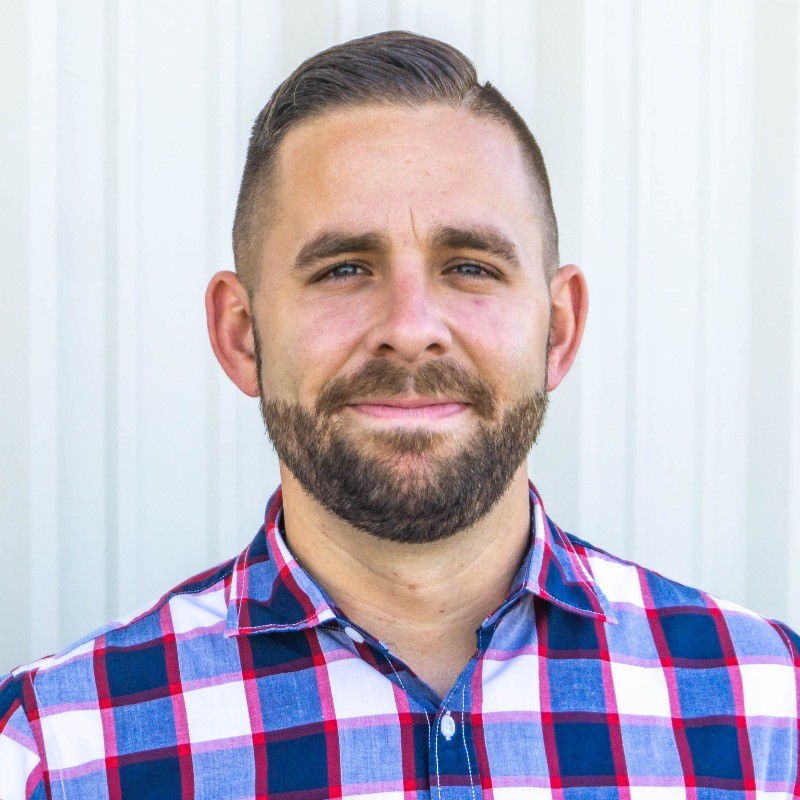
Between the three of us there is more than forty years of worship technology experience — Seth leading worship and running production long before any of this had a name, Andrew in ministry, and Paul on the road. Paul Richards started at PTZOptics in 2014, and for the next twelve years the job took him into more church booths than he can count. Multi-site campuses with a full-time production staff. One-room congregations where the sound board and the thermostat shared a shelf. Churches on the other side of the world where he needed a translator to explain what an SDI cable does.
The buildings were never the same. The problem always was.
Somewhere near the back there was a table, and at that table stood one person — usually a volunteer, often the only one in the building who understood how any of it worked. They ran the camera, the slides, the audio feed, and the stream. If they caught the flu, the service did not go out. If they moved away for a job, the church lost years of hard-won knowledge in a single weekend, and the next person started over from nothing.
Paul got very good at helping that person. What he could never do, from the other end of a phone call or across a trade show counter, was give them a second person.
“Every church has tech support issues. I tried my best to help train folks, but with the constant churn of new volunteers, church production technology just kept getting more complex.”
It was not just us
The research says the same thing.
In June 2026, Church Production Magazine published the first results of its “Then vs. Now” research project, comparing where church production teams are today against two years ago. The numbers describe the exact problem we had been watching from the road.
- 57%
- name training and skill development their top operational challenge — up 20 points, now ahead of volunteer recruitment
- 72%
- run production mostly on volunteers, up 7 points — and 79% at churches under 500
- +15pp
- growth in churches citing system complexity as a core operational challenge, now 38%
Two more findings pointed the same direction. Volunteer training rose 24 points as a stated production priority, from 52% to 76%. And when churches evaluate technology now, reliability has climbed 23 points to 73% while ease of use for volunteers is up 15 points to 65% — cost has fallen from the top criterion to third.
That is the whole thesis of this company, written in someone else's data: churches do not need more capability. They need what they already own to be operable by the people who actually show up on Sunday.
Source: Church Production Magazine, “Then vs. Now: How Church Production Is Shifting,” Research Series, June 2026.
2019 — The book
A book, an email, and the friend who answered it
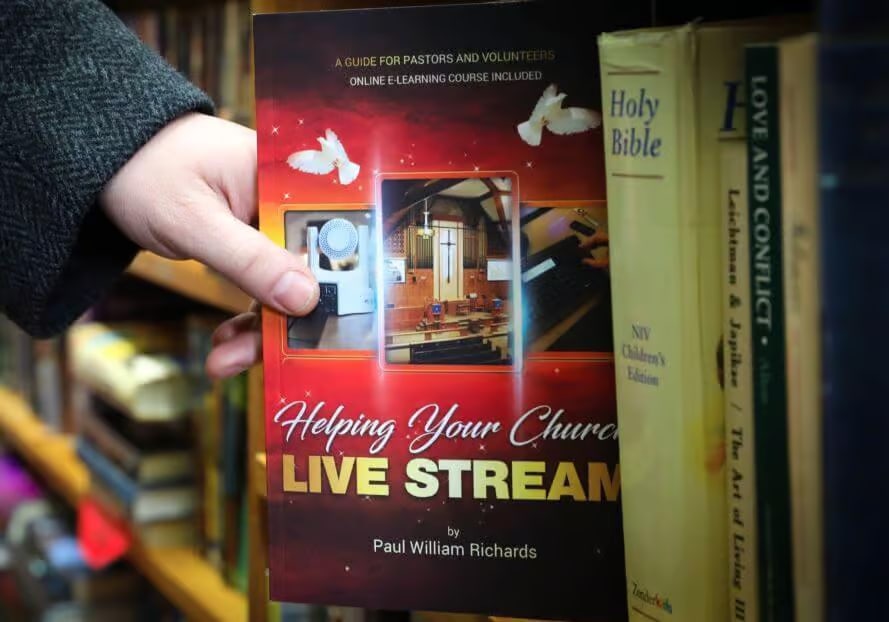
In 2019 Paul wrote it all down. Helping Your Church Live Stream was meant to be the thing he could hand to a church instead of scheduling another two-hour phone call — the whole workflow, in plain language, for people who had never produced anything in their lives.
While the book was making the rounds, Paul reached out to a producer he had been watching for a while: Seth Haberman, better known online as the Digital Pastor. Seth had served at several churches over the years, and he was the rare kind of church video producer who kept going well past “good enough for a Sunday.”
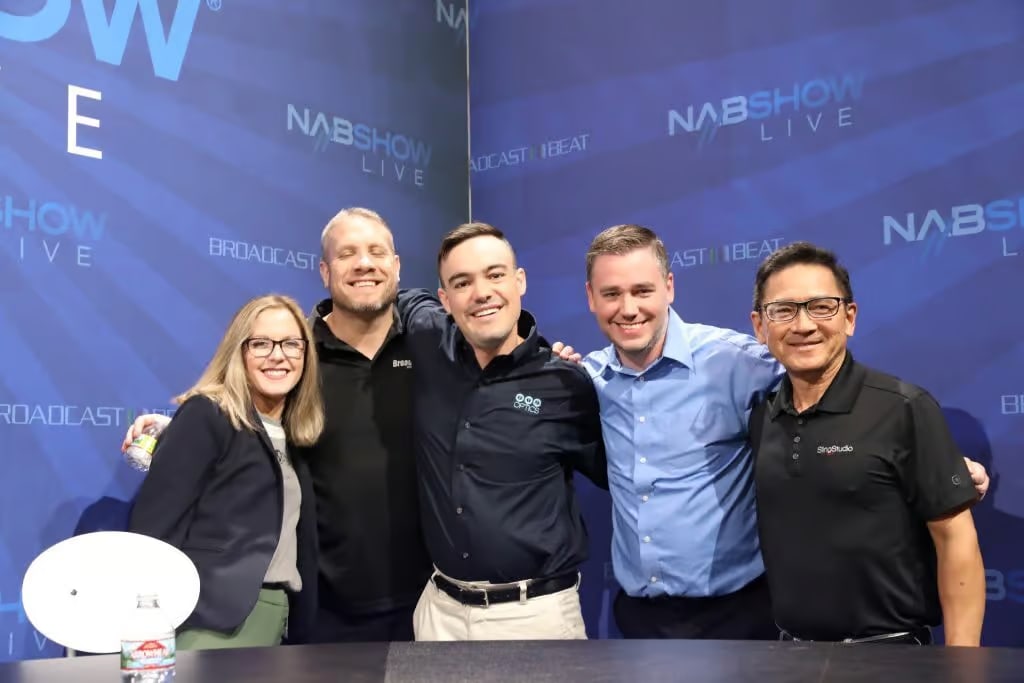
You could find him at the vMix booth at the NAB Show, asking the kind of questions that made the engineers put their coffee down. He was a complete techie and a serious Christian, and he believed — genuinely believed — that a well-produced service could carry the gospel to someone who would never walk through the front doors on their own.
Seth wrote back, and the two of them hit it off immediately. Seth's Digital Pastor channel and Paul's work on the PTZOptics and StreamGeeks channels started to overlap, then collaborate, then stop being separable. Somewhere in there it stopped being a professional relationship and became a friendship.
2020 — The doors close
When every sanctuary in the world went dark at once
Then came March 2020, and the work changed overnight.
Live streaming stopped being a nice-to-have and became the only way a congregation could gather at all. Pastors who had never touched an HDMI cable were suddenly asking about bitrates and upload speeds. Churches that had put off the whole question for a decade had a week to solve it.
Paul and Seth spent that year on Zoom calls, webinars, and live streams, helping thousands of churches get a signal out of a building nobody was allowed to enter. It was not glamorous work. It was mostly patience, and answering the same question kindly for the fortieth time, for people who were frightened and exhausted and trying to reach a congregation that had never been so alone.
Out of that season came the Churches That Live Stream community, which turned into thousands of church tech people helping each other through the hardest year most of them had ever had. It also produced more books — on OBS, on vMix, on PTZ cameras, and on the thing Paul kept coming back to: how to train a volunteer who has never done this before, and make them want to come back next week.
Twelve years of this work does something to a person. Paul went into it as an AV guy with a product to support. He came out of it with friendships in congregations on nearly every continent, and a much clearer sense of what he actually wanted to build.
“We spent 2020 helping churches reach people who could not be in the room. It turns out that is not a pandemic problem. That is just ministry now.”
2023–2024 — Coming home
Eleven kids and nowhere to put them
By 2023 the emergency had passed, and Paul noticed something uncomfortable. He had spent nearly a decade helping other people's churches while doing very little at his own: First Presbyterian Church in West Chester, where his family sits on a Sunday morning.
He wanted to start an AV club.
Part of that was the kids. Paul has three children. Seth has five. And across both households, and across every church Paul had visited in the previous decade, the same thing kept showing up: young people who were genuinely, unmistakably interested in this — in cameras, in switching, in graphics, in running the stream — and no path forward for any of them.
There was no on-ramp. No club, no training track, no obvious way for a curious thirteen-year-old to become the person who runs camera two. The knowledge lived in one volunteer's head and left the building when they did.
Meanwhile the youth minister at First Presbyterian was looking for ways to connect with the music committee, and the pieces started to look like they belonged together. Paul and Seth began talking seriously: what if the tools that made Sunday easier were also the tools that brought new people in? What if the online audience — that large, quiet, mostly anonymous group of people watching every week — could actually be connected to, welcomed, and eventually invited to serve?
That is the conversation that became WorshipMetrics.
2025 — The third voice
The pastor who arrived at exactly the right moment
While all of this was brewing, First Presbyterian called a new senior pastor: Rev. Andrew Esqueda.
Andrew turned out to be a technology-forward, future-forward pastor who saw immediately what Paul and Seth were circling. He also happens to be almost exactly the same age as both of them. Three men in their late thirties, all with young families — Andrew has three children of his own, which brings the total across the three households to eleven.
That is not a marketing detail. It is the reason the product looks the way it does. Every one of those eleven kids is a person who could be handed a real job on a Sunday morning, and every one of them is a person who will quietly drift away from church if nobody ever hands them one.
Andrew's role is to keep the whole thing honest. He is an active pastor with an actual congregation, actual volunteers, and an actual Sunday to get through every week. When a feature does not survive contact with that reality, he says so.
2026 — All in
Fearlessly, together
In 2026, after twelve years, Paul left PTZOptics to build WorshipMetrics full time. It was not a small decision. It was the right one.
We are three Christian men who have spent our careers at the place where technology meets ministry, and we have all arrived at the same conviction: the tools a church uses on a Sunday should carry the message further, share the load between more people, and create somewhere for the next generation to stand.
WorshipMetrics launches in October 2026. We are building it fearlessly, together, because we believe it matters.