The kid at the edge of the room
Every congregation has them, and maybe you’re raising one: the kid who comes because the family comes, sits where the row ends, and leaves the moment it’s over. Not hostile — just unclaimed. And if you’re their parent, you’ve likely run the anxious diagnosis at least once: is this a faith thing? Are we losing them?
Here’s the reframe from people who work with church teenagers for a living: most “fit” problems are matching problems. A church’s visible on-ramps — singing, speaking, greeting, childcare — suit certain wirings wonderfully and leave others with nowhere to stand. A kid whose gifts point elsewhere isn’t rejecting the church; the menu just never included them. The fix isn’t pressure. It’s a better map.
Read the wiring first
Before looking at roles, look at your actual kid — not the kid the serve list assumes. How do they spend unsupervised attention?
- The performer — sings in the car, holds a room. The visible paths (worship team, drama, reading scripture) genuinely fit; talk to the worship leader.
- The nurturer — magnetic to little kids, patient, warm. Children’s ministry is the classic home, and a genuinely formative one.
- The host — remembers names, notices the new person. Greeting, welcome desk, the check-in tablet.
- The builder/helper — happiest with a task and a truck. Setup teams, workdays, practical mercy ministries.
- The screen-native — the gamer, the streamer, the video editor, the playlist obsessive, the one who notices when the lyrics are late. This is the wiring churches most often have no visible door for — and it’s the one this guide is mostly for, because the door exists. It’s just at the back of the room.
The forgotten door: the booth
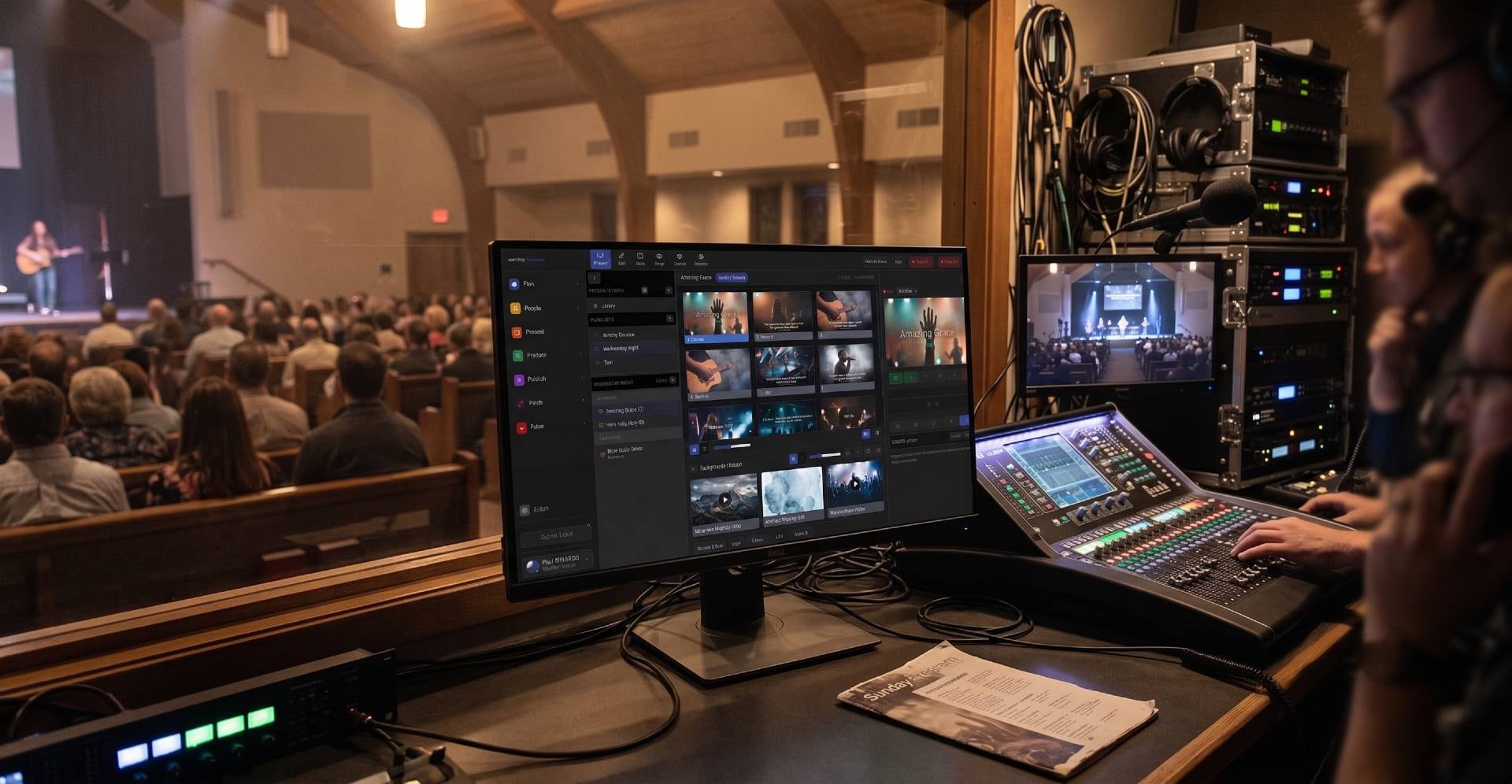
Your church produces a live event every week — cameras, sound, lyrics on screen, a livestream, a recording. Behind it is a booth with real seats: camera operator for the phone photographer, lyrics for the focused and dependable, audio for the headphones kid, the stream for the one who already streams for fun, recording and clips for the editor. Real jobs, sized for students, each with a mentor and a ladder — and in most churches, understaffed, which means your kid wouldn’t be squeezing in. They’d be answering a prayer.
Two minutes with the seat finder — honestly, do it together; it’s fun — turns “my kid is good with computers” into a specific seat with a name. And if the safety question is in your head (a teenager, live, on Sunday?), it has a thorough answer: mentors who can watch their trainee’s actual controls, systems that catch routine failures automatically, and mistakes that surface where only the mentor sees them. The longer story of what a booth seat does in a kid — belonging through usefulness, excellence as devotion — is in your teen’s gaming and video skills belong at church.
How a parent opens the door (without pushing)
The move is advocacy, not enrollment. Three steps, all gentle:
- Try the seat finder with your kid. Frame it as curiosity, not commitment: “this is weirdly accurate — which one are you?” Let the result do the talking.
- Send one short note to your church. Youth pastor or tech director, either works: “We tried this seat-matcher and it nailed our son — Camera Operator. Does our church have anything like an AV Club? Happy to share the link.” Parents surfacing gifts is how most serving matches actually begin; nobody experiences this as overstepping.
- Hand them the proposal if they’re interested. There’s a printable one-page AV Club proposal built for exactly this — what it is, what it produces, what it requires — so your suggestion arrives with its homework already done.
What you’re really giving them
One season from now, the version of this that works looks quietly unremarkable: your kid, headset on, at the back of the room — needed, named, part of a crew, using the very gifts you worried were pulling them away. The edge of the room turns out to be a seat.
Fit was never the missing thing. The door was. Now you know where it is.
Related questions
- My teenager says church is boring and doesn't want to go. Is that a faith problem?
- Usually it's a fit problem wearing a faith costume. A student who's only ever been the audience has nothing at church that needs them. The pattern that changes the story is a real role matched to their actual wiring — and 'bored' teens routinely become the most committed ones once the room depends on them.
- What if my kid's interests — gaming, video, music production — don't seem 'churchy'?
- Those are the exact skills church production booths run on: live awareness, framing, editing, ears. Most churches have understaffed tech seats and a leader who would be delighted to train a student who already half-knows the craft.
- How do I suggest this to our church without overstepping?
- You're not overstepping — parents surfacing a student's gifts is how most serving matches happen. Try the seat finder together, then send the youth pastor or tech director a short note with the result. A printable AV Club proposal exists for exactly that conversation.
What Happens When Your vMix Person Leaves?
NextYou Already Have vMix. Here's the Team It Can Carry.
Related Articles

Making a Complicated Church AV System Easy to Run, Without Hiring an AV Company
Many church AV systems aren't too old or too small. They're too complicated for a volunteer. A simple button panel built with Bitfocus Companion can hide that complexity behind plain-word buttons, and a church can often build it themselves. Here's when that works, when to call a professional, and how to start.

Your Church Livestream Team, Connected Even When They're Not at Church
A three-person livestream team only works if everyone shares the same plan, the same wiring diagram, and the same news when something breaks. Here's how WorshipMetrics connects the director, slides, and camera volunteers through the week: chat, alerts, documentation, AI help, scheduling, and cloud control for OBS and vMix.

The Three-Person Church Livestream Team: Director, Slides, and Cameras
A church livestream runs best with three clear jobs: a director on OBS or vMix, a slides operator, and a camera operator. Here's what each role does before, during, and after the service, what skills it takes, and how the three talk to each other.