Views aren’t visitors
It’s exciting when a clip gets 5,000 views. But leadership will eventually ask the real question: is any of this bringing people in the door?
Views alone can’t answer that. A view might be a three-second scroll-past. To know whether your online presence is growing your church, you need to connect a few numbers that usually live in different places.
Five numbers worth tracking
1. Clip engagement that means something
- Completion: how many people watched to the end.
- Shares: someone thought a friend needed to hear it. This is how clips reach new people.
- Saves: someone wants to come back to it.
- Comments, especially questions and prayer requests. (Answer them.)
2. Online attendance How many people join your livestream and watch the replay. Is it growing month over month?
3. First-time guests How many new people walked in this month? Compare the same months year over year, since seasons like Christmas and Easter always spike.
4. How they heard about you The single most useful question: “How did you first hear about us?” Put it on your welcome card or check-in form, with options like “a friend,” “drove by,” “online search,” and “a video or clip on social media.”
5. Who comes back A first visit is a start. A second and third visit mean the welcome worked. Track how many first-time guests return within a month.
Put it together monthly
Once a month, look at these side by side:
| Question | What to look at |
|---|---|
| Are clips reaching new people? | Shares, saves, and new followers |
| Is online interest growing? | Online attendance over time |
| Is it turning into visits? | First-time guests, and how many mention clips |
| Are visitors staying? | Second and third visits |
You’re looking for the pattern: clips spreading, online attendance rising, and guests saying “I saw a video.” When those move together, your online presence is doing its job.
Watch for false signals
- One viral clip is nice, but steady shares every week matter more.
- Follower counts measure promotion, not impact.
- A single big Sunday like Easter needs to be compared to last Easter, not last week.
(For a wider look at ministry metrics, see the six-metric weekly report.)
How WorshipMetrics helps
The hard part of measuring growth is that the numbers live in different places. WorshipMetrics brings key pieces together:
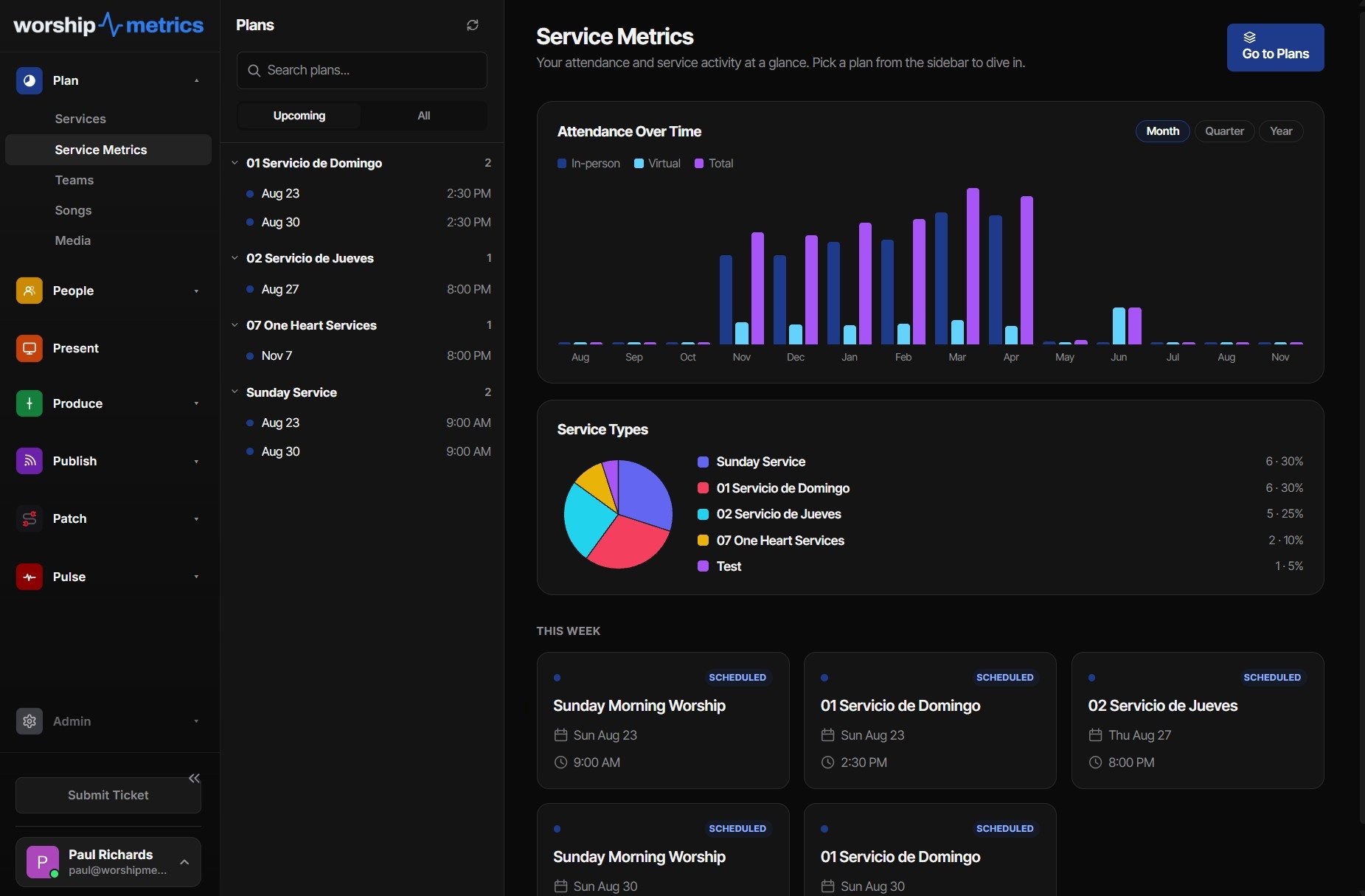
- Service Metrics shows in-person and online attendance on one dashboard, with comparisons over time by service type. With the Max plan, YouTube and Facebook viewers are counted automatically.
- QR check-in adds first-time guests to People, your directory, without anyone typing, and recognizes returning guests automatically, so you can see who comes back.
- Reels (formerly Worship Clips) keeps the clips flowing, so there’s something to measure in the first place.
Share the story, not just the numbers
When a guest says “I found you through a clip of Pastor’s sermon,” tell that story to your church and your clip team (with permission). Nothing motivates volunteers like knowing their work brought someone through the door. And it’s the best answer to “is this worth it?” a leadership team can hear.
See how the whole path connects: grow your church online.
Next: turn these numbers into decisions with the monthly media insights review for church leadership.
Related questions
- How do we know if social media is growing our church?
- Track a few things together: clip engagement (completion, shares, saves), online attendance, first-time guests each month, how those guests first heard about you, and how many come back. When guests start mentioning clips and online and in-person attendance rise together, it's working.
- What's the most useful church social media metric?
- Shares and saves. A share means someone thought a friend needed to hear it, which is how clips reach new people. Views alone mostly measure the algorithm.
- Do we need special software to track online-to-in-person growth?
- No. A 'how did you hear about us?' question and a monthly review go a long way. Tools help by putting online and in-person attendance in one place and recognizing returning guests automatically.
Is Social Media Bad for the Church? An Honest Look
NextFrom Livestream to Front Door: How Your Church's Online Presence Brings People In
Related Articles

Making a Complicated Church AV System Easy to Run, Without Hiring an AV Company
Many church AV systems aren't too old or too small. They're too complicated for a volunteer. A simple button panel built with Bitfocus Companion can hide that complexity behind plain-word buttons, and a church can often build it themselves. Here's when that works, when to call a professional, and how to start.

Your Church Livestream Team, Connected Even When They're Not at Church
A three-person livestream team only works if everyone shares the same plan, the same wiring diagram, and the same news when something breaks. Here's how WorshipMetrics connects the director, slides, and camera volunteers through the week: chat, alerts, documentation, AI help, scheduling, and cloud control for OBS and vMix.

The Three-Person Church Livestream Team: Director, Slides, and Cameras
A church livestream runs best with three clear jobs: a director on OBS or vMix, a slides operator, and a camera operator. Here's what each role does before, during, and after the service, what skills it takes, and how the three talk to each other.