 Plan Services, songs, and attendance, with the team scheduled.
 People Your directory, volunteers, and team chat in one place.
 Present Lyrics, scripture, slides, and stage display, free in any browser.
 Produce One dashboard for the switcher, PTZ cameras, and the stream.
 Publish Stream Sunday, keep every sermon on your watch page, clip it.
 Patch Every device, cable, and signal path, mapped and printable.
 Pulse Know the moment the stream or a device drops.
Use case · New opportunities to serve
The booth is a place to serve. Build the seats, and people fill them.
Investing in the booth isn't only about the stream. It's about roles: seven clear seats one person can learn in a morning, so a sixteen-year-old who edits video on her phone, a retired engineer who misses having a job, and a parent who wants to serve beside their kid all have somewhere to sit. Finding the right seat for the right person is often what gets AV up and running.
Every seat runs on the free platform, with unlimited users.
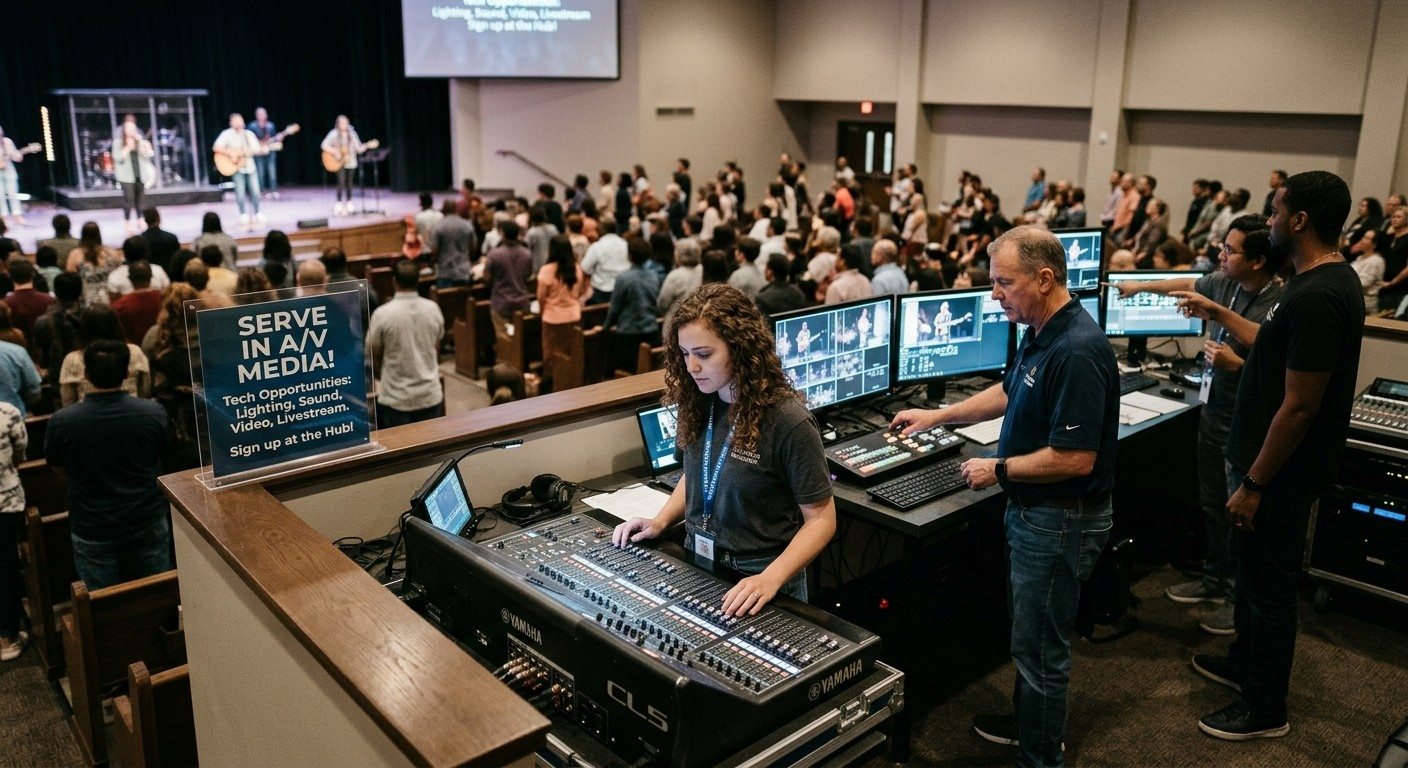
Sunday, the announcements
“We need tech volunteers.” Nobody moves.
The announcement goes out most months. Dave has run the whole booth for six years, and the church would like him to take a Sunday off before he burns out. Nobody comes forward, because “tech” sounds like all of it: the switcher, the sound, the stream, the slides, and the thing nobody can name that Dave fixes by wiggling a cable.
Meanwhile the fifteen-year-old who edits video on her phone was asked to put it away. The retired electrical engineer in the third row has no job here. The volunteer who ran lyrics for a year moved away and took the knowledge with her. The people are in the room. There is nothing shaped like a seat for them to sit in.
Here is what changes when the booth is seven seats instead of one job.
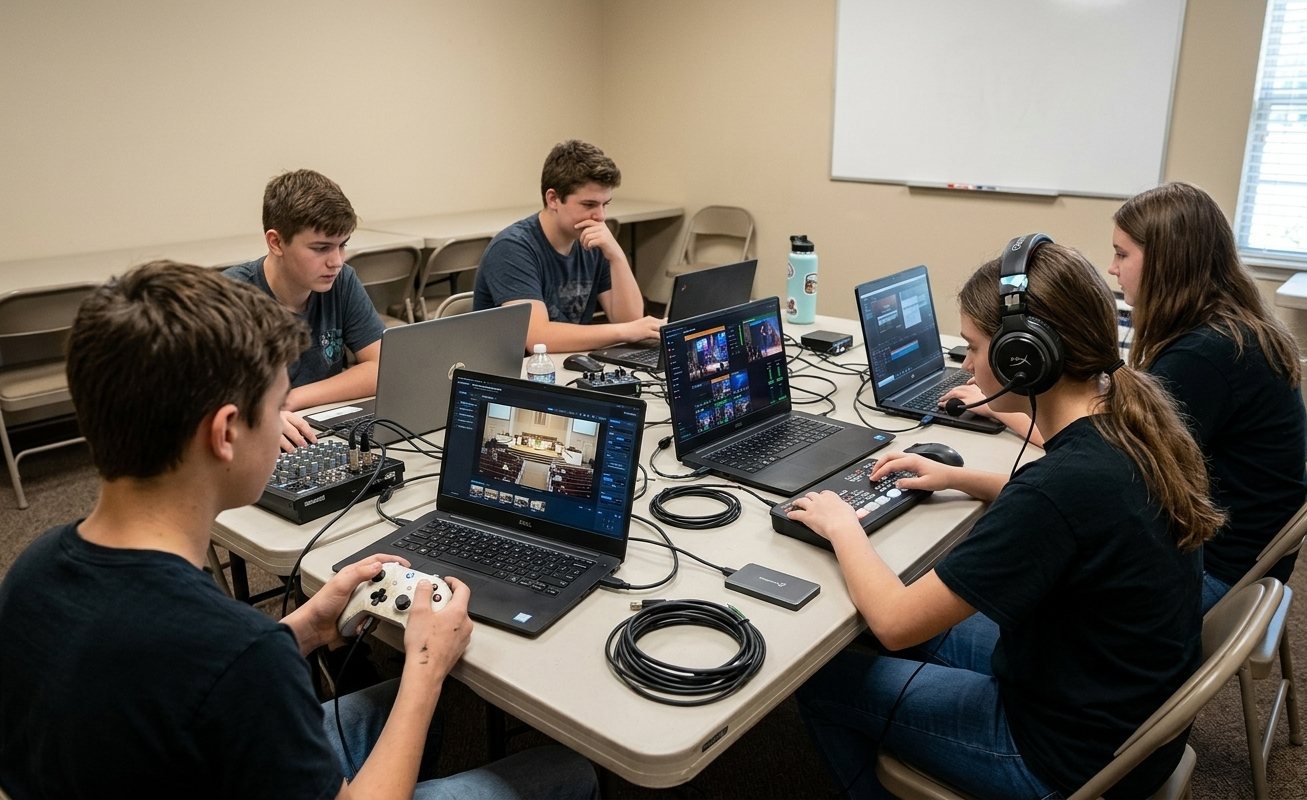
Seven seats, one job each
A seat is a job one person can own.
Each seat has a starting age, a first-week win, and a next seat to grow into. Nobody has to say yes to all of AV. They say yes to one of these.
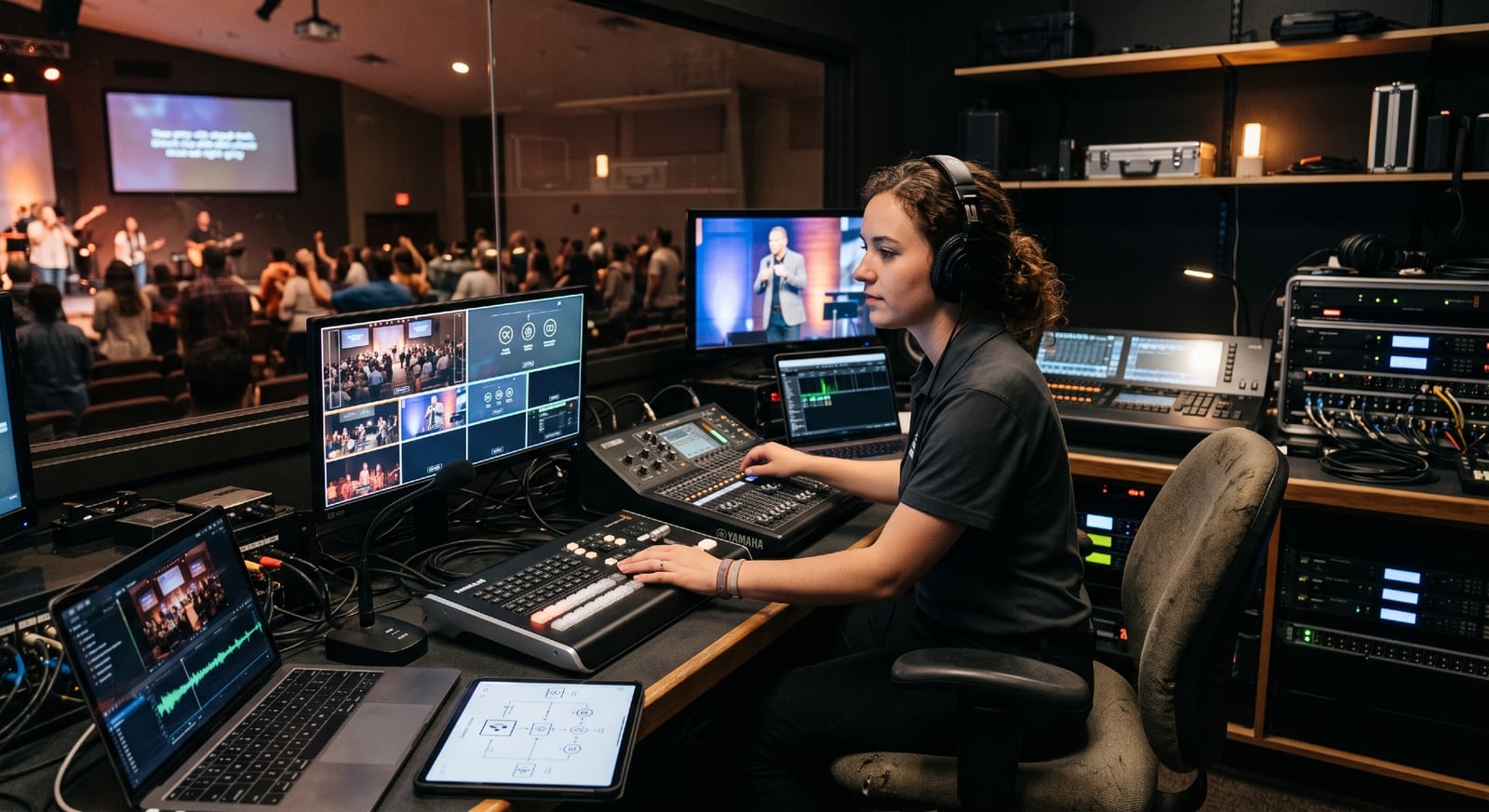
The Quarterback
Service Director
Calls the show and keeps every role moving together.
Typically 17+ or experienced adult volunteer
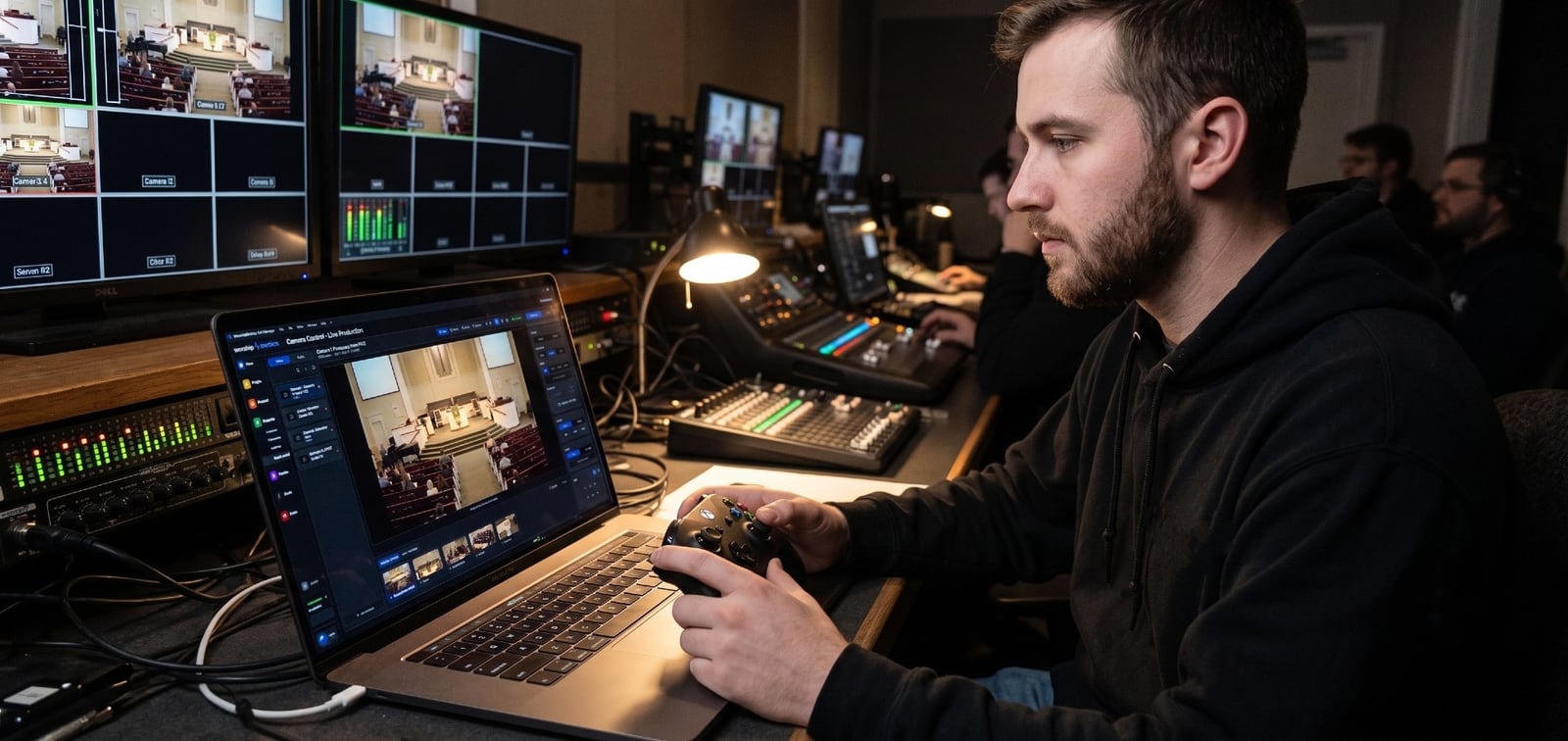
The Shot Framer
Camera Operator
Owns one camera with presets and live framing.
Typically 14+
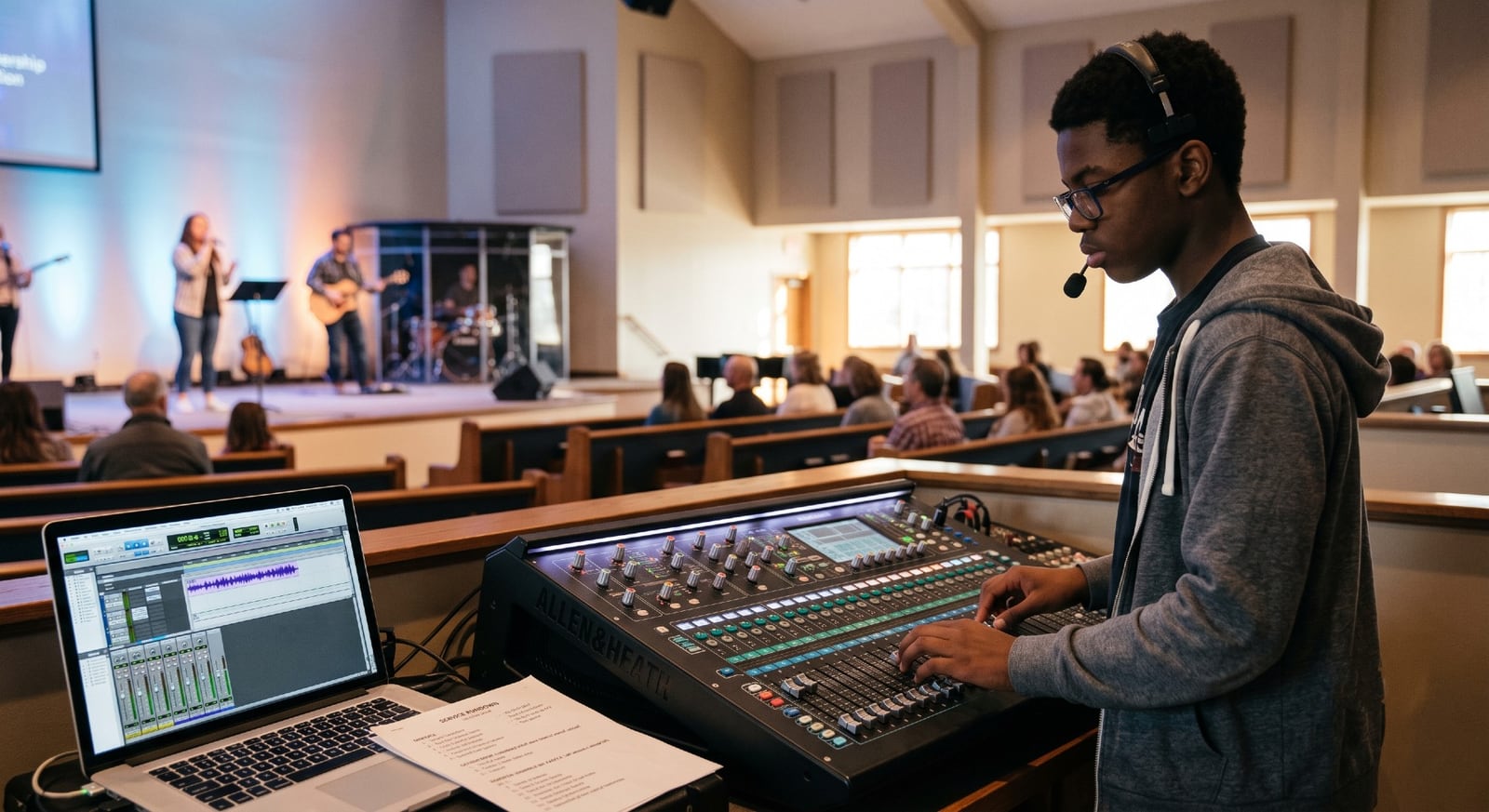
The Ears
Audio Engineer
Keeps the room mix and stream mix clean and steady.
Typically 16+
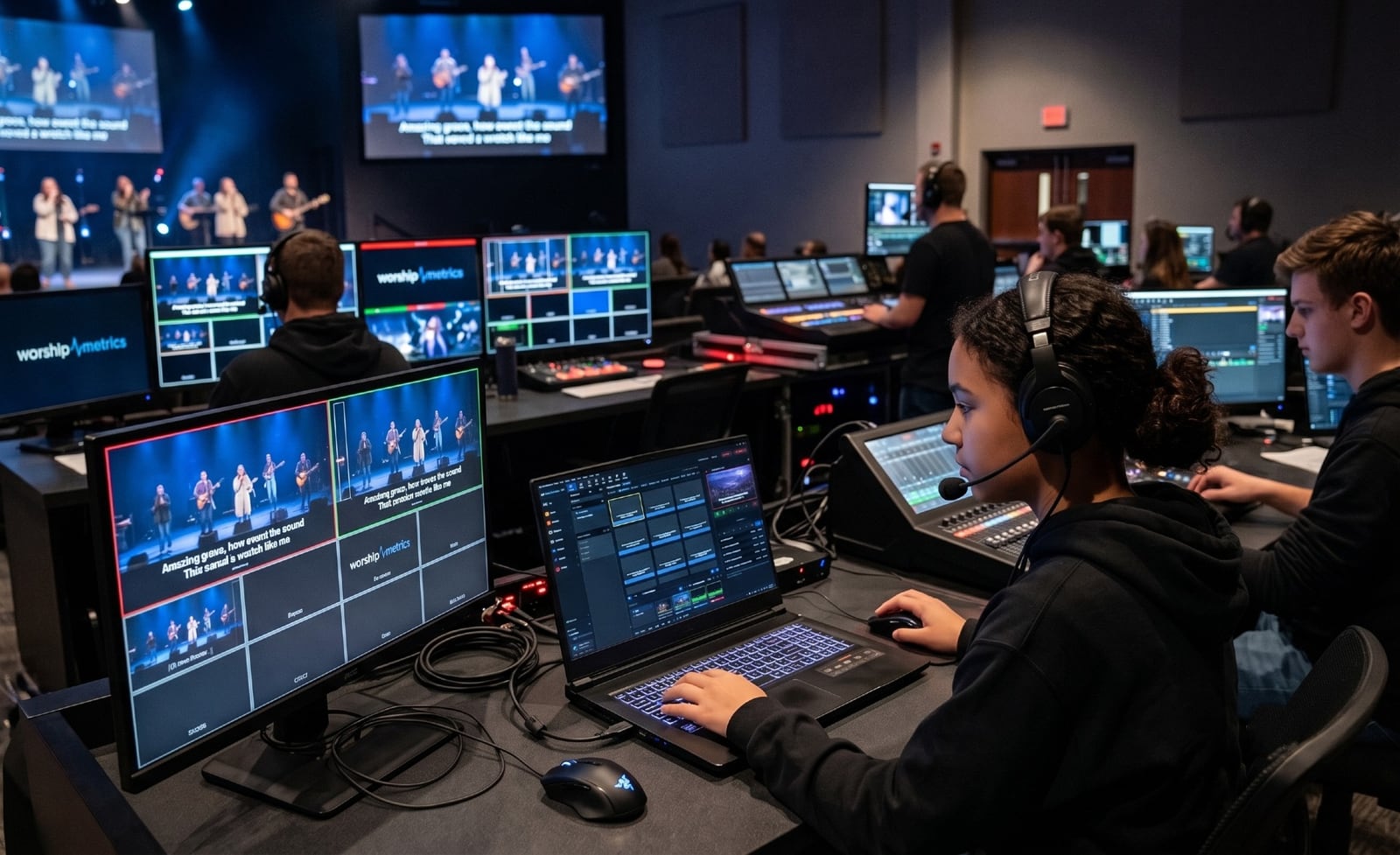
The Story Keeper
Lyrics Operator
Advances lyrics, sermon slides, and lower-thirds on cue.
Typically 12+
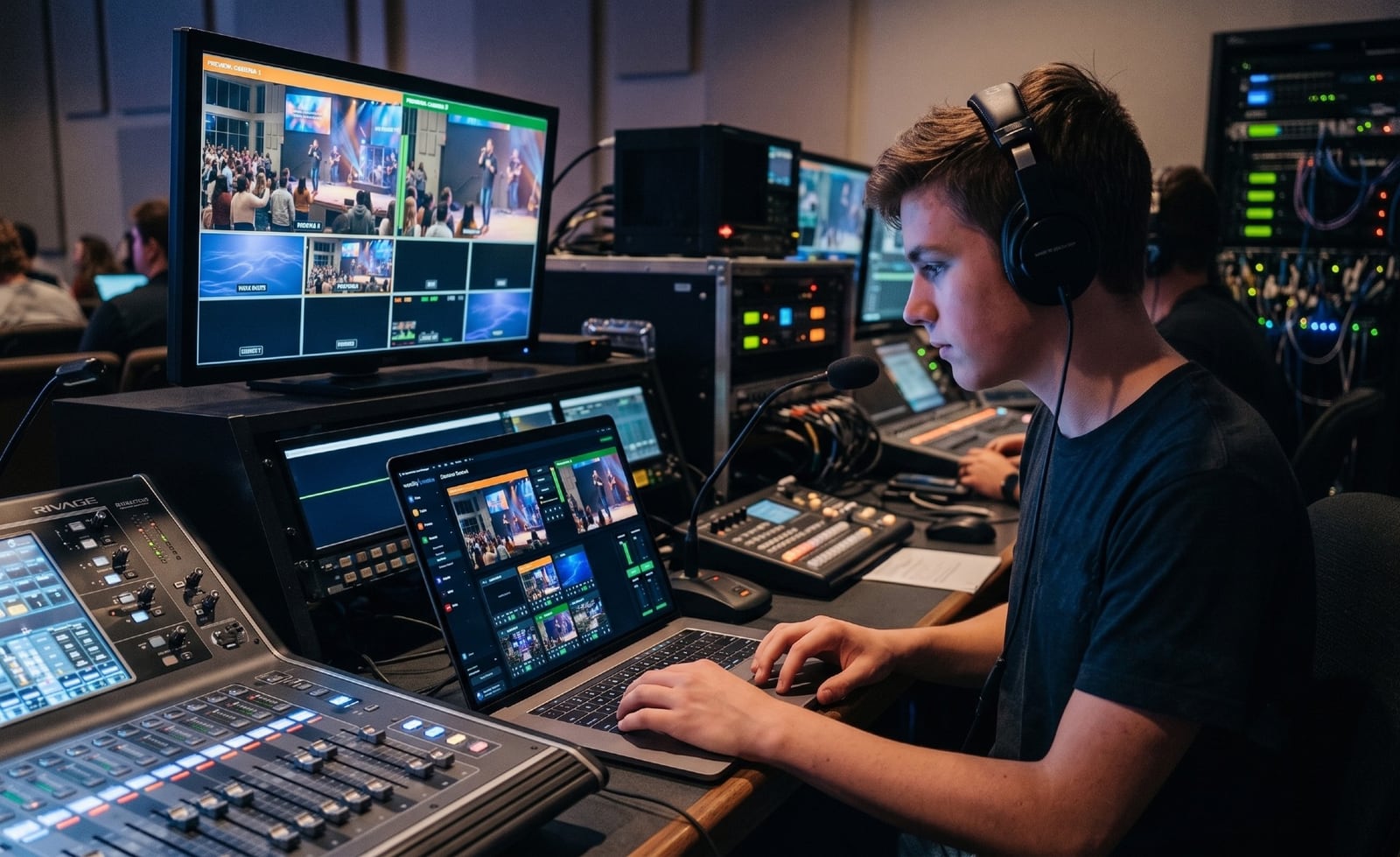
The Broadcaster
Stream Operator
Owns the online service from countdown to closing screen.
Typically 15+
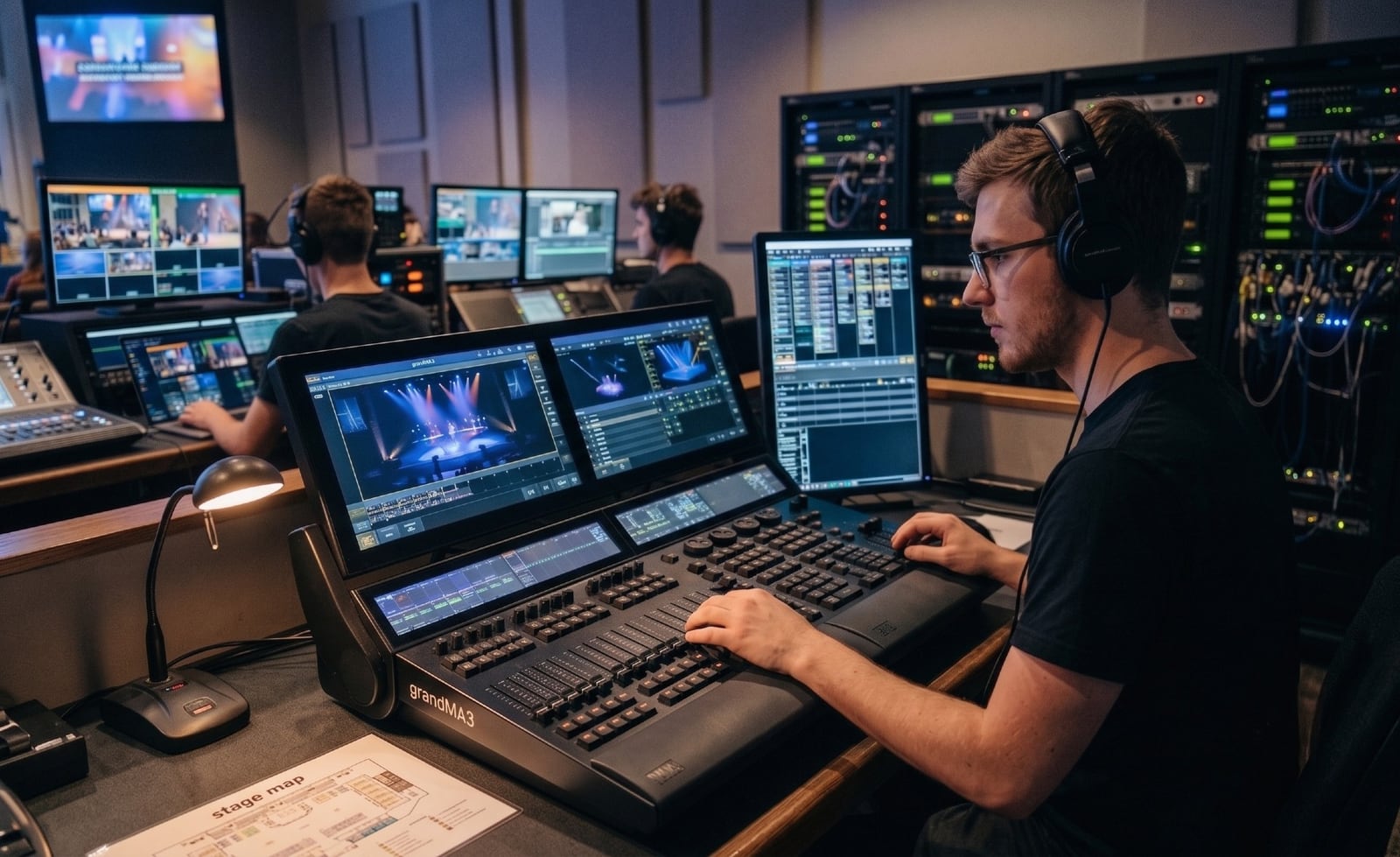
The Atmosphere
Lighting Operator
Shapes the room and owns the rig, one look at a time.
Typically 14+
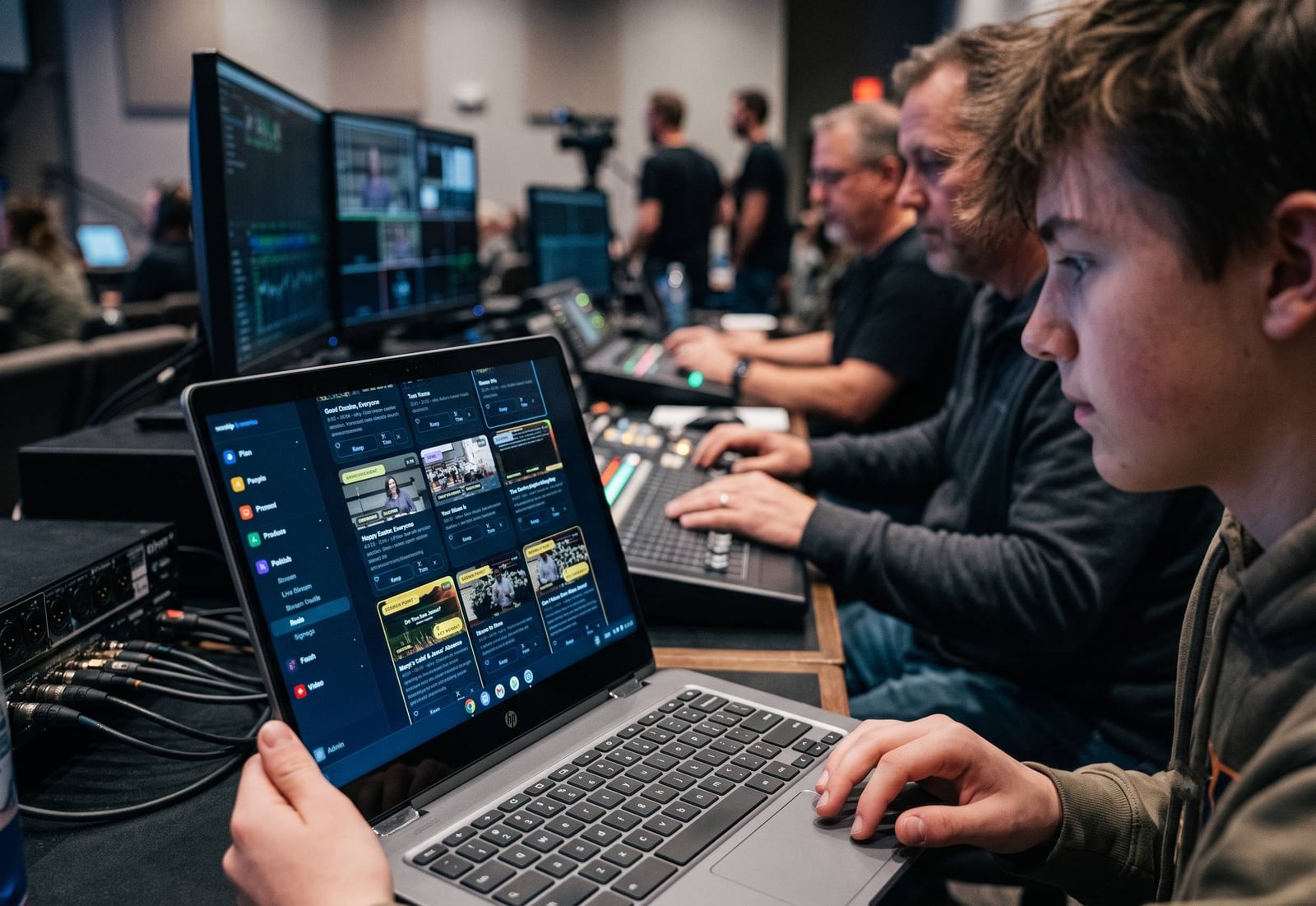
The Historian
Recording / Archivist
Makes sure every service is captured and useful afterward.
Typically 13+
Not sure which seat?
A two-minute quiz for students and the adults who serve beside them.
One seat, one clear job, one place to belong. The result comes with a note you can hand to your youth pastor or tech director.
Find the seat →The right seat for the right person
Who was sitting in the pews.
The student
Fluency looking for a place.
She edits video on her phone, knows what dropped frames mean from watching streamers, and was asked to put the phone away. The Lyrics seat gets her a first-week win at thirteen. Camera and Stream are where students spend the most time, because they can see their work immediately. The Youth Clip Team lets her find Sunday's best moments from home, with an adult approving every clip before it posts.
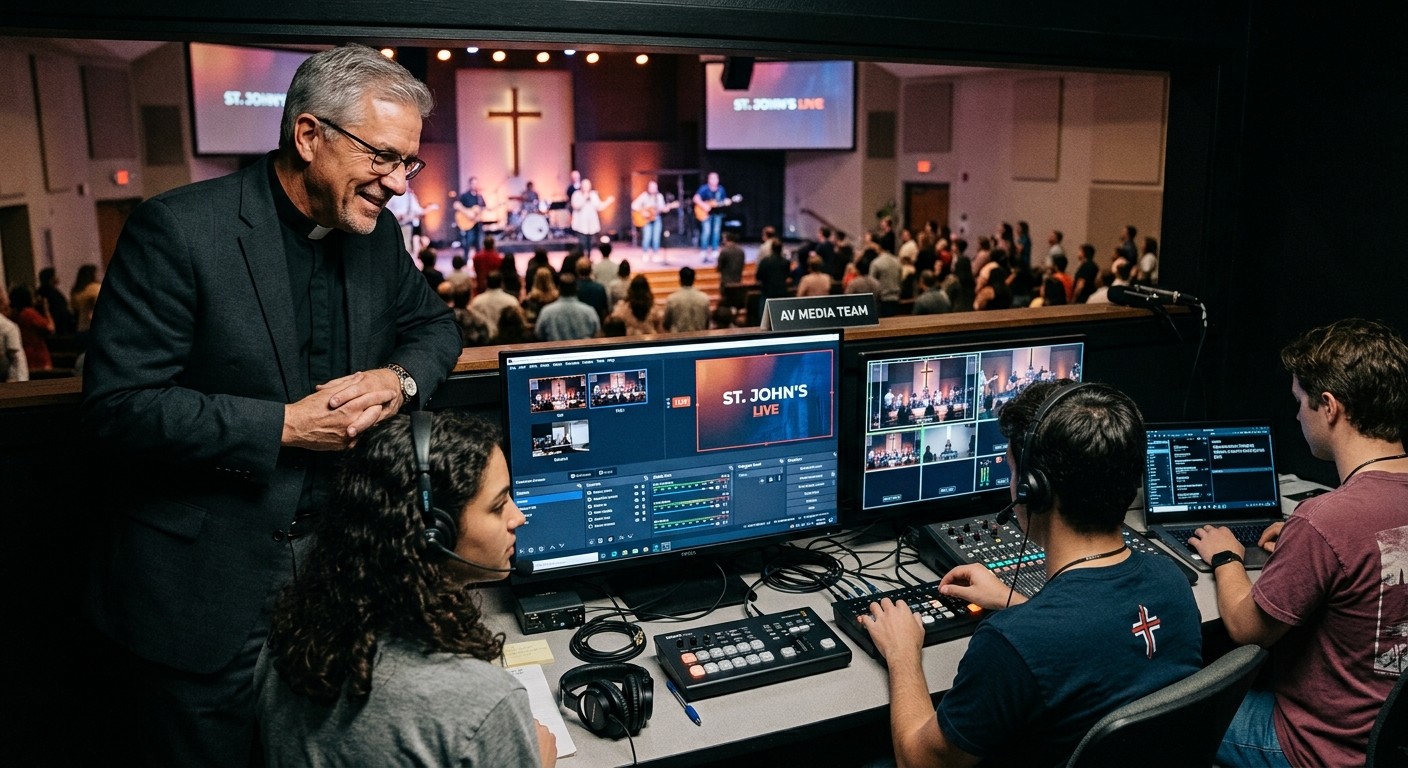
The member
More fulfilling work than ushering twice a year.
A retired electrical engineer in the third row has been waiting for somebody to ask. Audio is a deeper skill track and he has the ears for it. The nurse who stays calm when things go off-script makes a natural Service Director. The organized parent who likes finishing things becomes the Archivist who makes sure every service is captured and useful afterward. None of them wanted to run the whole booth. Each of them will own one seat.
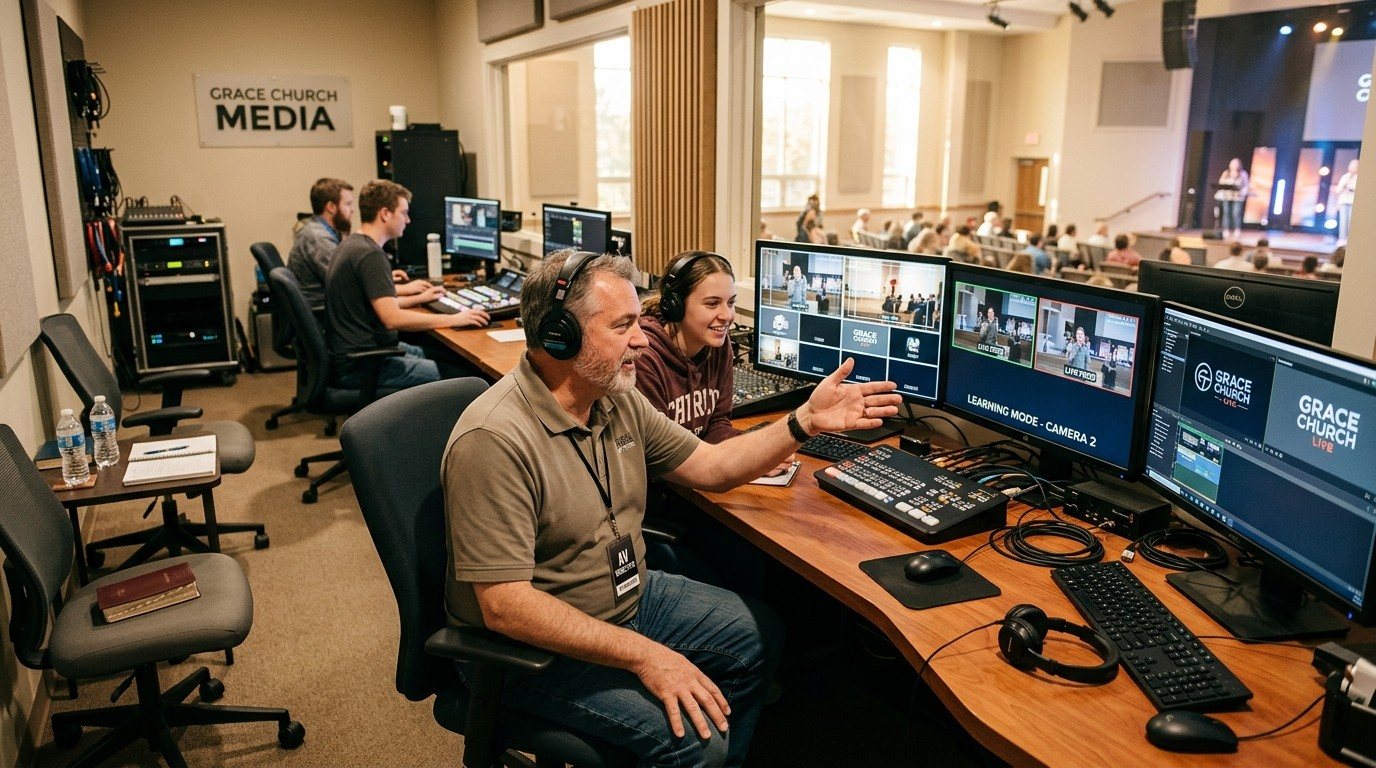
The team
Serve in one seat first. Grow into the next.
The senior seat, Service Director, belongs to whoever earned the team's trust by serving in other seats first. That's the ladder: a student who started on Lyrics at thirteen is calling the show at seventeen, and the adult who started on Camera is mentoring the next camera operator. Positions live on each person in WorshipMetrics, so the schedule knows who can fill what, and the next invitation goes to someone ready for it.
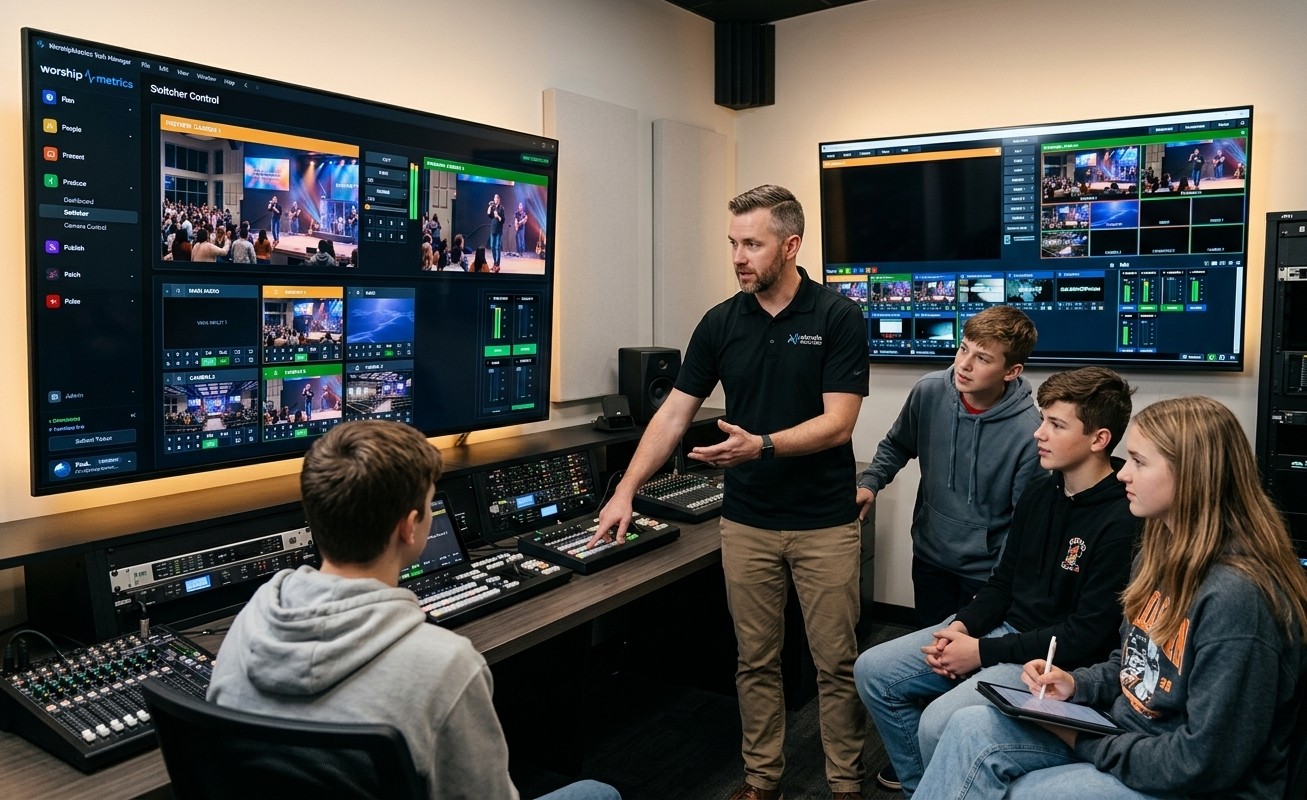
Why a seat is learnable in a morning
The platform does the hard parts. The seat is what's left.
The reason a thirteen-year-old can run lyrics on her first Sunday is not that she's gifted. It's that the slides built themselves from the song library and the whole service is on one screen before it starts. Every seat works the same way.
Lyrics
Slides build from the song library, so the seat is advancing on the right word, not building slides under pressure.
Learn more →Camera and Stream
The production dashboard puts preview, program, the cameras, and the stream health on one screen, with Go Live one click away.
Learn more →Audio and Lighting
The Signal Map says where every cable goes and prints the patch sheet for the binder, so the seat learns the room, not the mystery.
Learn more →When something breaks
Support can see the booth, and 910-WORSHIP answers any hour, so the new volunteer is never the only one who can fix it.
Learn more →What changed
Finding volunteers is no longer the hardest part. Training them is.
For years the industry treated recruitment as the volunteer problem. Church Production Magazine's latest research puts training ahead of it for the first time.
- 57%
- name training and skill development an operational challenge — up 20 points, now the most-cited one, ahead of volunteer recruitment
- 76%
- name volunteer training a production priority, up from 52% two years ago
- 72%
- run production mostly on volunteers — and 79% at churches under 500
That is why defined seats matter more than another feature. A volunteer with one clear job, and a seat designed around it, can be useful on their first Sunday instead of their fifth.
Source: Church Production Magazine, “Then vs. Now: How Church Production Is Shifting,” Research Series, June 2026.
FAQ
Questions churches ask about opening seats to serve
What are the AV team seats?
Seven clear jobs: Service Director, Camera Operator, Audio Engineer, Lyrics Operator, Stream Operator, Lighting Operator, and Recording / Archivist. Each is one job one person can own, with a typical starting age and a path to the next seat. They describe who does what on Sunday; every signed-in person can use the whole platform.
Do we need seven people to start?
No. Most churches start with two or three seats filled and one person covering the rest, then add a seat as a person appears for it. The point of naming the seats is that a volunteer can say yes to one job instead of to all of AV.
How young can a student start?
Lyrics is the usual first seat, at twelve or thirteen: three important buttons, a first-week win, and a place on the team. Camera and Archivist suit fourteen and up, Stream fifteen and up, Audio sixteen and up, and Service Director is the seat a student grows into after years of serving well in the others.
What makes a seat learnable in a morning?
The platform does the hard parts. Lyrics build from the song library, the production dashboard puts the booth on one screen, the Signal Map says where every cable goes, and support can see the system when something breaks. What's left for the seat is one job, taught by the person who held it last.
From the Knowledge Base
Serving questions, answered in the Knowledge Base.
Get started
Open the first seat this Sunday.
Create your church's free account, give the team their own logins, and put one person in one seat with the regular beside them. Every module is free forever, with unlimited users. No credit card, and no call or approval needed.
Questions? Call 910-WORSHIP or email hello@worshipmetrics.com.
- Sign up on your own, any time
- Setup help by phone and email
- On-site installation and training available
- AI phone support any hour