Start by listening
If you want your church to post sermon clips, you’ve probably already pictured it: your pastor’s best moments reaching people who’d never sit through a 75-minute livestream. (See your best sermon moments are buried.)
Your pastor may be less sure. That’s reasonable. Preaching is personal, and handing it to social media feels risky. Start by asking what concerns them, and take those concerns seriously. Here are the ones that come up most, and honest answers.
”It’ll take things out of context.”
It can, if clips are chosen carelessly. Good clips:
- Hold one complete thought, from the start of the idea to where it lands.
- Make sense on their own, to someone who’s never been to the church.
- Link to the full sermon, so anyone can hear the rest.
And you can agree that the pastor approves every clip before it’s posted, at least at first.
”I don’t want to become a content machine.”
Nobody’s asking the pastor to make content. The clips come from the sermon they already preach. The pastor’s job doesn’t change. Someone else does the clipping. (See can sermon clips actually grow a church?.)
”We don’t have anyone to do it.”
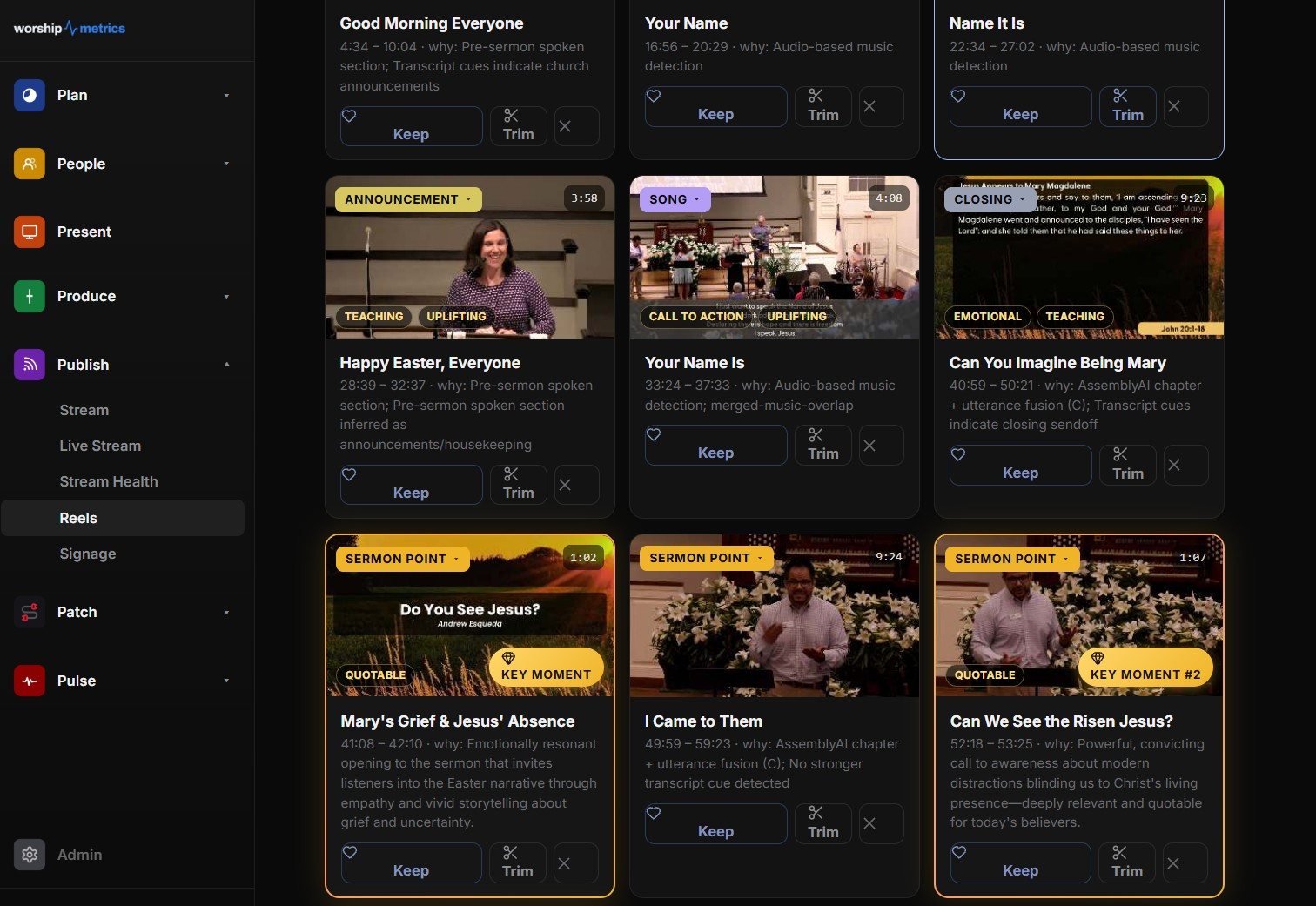
You. Or you and a couple of friends. With an AI tool that suggests the moments, clipping takes about an hour a week. With Reels (formerly Worship Clips), the service is read, moments are suggested, and clips render with captions and the church’s branding. Volunteers can even work from home with cloud Reels on Pro and Max. (See the Youth Clip Team.)
”Is this just chasing trends?”
It’s meeting people where they are. Many people, especially under 40, will never watch a full service online. But they’ll watch 45 seconds of a pastor saying something true, and some of them will come back for more. Clips don’t replace the sermon. They invite people to it. (See from livestream to front door.)
”What about privacy and safety?”
Good question, and there are clear answers:
- Never post prayer requests, people in emotional moments, pastoral care moments, or children without parental consent.
- Keep account passwords with church leaders, not volunteers.
- Check music licensing before posting worship song clips. (See can churches post worship song clips?.)
- Keep service video on the church computer if that’s a concern. Reels can run there for free. (See privacy for sermon clips.)
Put it on one page. (See the guardrails pastors need.)
”What will it cost?”
Reels is free and unlimited in Tech Manager, the WorshipMetrics app on the church’s streaming computer. Working on clips from home uses cloud Reels, included with Pro and Max. See pricing for the details.
The pitch: a one-month trial
Instead of asking for a big change, ask for a small experiment:
“Can we try posting two or three clips from your sermon each week for one month? I’ll make them, you approve each one before it goes up, and we won’t post anything personal or sensitive. At the end of the month, we’ll look at how many people watched and whether anyone new reached out.”
That’s easy to say yes to. It keeps the pastor in control, and it lets results make the case.
At the end of the month
Bring the numbers: views, how many people watched to the end, shares, comments, and any first-time guests who mention the clips. (See are your clips bringing people in?.) Then ask: keep going?
Most pastors who see a stranger comment “I needed to hear this today” on a 45-second clip of their sermon don’t need much more convincing.
Related questions
- How do I convince my pastor to post sermon clips?
- Listen to their concerns first, then propose a small, low-risk trial: a few clips a week for one month, each approved by the pastor or a leader before posting, with clear rules on what never gets posted. Show the results at the end of the month.
- Won't sermon clips take things out of context?
- They can if they're chosen carelessly. The fix is choosing moments that hold one complete thought, linking every clip to the full sermon, and having the pastor or a leader approve clips before they're posted.
- Is posting sermon clips just chasing trends?
- It's meeting people where they are. Many people will never watch a full church service online but will watch 45 seconds of a pastor saying something true. Clips don't replace the sermon; they invite people to it.
Is It Safe to Upload Church Service Video to AI? Privacy for Sermon Clips
NextWant to Help Your Dad's Church Grow Online? Start With His Livestream
Related Articles
A Content Engine That Stays Personal: More Clips, Better Titles, Better Thumbnails
Keeping up online means more content than most church teams can make by hand. Clipping every service, with AI help on titles, descriptions, and thumbnails, turns one sermon into a week of posts. Here's how to build a church content engine that stays personal, controllable, and true to your voice.
Which Sermons Resonate? What Clip Metrics Tell Pastors
When you clip every service, each clip becomes a small signal: what people watched, finished, shared, and came back to. Here's how pastors can read sermon clip metrics to learn what's connecting with their congregation and community, without letting the numbers write the sermon.

Which Worship Songs Does Your Congregation Love? Song Insights From Clips
Worship leaders usually choose songs by feel, familiarity, and theme. Clip metrics add another view: which songs people play again and again, at church and online. Here's how to read worship song insights to plan stronger sets, and the licensing to check along the way.