The fluency gap runs in reverse
In most church jobs, adults train students. Sermon clipping flips that. Many of your students understand short-form video better than anyone on staff.
They’ve grown up on it. Without thinking, they know:
- When a clip is going to lose people, often within the first two seconds.
- What sounds authentic and what sounds like an ad.
- How long is too long for a given moment.
- What their friends would actually share, and what they’d scroll past.
That’s not a skill most adults can learn from a guide. It’s instinct, built from thousands of hours of watching. Your church can put it to work.
They’re also the audience
Students don’t just know the platforms. Their friends are the audience your church struggles to reach. When a student asks “would my friends stop for this?” they’re asking the right question, about the right people.
And when they share a clip they chose, it arrives in their friends’ feeds with a personal endorsement no church account can match. (See the youth media flywheel.)
Finding the moment means listening
Here’s the part youth pastors love. You can’t find the best moment of a sermon without listening to the whole sermon and deciding what mattered most.
One simple approach that works well: ask each student to listen and pick one moment that resonated with them personally. That moment becomes the clip they prepare for the church. Then ask them why they chose it.
The answers are often the best conversation about the sermon all week. A student who spent an hour deciding which 45 seconds of a message on forgiveness to share has thought about forgiveness more than almost anyone in the room. (Turn it into a group session: see the sermon clip night.)
Taste can be coached
Good instincts get better with feedback. A few things to coach:
- Start at the hook. Trim the lead-in so the clip opens with the strongest sentence. (See sermon clip hooks.)
- One complete thought. End when the idea lands, not mid-sentence.
- Makes sense to a stranger. Would someone who’s never been to your church understand it?
- Read the captions. Check names and Bible books before anything goes out. (See captions for sermon clips.)
What adults add
Students bring fluency. Adults bring context:
- Theological clarity. Does this moment say what the pastor meant, or could it be misunderstood without the surrounding sermon?
- Pastoral awareness. Is anyone in the shot who didn’t agree to be featured? Is this a sensitive moment?
- Music and consent rules. Worship song clips need a licensing check. (See can churches post worship song clips?.)
- Final approval. An adult signs off before anything is posted.
A five-minute review is usually enough. It also turns into mentoring: the adult explains why, and the student learns to spot it next time.
Let AI handle the tedious part
Students shouldn’t spend their hour scrubbing a 75-minute video. Reels (formerly Worship Clips) reads the service and suggests candidate moments, then renders the chosen clips with captions and your branding in vertical, square, and horizontal formats. That leaves students free to do what they’re best at: choosing.
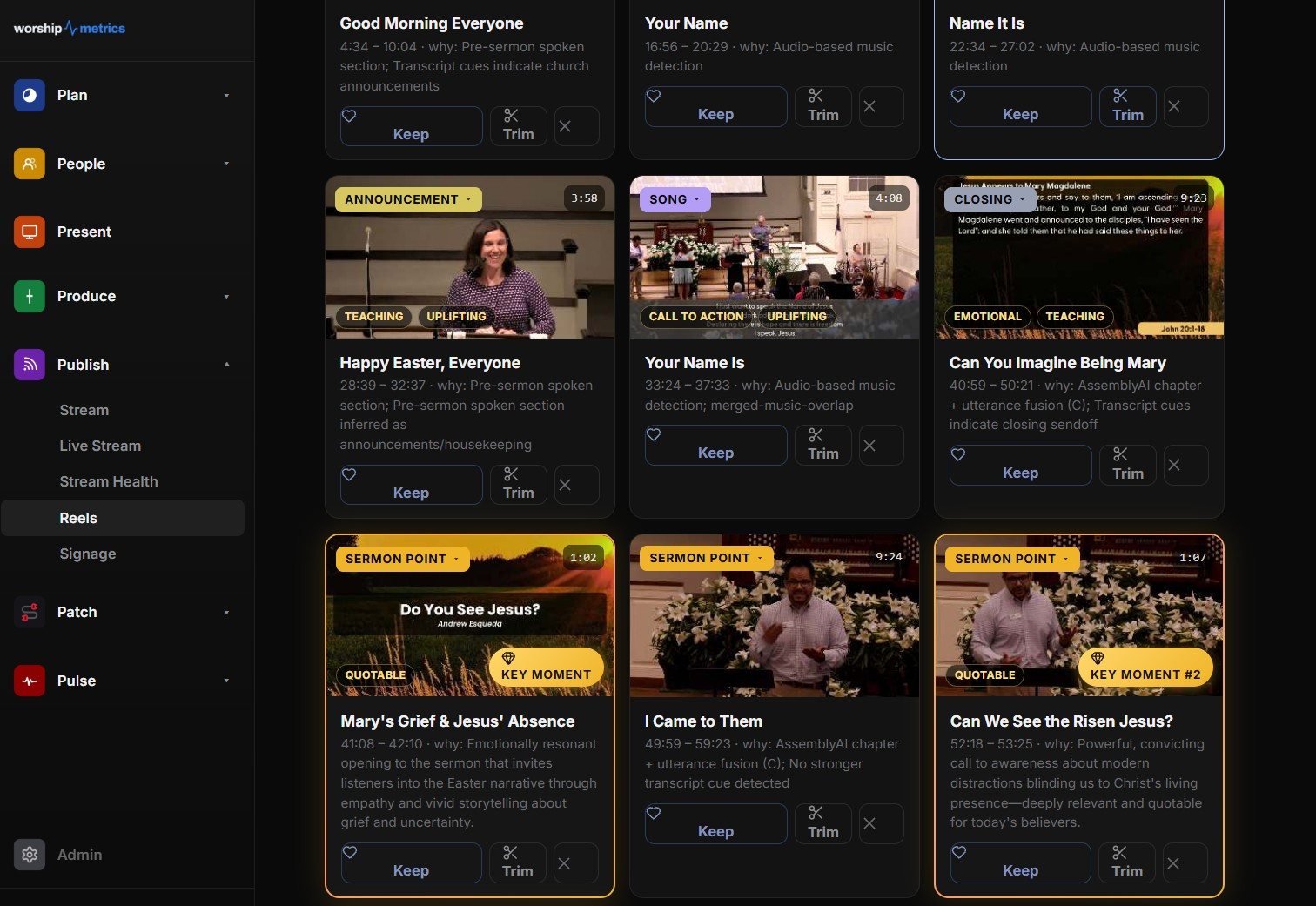
And because cloud Reels (on Pro and Max) works from a browser, they can do it from home whenever they have time. See serving from home, or the full picture on the Youth Clip Team page.
Related questions
- Why should students make our church's sermon clips?
- They know short-form video better than most adults: what hooks attention, how long a clip should run, what feels authentic versus forced. Their friends are also the audience the church most wants to reach, and they'll share what they made.
- Does clipping sermons help students spiritually?
- It can. To find the best moment, a student has to listen to the whole sermon closely and decide what mattered most. Many youth leaders find it leads to better conversations about the message than simply sitting through it.
- What do adults need to add when students make clips?
- Context and care: whether a moment is theologically clear on its own, whether anyone in the clip needs to give consent, and whether a clip could be misunderstood out of context. A short adult review before posting covers it.
Serving From Home: How Students Can Clip Sermons on Their Own Schedule
NextCan Churches Post Worship Song Clips? Copyright, CCLI, and Social Media
Related Articles
A Content Engine That Stays Personal: More Clips, Better Titles, Better Thumbnails
Keeping up online means more content than most church teams can make by hand. Clipping every service, with AI help on titles, descriptions, and thumbnails, turns one sermon into a week of posts. Here's how to build a church content engine that stays personal, controllable, and true to your voice.
Which Sermons Resonate? What Clip Metrics Tell Pastors
When you clip every service, each clip becomes a small signal: what people watched, finished, shared, and came back to. Here's how pastors can read sermon clip metrics to learn what's connecting with their congregation and community, without letting the numbers write the sermon.

Which Worship Songs Does Your Congregation Love? Song Insights From Clips
Worship leaders usually choose songs by feel, familiarity, and theme. Clip metrics add another view: which songs people play again and again, at church and online. Here's how to read worship song insights to plan stronger sets, and the licensing to check along the way.