The most powerful story your church can tell
A sermon explains what God does. A testimony shows it happening to someone in your church. For a viewer who’s still deciding whether your church is real, a 90-second story from someone like them can say more than a whole series.
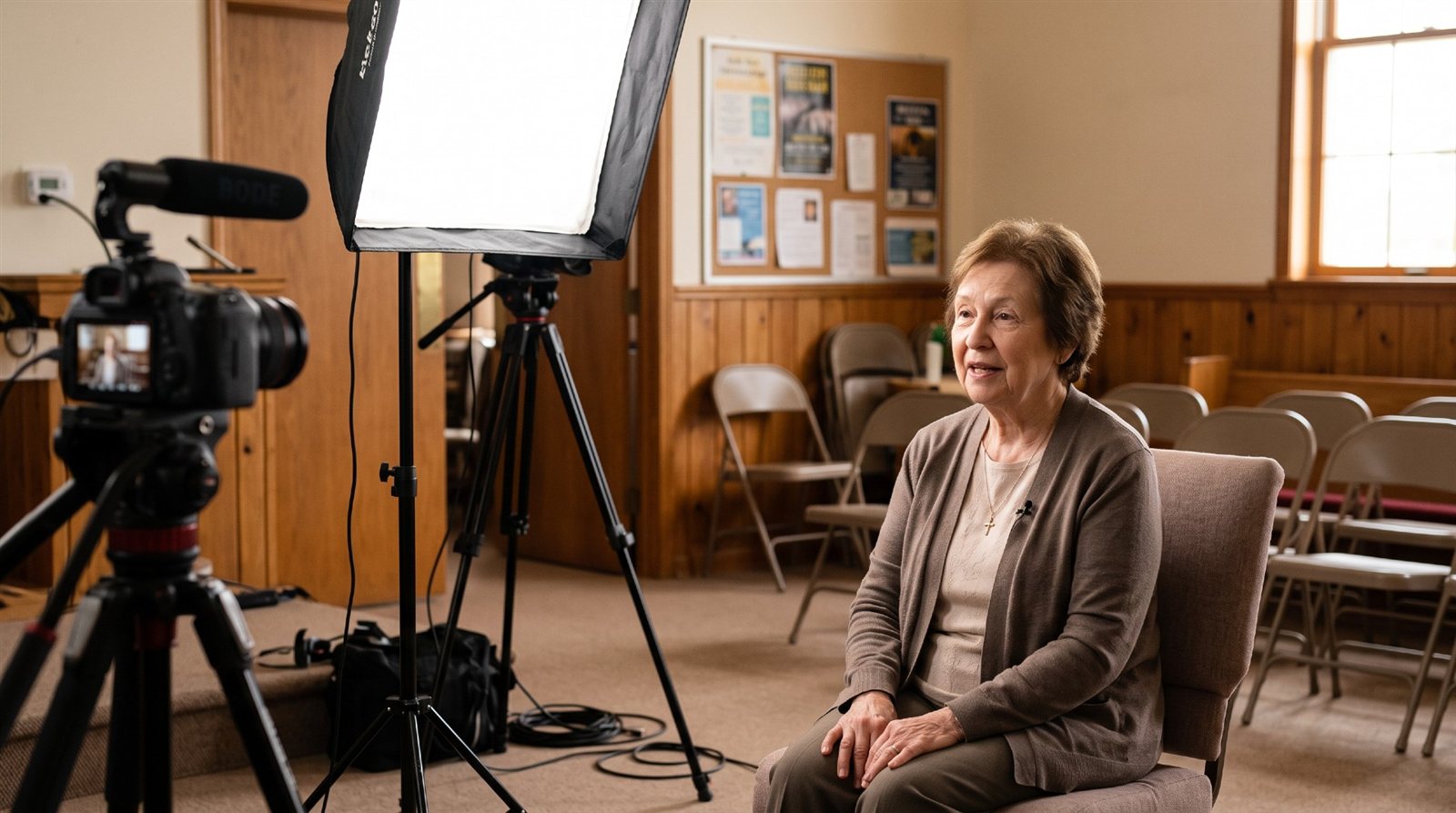
Testimony videos don’t need a film crew. They need a simple structure, good questions, and care for the person telling the story.
The three-part structure
Every testimony follows the same simple arc:
- Who I was before. Life before the change: the struggle, the question, the season.
- What happened. The turning point: a person, a moment, a step of faith, a church that showed up.
- Who I am now. What’s different, and what they’d say to someone who’s where they used to be.
Keep the whole thing between ninety seconds and three minutes. That’s long enough to tell a real story and short enough that people finish it.
Interview, don’t script
Scripts make people sound rehearsed. Questions let them sound like themselves. Sit beside the camera, not behind it, and ask open questions:
- “What was life like before?”
- “What was the hardest part of that season?”
- “When did things start to change?”
- “Who was there for you?”
- “What’s different now?”
- “What would you say to someone going through what you went through?”
Ask the person to answer in full sentences (“Before I came to this church, I…”), so their answers make sense without your question. Then let silence work. The best answers often come after a pause.
A simple setup
- Camera: a phone or a church camera on a tripod, at eye level.
- Light: face a window, or use one soft light. Avoid bright windows behind them.
- Audio: a clip-on mic. People forgive soft video; they don’t forgive bad audio.
- Background: somewhere quiet and meaningful, like the sanctuary, their kitchen, or where the story happened.
- B-roll: a few shots of them in everyday life or serving at church, to cover edits.
Consent comes first, every time
Testimonies often include painful details. Protect the people who share them:
- Get written consent before publishing, and say where the video will appear: stream, YouTube, social media, website.
- For anyone under 18, get written consent from a parent or guardian. (See safeguarding students in church tech.)
- Let them review the final cut, and remove anything they’re not comfortable with.
- Let them withdraw later if circumstances change, and take the video down if they ask.
- Protect other people in the story. Leave out names and details of family members or others who haven’t agreed to be included.
Where to use it
- During a service, before a sermon on the same theme.
- On YouTube, with a search-friendly title and an end screen pointing to a what to expect page.
- As a short clip of 30 to 60 seconds for Reels and Shorts, ending with an invitation to watch the full story.
- In your private community and the pastor’s email, where it reaches people who already care.
Add testimonies to your touchpoint map as a monthly rhythm, and make them a semester project for your AV Club.
Cutting the short version
The short version needs a hook in the first three seconds, usually the strongest line from “who I am now.” Add captions, since many people watch with the sound off, and end on the invitation rather than a logo. If you’re training someone for this, see how to train a church clips volunteer. For sermon moments, WorshipMetrics sermon clips handles the finding and formatting so your clipper has more time for stories like these.
Related questions
- How long should a church testimony video be?
- Ninety seconds to three minutes for the main video. You can cut a 30 to 60 second version for Reels and Shorts that ends with an invitation to watch the full story.
- Should we script testimony videos?
- No. Interview people with open questions instead. Scripts make people sound rehearsed; good questions let them tell their story in their own words. Edit afterward for length and clarity.
- What consent do we need for a testimony video?
- Written consent from the person before publishing, covering where the video will be shared. For anyone under 18, get written consent from a parent or guardian. Let people review the final cut and withdraw if they change their mind.
The Five-Minute Story Huddle: Tell Your Media Team the Story Before You Tell the Room
NextThe 'What to Expect' Page: Helping Online Viewers Make Their First Visit
Related Articles
A Content Engine That Stays Personal: More Clips, Better Titles, Better Thumbnails
Keeping up online means more content than most church teams can make by hand. Clipping every service, with AI help on titles, descriptions, and thumbnails, turns one sermon into a week of posts. Here's how to build a church content engine that stays personal, controllable, and true to your voice.
Which Sermons Resonate? What Clip Metrics Tell Pastors
When you clip every service, each clip becomes a small signal: what people watched, finished, shared, and came back to. Here's how pastors can read sermon clip metrics to learn what's connecting with their congregation and community, without letting the numbers write the sermon.

Which Worship Songs Does Your Congregation Love? Song Insights From Clips
Worship leaders usually choose songs by feel, familiarity, and theme. Clip metrics add another view: which songs people play again and again, at church and online. Here's how to read worship song insights to plan stronger sets, and the licensing to check along the way.