Choosing between the Teradek VidiU Go and VidiU X comes down to understanding your church’s specific needs and streaming scenarios. Both are portable, reliable encoders, but they’re optimized for different use cases. This comparison helps you decide which is the right investment for your ministry.
Core Specifications and Similarities
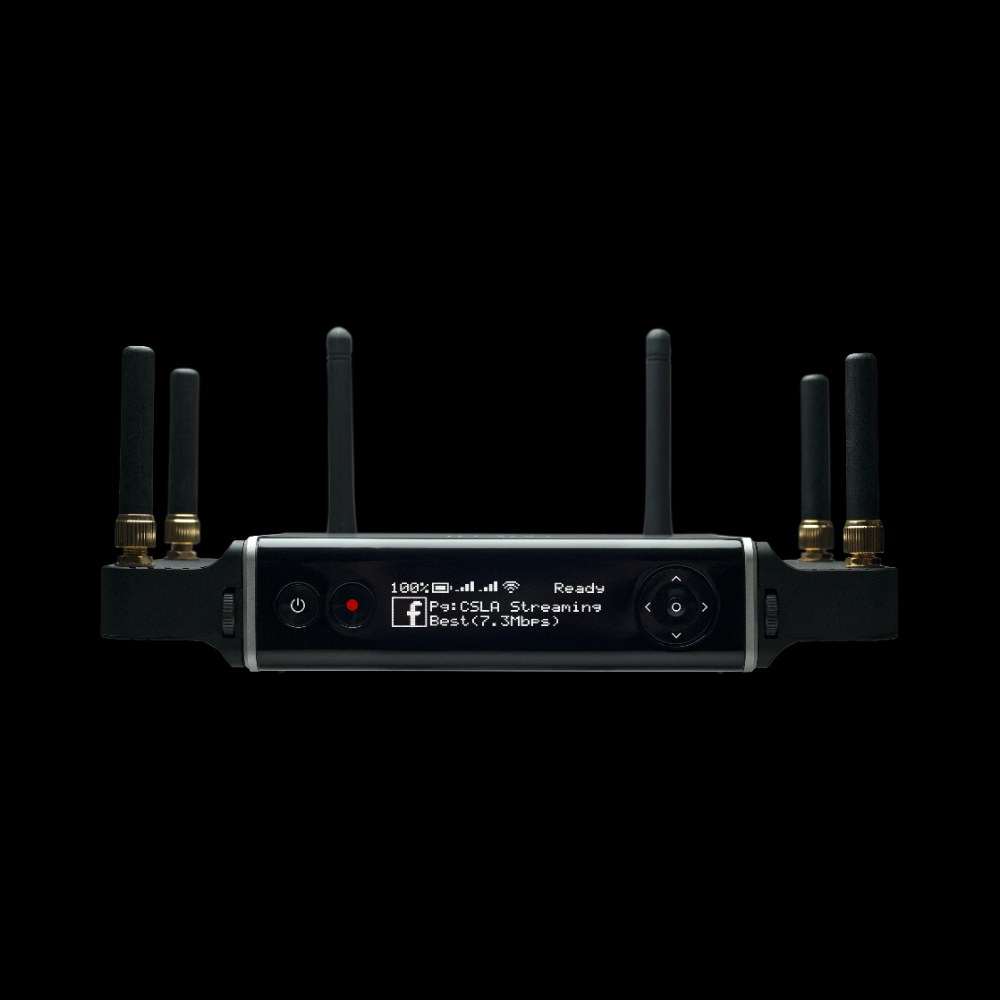
Both the VidiU X and VidiU Go are compact hardware encoders with HDMI inputs, web-based interfaces, and integration with Teradek’s CORE cloud management platform. Both support streaming to YouTube, Facebook, and custom RTMP destinations simultaneously. Both can encode at resolutions up to 1080p60 with flexible bitrate settings.
In a sanctuary with access to reliable Ethernet, both devices perform virtually identically. The encoded video quality, platform compatibility, and configuration interfaces are the same. The key differentiator is connectivity.
Connectivity: The Primary Difference
The VidiU X relies on Ethernet (or Wi-Fi if necessary). It’s designed for venues with stable internet infrastructure. Your sanctuary, office, or main broadcast location presumably has good Ethernet available.
The VidiU Go includes multiple built-in cellular modems supporting bonded mobile connections. It’s designed for locations where Ethernet is unavailable or unreliable. The Go can simultaneously connect to multiple cellular carriers, combining their bandwidth for robust outdoor streaming.
This single difference drives every other distinction between the two devices.
Cost Consideration
The VidiU X typically costs $500-1200 depending on retailer and promotions. It’s a one-time hardware expense. Your ongoing costs are only platform fees (YouTube/Facebook, which are free for basic streaming).
The VidiU Go costs $1500-2500—significantly more upfront. Beyond hardware, you’ll need cellular data plans. With bonded cellular (multiple carriers), expect $50-150 monthly ongoing. Over a three-year ownership period, total cost of ownership for the Go can exceed the X by $1500-2000.
For a church streaming mostly from fixed locations (your sanctuary, multi-campus main venue), the VidiU X is more economical. For a church with regular outdoor events or multiple remote locations, the Go’s cost premium becomes justified.
Venue and Usage Scenarios
VidiU X is ideal if: Your church streams primarily from your sanctuary with Ethernet access. You might occasionally stream from another fixed location (fellowship hall, education wing, parking lot tent revival) where temporary Ethernet can be run. Your streaming is scheduled and predictable.
VidiU Go is ideal if: Your church holds regular outdoor events (Easter sunrise services, baptisms, outdoor weddings). You stream from multiple remote locations without reliable internet. Your streaming situations are unpredictable or ad-hoc. You want the freedom to broadcast from anywhere without pre-planning network infrastructure.
Practical Examples
A single-campus church with a sanctuary broadcast setup and annual Easter sunrise service might purchase the VidiU X for regular use and rent a VidiU Go for that one outdoor event annually. Renting costs $50-100 per day—cheaper than owning for occasional use.
A multi-campus church with a main venue (VidiU X on Ethernet) and satellite campuses (each with VidiU Go for cellular bonding) can distribute services independently. Each campus streams its own angle simultaneously, enriching the viewing experience.
A church with outdoor ministry focus (beach baptisms, mountain prayer gatherings, van-based neighborhood events) justifies the VidiU Go’s premium for its reliability and carrier bonding.
Reliability and Redundancy
The VidiU X’s reliability depends entirely on your venue’s Ethernet infrastructure. If your internet connection goes down, so does your stream. For most churches, this is acceptable—internet reliability is generally good in developed areas.
The VidiU Go provides built-in redundancy through cellular bonding. If one carrier’s signal weakens, others compensate automatically. If one carrier drops completely, others continue seamlessly. This is inherently more resilient for unpredictable outdoor environments.
However, this redundancy comes at the cost of monthly cellular fees. If your church streams infrequently from outdoor locations (perhaps twice yearly), paying $100+ monthly for redundant cellular might not be economical. You’re paying for reliability you rarely need.
Deployment Flexibility
The VidiU X requires advance planning for any new location. You need to run Ethernet to the location (if Wi-Fi is insufficient). For organized events with lead time, this is manageable. For spontaneous outdoor broadcasting, it’s limiting.
The VidiU Go is “grab and go”—take it anywhere with cellular coverage and start streaming. No planning required beyond confirming signal strength at your intended venue. This flexibility is valuable for responsive ministry.
Bandwidth and Quality
Both devices can stream identically high-quality video given adequate bandwidth. On Ethernet, the VidiU X can rely on consistent, high-bandwidth connectivity. On bonded cellular, the VidiU Go can also deliver excellent quality if you’ve bonded multiple strong carriers.
The potential limitation with VidiU Go is cellular bandwidth ceiling. Even with bonded cellular from three carriers, your maximum aggregated bandwidth might be 25-30 mbps in an ideal location. Urban areas with good coverage can achieve this; rural areas might be limited to 5-10 mbps.
For comparison, most church Ethernet connections easily provide 50-100 mbps upload capacity, making the X more future-proof if you eventually want 4K streaming or higher bitrates.
Management and Monitoring
Both devices integrate with Teradek CORE for remote monitoring and cloud management. There’s no functional difference here—both are equally capable of remote monitoring from a phone or web browser.
Training and Support
The VidiU X is simpler—no cellular bonding to configure, no SIM cards to manage. Your AV volunteers need to understand HDMI connectivity and basic RTMP configuration. Setup is straightforward.
The VidiU Go requires additional knowledge—cellular carrier selection, bonding configuration, signal strength monitoring, data plan management. Your team needs slightly more technical depth.
However, both devices have identical web interfaces and streaming configuration, so the learning curve difference is manageable.
Recommendation Framework
Choose the VidiU X if you’re primarily streaming from fixed locations with reliable Ethernet and budgets are constrained. It’s an excellent device at a lower price point.
Choose the VidiU Go if you frequently stream from outdoor locations, multiple remote venues, or situations where Ethernet is unavailable. The premium is worth it for the flexibility and reliability benefits.
Consider both devices if you’re a larger church. Use the VidiU X as your primary sanctuary encoder and deploy one or more VidiU Go units for outdoor events and satellite locations.
Consider renting a VidiU Go for specific outdoor events rather than purchasing, especially if outdoor streaming is infrequent.
Future-Proofing Your Investment
Both devices should remain useful for 4-5 years before becoming outdated. Teradek regularly releases firmware updates that extend functionality without requiring hardware replacement.
If your church anticipates growth in outdoor events or multi-location broadcasting, the Go’s flexibility might prove more valuable over time. If you’re confident your streaming will remain primarily sanctuary-based, the X’s efficiency is sufficient.
Neither device is a poor choice—they’re both excellent encoders optimized for different use cases. Your decision should center on your specific ministry’s streaming needs and budget constraints.