Verdict
OBSBOT Tail Air wins for AI tracking and small sanctuary use; AVKANS wins for budget multi-camera NDI setups.
The comparison between OBSBOT Tail Air and AVKANS PTZ-U100 represents a fundamental difference in camera philosophy. One camera uses artificial intelligence to follow movement automatically. The other requires a skilled operator to compose shots through live control. Both cost between $400-600, but they serve entirely different production models. Understanding which philosophy matches your church’s team and worship style is critical.
OBSBOT Tail Air Overview
The OBSBOT Tail Air is an AI-powered camera designed to track moving subjects automatically. Using built-in computer vision, it identifies people, follows them as they move across the stage or sanctuary, and keeps them framed in the shot. For churches with single-camera setups, this removes the need for a dedicated camera operator.
The magic is real. The tracking works reliably across typical worship scenarios — a pastor moving between stage areas, a worship leader moving left to right, congregational prayer with movement. The camera learns preferred framing and can switch between multiple subjects intelligently. The initial setup involves teaching the camera who to track (simple face registration), then letting AI handle the framing.
The Tail Air ships with USB connectivity and integrates cleanly into OBS, Streamlabs, or Wirecast. No network complexity, no IP addressing, minimal configuration. Plug in USB, choose the camera in OBS, and you have an automated video operator.
The build quality is excellent. The motorized pan, tilt, and zoom mechanisms are smooth and precise. The 4K resolution sensor captures detail even when zoomed, important for picking up subtle expressions and text displays.
However, AI tracking introduces limitations. The camera can miss subject changes if someone enters from off-screen, can get confused when subjects overlap, and occasionally will hunt for framing in low-light scenarios. More fundamentally, AI tracking creates a specific aesthetic — you get automatic, reactive framing rather than intentional composition. Some churches love this modern look; others find it distracting.
The price is the other consideration. At $500-600, OBSBOT Tail Air is at the premium end of the budget PTZ market, yet it delivers only one camera rather than supporting a multi-camera setup.
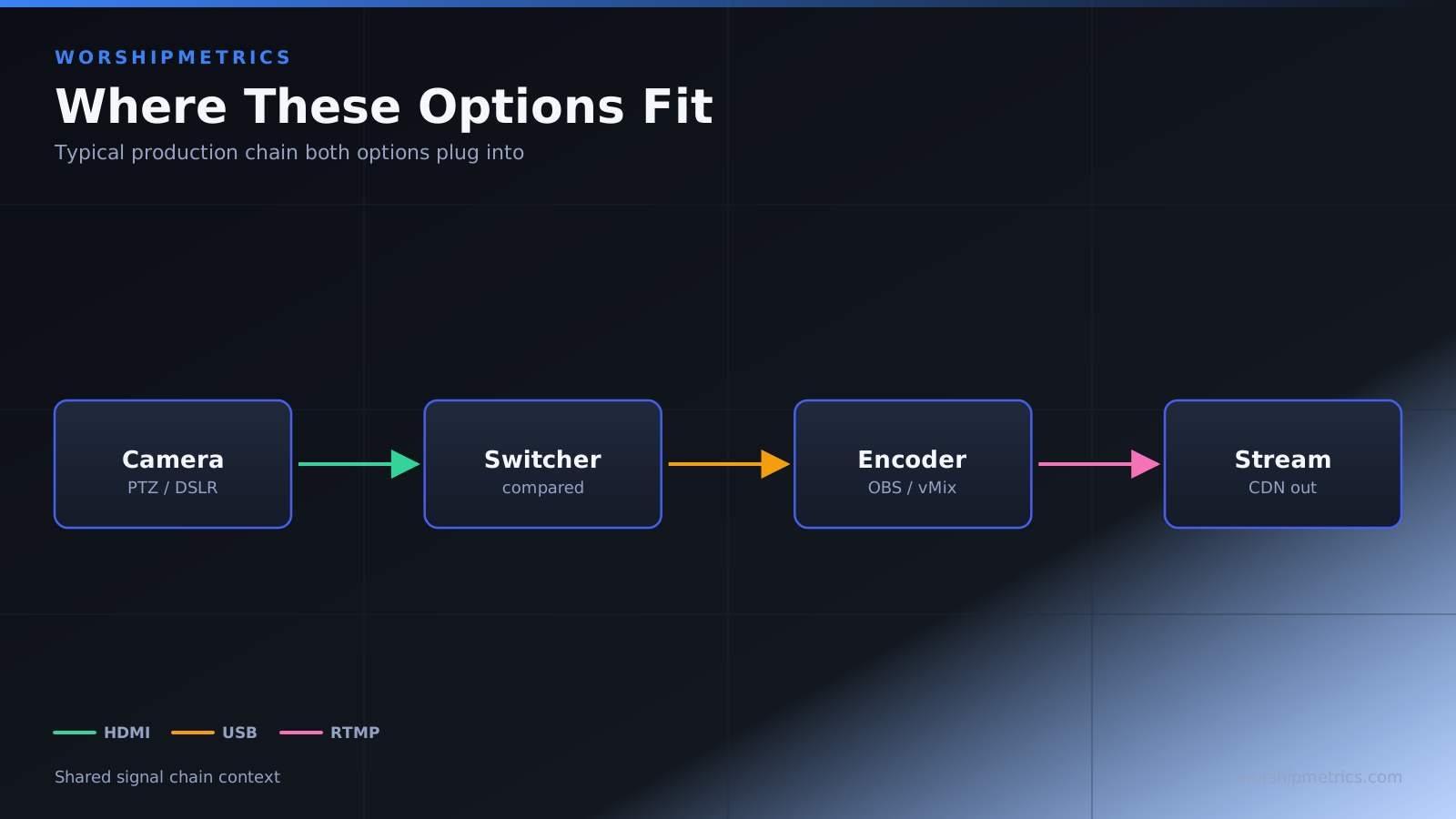
AVKANS PTZ-U100 Overview
The AVKANS PTZ-U100 represents the manual operator model. It requires someone at a keyboard or joystick composing shots in real-time. When the pastor moves across the stage, an operator pans and adjusts zoom. When worship begins with the band moving around, the operator frames the dynamic action. This is traditional television directing applied to church production.
What you gain from this manual model is intentionality. A skilled operator composes shots for storytelling — tightening on a vocalist during an emotional moment, pulling back during congregational singing, emphasizing the teaching moment with sustained pastor shots. The camera becomes an instrument of narrative rather than an automated response to movement.
The AVKANS’s NDI support positions it as the foundation of a scalable system. If your church later adds multiple cameras, you can integrate additional AVKANS units (or different PTZ cameras) into the same NDI network. You’re investing in an architecture, not just a single camera.
Network-based setup is slightly more complex than USB plug-and-play, but the flexibility is worth it. You can control the camera from anywhere on your network, integrate it with software switchers, and add redundancy or distribution capabilities as you grow.
The 30x zoom provides reach for medium-to-large spaces. The stable, predictable image quality means operators develop muscle memory and consistency across services.
The trade-off is labor. You need someone operating the camera — either a trained operator or a volunteer learning on the job. For single-camera setups serving smaller sanctuaries, this is a real operational burden.
Head-to-Head: Automation vs Intentionality
This comparison isn’t really about camera specs. It’s about production philosophy. Do you want technology that automatically responds to movement, or do you want a tool that enables human storytellers to compose shots?
The OBSBOT Tail Air liberates small churches from needing a dedicated camera operator. A single person can manage the entire stream — audio levels, graphics, switching — without needing separate camera control. The AI framing is respectably composed, appropriate for most worship scenarios. For a church with limited production team, this is genuinely valuable.
However, the AI model creates constraints. The camera follows; it doesn’t lead. You can’t compose a specific shot to emphasize a moment before it happens. You can’t deliberately choose to stay wide during a congregational singing section. You’re always reacting to what the AI detected.
The AVKANS model requires an operator, but that operator becomes a creative contributor. They can emphasize, frame, and compose intentionally. For churches that have trained operators or are willing to invest in training, this produces more intentional, storytelling-driven video.
Which Should Your Church Choose?
Choose OBSBOT Tail Air if your church has a single sanctuary, limited production team, and wants to reduce operational burden. If you’re currently streaming with a fixed camera or can’t dedicate a person to camera operation, the Tail Air’s automation is liberating. The AI framing is professional and appropriate. Also choose OBSBOT if you prefer a plug-and-play USB experience without network configuration.
Choose OBSBOT Tail Air for very small sanctuaries (under 150 seats) where a single tightly-framed camera covers all action. The AI’s tendency to follow subjects closely actually works better in compact spaces.
Choose AVKANS if you have (or plan to hire) a trained camera operator. If someone on your team enjoys operating cameras and can dedicate time to live switching, the AVKANS’s manual control enables more intentional, storytelling-driven production. The 30x zoom also handles larger sanctuaries better.
Choose AVKANS if your church is building toward multi-camera production. The NDI support means you can add additional cameras, integrate with network-based audio and graphics systems, and scale without replacing infrastructure.
For churches planning to grow, AVKANS is the foundation camera. You can keep it as a wide or stationary shot while adding additional cameras and developing more sophisticated production. OBSBOT is harder to integrate into expanding multi-camera systems.
The right choice depends on your team capacity and production values. OBSBOT Tail Air removes the operator bottleneck, perfect for churches without dedicated production staff. AVKANS demands more operational commitment but unlocks intentional, composed storytelling. Choose based on whether your constraint is people (choose OBSBOT) or budget and growth plans (choose AVKANS).