Verdict
For most churches with dedicated production operators, a hardware switcher provides more tactile control and better reliability under pressure.
Churches evaluating video switchers face a fundamental architectural choice: buy a dedicated hardware device like the ATEM Mini, or handle switching through software on your production PC using OBS or vMix? The choice is consequential because it affects operational experience, feature depth, cost, and reliability. Understanding the real tradeoffs helps tech directors choose wisely.
Hardware Switcher Approach (ATEM Mini)
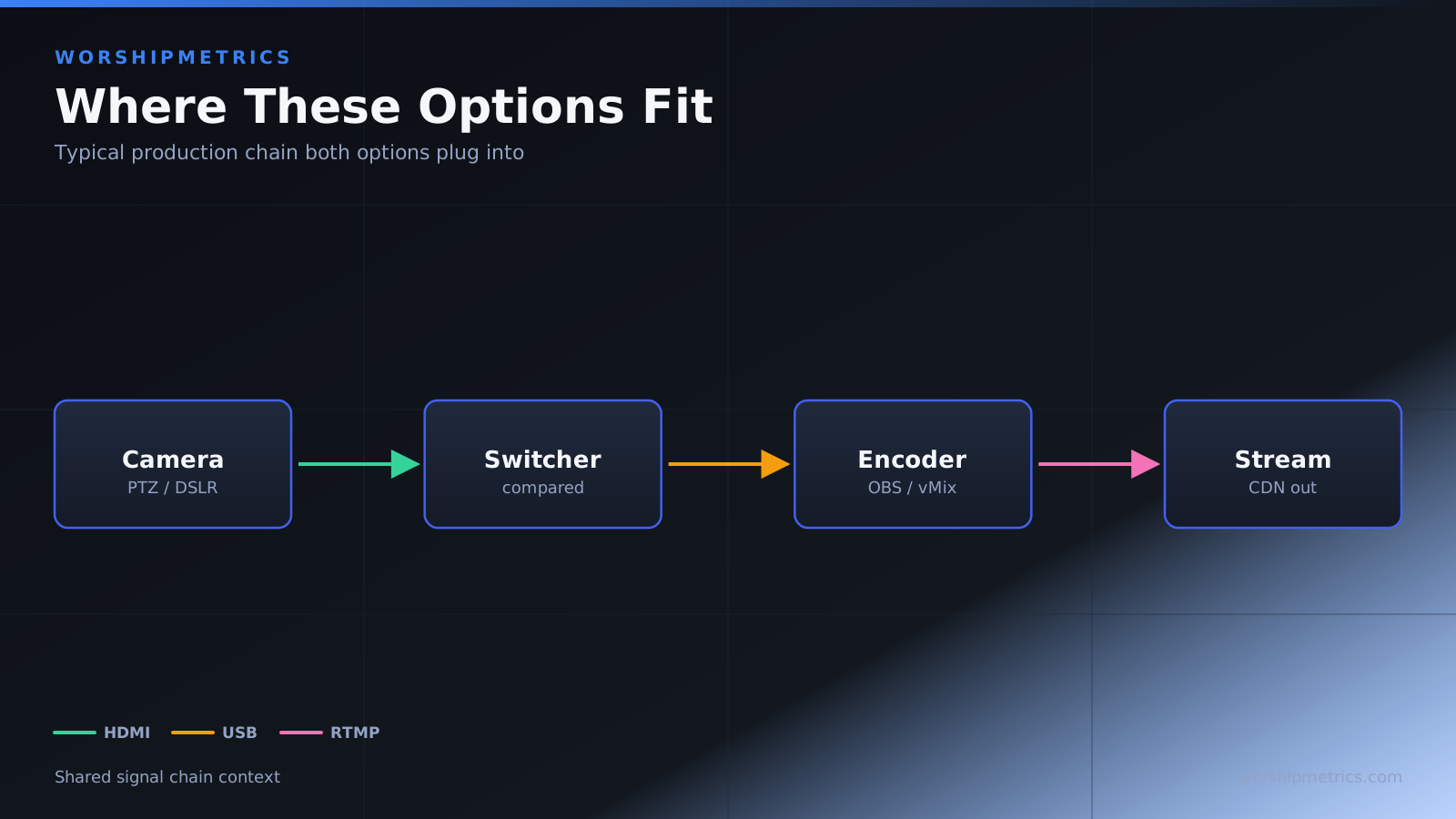
A hardware switcher is a dedicated device that sits between your video sources and your streaming output. The ATEM Mini ($300-500) represents the accessible entry point for hardware switching. Connect cameras and graphics to its HDMI inputs, press buttons to switch, and video goes to your encoder or streaming software.
The reliability is the primary advantage. Hardware switching is independent of your production PC. Even if Windows crashes, OBS freezes, or your computer overheats, the ATEM continues processing video. This isolation is powerful for live production where reliability matters more than features.
The operational experience is tactile. Buttons on the mixer provide immediate, physical feedback. Pressing a button switches the video instantly. There’s no menu navigation, no software lag, no wondering if your click registered. This directness is satisfying for operators and builds confidence under the pressure of live service.
The learning curve is gentle. New operators understand the physical interface quickly. After a few services, muscle memory develops and switching becomes second nature. This accessibility is valuable for churches with rotating volunteer operators.
The cost is reasonable. The ATEM Mini costs $300-500, a manageable investment for reliability.
The limitation is feature depth. Hardware switchers do switching, transitions, and basic effects well. Advanced keying, complex graphics animation, and sophisticated effects require additional software or external graphics systems. For churches wanting broadcast-quality graphics integrated into the switcher, hardware’s limitations become apparent.
Software Switcher Approach (OBS or vMix)
A software switcher runs on your production PC. OBS is free; vMix costs $600-1000 annually depending on tier. You install software, configure sources, and switch between scenes using keyboard commands or external control devices.
The feature depth is the primary advantage. vMix especially offers broadcast-quality production tools. Advanced graphics, virtualized sets, sophisticated keying, and frame-accurate control are all available. If your production ambitions are sophisticated, software switchers enable them more directly than hardware.
The flexibility is also appealing. You can adjust configurations on the fly, create complex switching sequences, integrate graphics with audio changes, and accomplish workflows impossible on hardware switchers.
The cost can be lower. OBS is free. Even vMix’s annual subscription is reasonable for the features provided. If feature depth matters more than hardware investment, software is economical.
However, the reliability is the tradeoff. Software switching depends on PC stability, driver compatibility, and resource availability. If Windows updates interrupt during service, if a driver becomes unstable, if CPU usage spikes, switching can fail or degrade. The single point of failure is also problematic — if the PC crashes, everything stops.
The operational experience is different. Switching happens through software menus or keyboard commands rather than physical buttons. Some operators find this less satisfying than tactile hardware control. The learning curve is steeper, especially for volunteers unfamiliar with software.
Head-to-Head: Reliability and Tactility vs Features and Flexibility
This comparison reflects different priorities in live production. Hardware switchers prioritize reliability and immediate tactile operation. You sacrifice feature depth for peace of mind.
Software switchers prioritize feature depth and flexibility. You sacrifice operational simplicity for production capability.
For churches doing weekly services where reliability is essential, hardware’s advantages are material. For churches with sophisticated production ambitions and dedicated staff, software’s capabilities justify the complexity.
Which Should Your Church Choose?
Choose hardware switcher if reliability is your priority. For mission-critical Sunday services where you can’t tolerate switching failure, the hardware approach provides greater peace of mind.
Choose hardware if your production team includes rotating volunteers. The simple, tactile interface means new operators learn quickly and feel confident operating.
Choose hardware if straightforward switching is all you need. For switching between camera, graphics, and media without complex effects, hardware is all you need and more cost-effective than professional software.
Choose hardware if you want separation of concerns. Keeping switching separate from PC encoding means production failures don’t cascade to streaming.
Choose software switcher if feature depth matters to your production. If you want advanced graphics, virtualized sets, or sophisticated effects, software provides capabilities hardware doesn’t.
Choose software if you have dedicated, trained production staff. Professional operators value software’s capability and can manage its complexity.
Choose software if your budget is extremely tight. OBS is free, and even vMix’s subscription is less than hardware over multiple years.
Choose software if your production needs are complex. Multiple simultaneous services, virtualized sets, or advanced graphics integration are more direct in software.
For most churches, the hardware switcher is the more pragmatic choice. The combination of reliability, simple learning curve, and reasonable cost makes sense for churches with volunteer teams and straightforward production needs. The simplicity means fewer things go wrong, and when problems do occur, they’re easier to troubleshoot.
For professional productions, software switchers like vMix make sense. The feature depth and flexibility enable broadcast-quality production that hardware can’t match.
The choice between hardware and software switchers hinges on whether your priority is reliability and simplicity (hardware) or feature depth and flexibility (software). For most churches with volunteer operators and weekly services, a hardware switcher like ATEM Mini provides better operational experience and greater peace of mind. For churches with dedicated production staff and ambitious production goals, professional software like vMix justifies the complexity. Choose hardware for reliability-first production; choose software for feature-first production. Most churches find hardware switchers the practical starting point, with software as the choice for sophisticated, professional operations.