Verdict
For NDI-capable church setups, AVKANS offers more flexibility; for USB-direct production, Tenveo is the simpler choice.
When churches move beyond basic webcam streaming, the PTZ (pan-tilt-zoom) camera becomes essential. Two budget-friendly options dominate the church market: the AVKANS PTZ-U100 and the Tenveo VHD30U. Both cameras cost under $500 and deliver solid performance, but they’re designed for slightly different production workflows. Understanding those differences will help your church choose the camera that matches your existing setup and growth plans.
AVKANS PTZ-U100 Overview
The AVKANS PTZ-U100 is a network-based PTZ camera that emphasizes flexibility through multiple connectivity options. It ships with NDI support built-in, along with RTSP, ONVIF, and traditional USB output. This means you can integrate it into modern church production workflows that leverage NDI networks — a major advantage if you’re building a professional setup.
The camera delivers 30x hybrid zoom, which provides reasonable tightness for medium-sized sanctuaries. The lens quality is solid, though not exceptional for high-contrast lighting scenarios common in worship settings. The build feels more plasticky than competitors, but the articulating mounting hardware is thoughtful and stable. Pan and tilt speeds are snappy and responsive — important for live switching where you need quick moves.
For churches already using NDI-capable switchers like the ATEM Mini Pro or vMix, the AVKANS’s native NDI output is a game-changer. It eliminates the need for additional capture cards or converters. The community support around AVKANS cameras on church production forums is growing stronger, with tech directors sharing setups and tips.
The weakness is in preset storage. While the camera supports position memory, the interface for saving and recalling shots during a service feels clunky compared to more polished competitors. You’ll likely rely on manual control or develop a muscle-memory approach to camera movements.
Tenveo VHD30U Overview
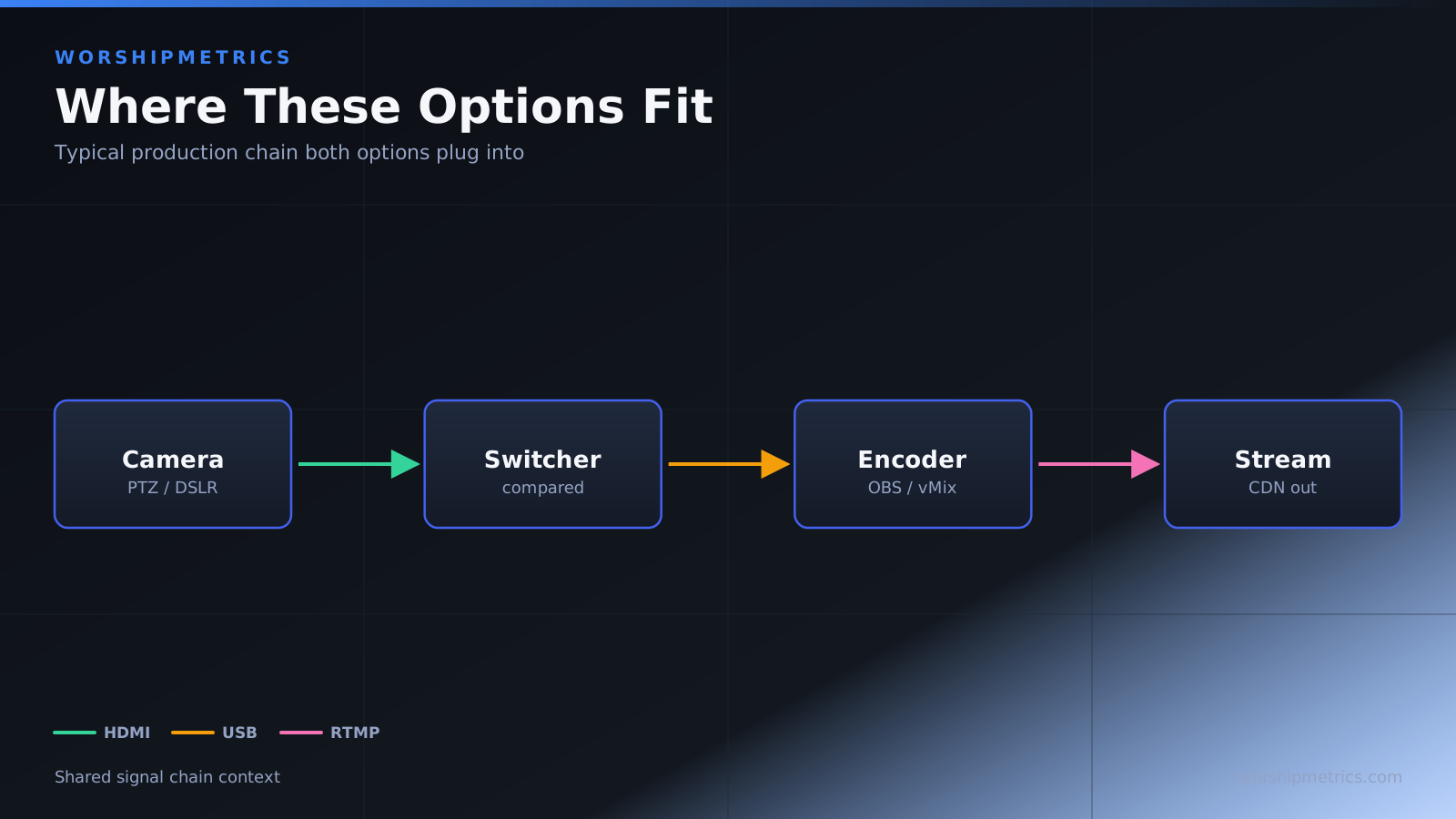
The Tenveo VHD30U prioritizes simplicity and universal compatibility. It connects via USB directly to your production computer — no network configuration, no IP addressing, no NDI licensing concerns. If you’re running OBS or a traditional switcher setup, plug in the USB cable and the camera appears as a native video input.
The VHD30U offers the same 30x hybrid zoom and delivers comparable image quality to the AVKANS. Pan and tilt responsiveness is smooth, though perhaps slightly less snappy under rapid movement. The build quality feels more substantial — heavier metal chassis and components that inspire confidence in longevity.
Where Tenveo excels is in documentation and out-of-the-box experience. The manual is clear, the software configuration is minimal, and most of the learning curve involves camera mounting and cable management rather than network setup. For churches with minimal IT infrastructure, this is genuinely valuable.
The camera also supports PTZ control over USB, meaning whatever software you’re using (OBS, Streamlabs, Vmix running locally) can control pan, tilt, and zoom without external joystick hardware. For single-camera setups, this is more than sufficient.
The trade-off is network isolation. The VHD30U doesn’t natively support NDI or RTSP, so if you want to distribute this camera’s video across your network in the future, you’ll need external capture hardware or a software encoder.
Head-to-Head: NDI Integration vs Simplicity
This is where the two cameras truly diverge. The AVKANS ships with NDI support ready to use. If your church is building toward a modern streaming stack, this is a significant architectural advantage. NDI lets you send camera video across your network without expensive capture cards, enables backup switching setups, and positions you for remote monitoring and secondary distribution.
However, NDI only matters if you have the supporting infrastructure. If you’re running OBS on a single PC with USB-connected inputs, the VHD30U’s simplicity wins decisively. There’s nothing to configure, no network bandwidth to worry about, and fewer failure points.
For churches evaluating their first professional PTZ camera, the honest answer is this: if you’re already using NDI elsewhere in your setup (networked audio, Dante switching, IP-based graphics), the AVKANS’s native NDI output justifies its consideration. If you’re building a traditional USB-based production setup with OBS or a local software switcher, the Tenveo’s simplicity and robustness is the better path.
Which Should Your Church Choose?
For NDI-capable setups: Choose the AVKANS PTZ-U100. If you’re already thinking about network-based video distribution, working with NDI switchers, or planning future redundancy, the AVKANS’s native NDI output removes complexity and cost. The community documentation for church NDI setups is growing quickly, and support via forums is responsive. Budget $450-500.
For USB-direct production: Choose the Tenveo VHD30U. If you’re running OBS on a single production PC, streaming directly without a separate network, or minimizing IT complexity, the VHD30U’s plug-and-play approach is unbeatable. You’ll spend less time troubleshooting and more time focusing on production. Budget $400-450.
For churches starting out: The Tenveo VHD30U is the safer first choice. The simplicity gives you breathing room to learn PTZ operation, develop camera switching skills, and understand your actual production needs. You can always add NDI infrastructure later.
For churches scaling up: The AVKANS signals that you’re thinking about network architecture. If you’re already discussing IP audio systems or building redundancy, the AVKANS keeps you aligned with modern standards.
Both cameras will serve a church well for several years. The decision ultimately hinges on whether your production infrastructure is network-based or USB-based. Choose the one that matches your existing ecosystem, not the theoretical “better” option. Your team will work faster and more confidently with the camera that fits your workflow.