Verdict
Hardware (ATEM) wins for reliability and simplicity; vMix wins for feature depth and scalability when you have a dedicated production PC.
This is perhaps the most consequential switcher decision for churches: dedicate a hardware switcher to video production, or handle switching through software on your production PC? The ATEM Mini Pro is the hardware approach; vMix is the dominant software option. Both cost in the $300-500 range for basic licensing, and both are genuinely excellent at what they do. But they suit profoundly different production environments, and choosing wrong creates friction across your entire workflow.
ATEM Mini Pro Hardware Switcher
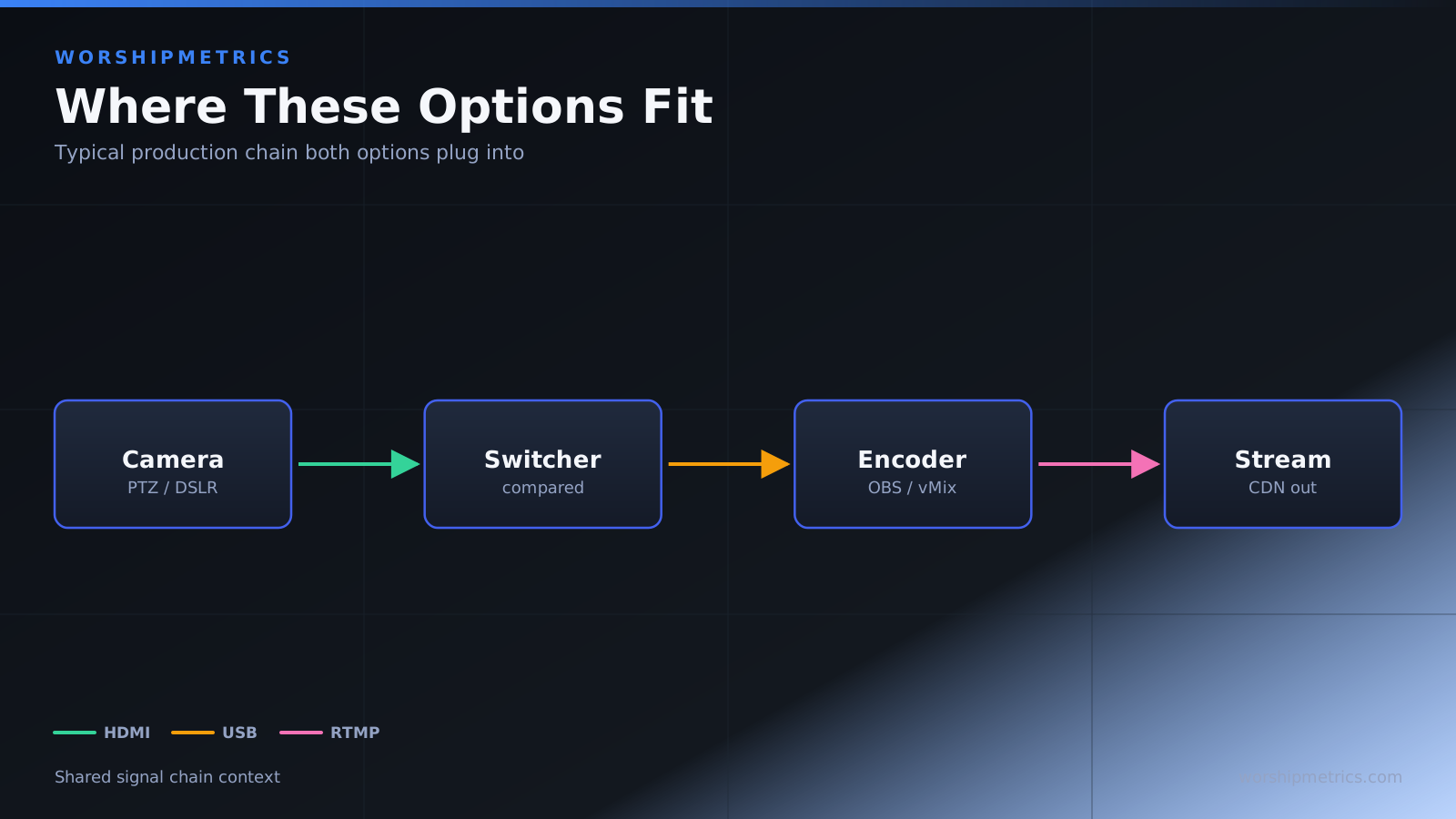
The ATEM Mini Pro is a dedicated, purpose-built video switcher. Connect cameras to its HDMI inputs, connect it to your production computer via USB, and you have a reliable, hardware-based switching platform. The four HDMI inputs handle most church setups. The physical buttons provide tactile switching control.
The reliability is the core advantage. Hardware switching is disconnected from your production PC’s OS, stability, or resource constraints. Even if Windows crashes, the ATEM keeps outputting video. Even if OBS locks up, the ATEM is still switching. This isolation is powerful for live production where reliability matters more than features.
The operational experience is focused. The ATEM Mini Pro does video switching. That’s its job. It does it excellently, predictably, and without requiring you to think about CPU resources or driver compatibility. An operator learns the button layout and operates confidently without worrying whether the switcher will bog down.
The ecosystem is mature. Firmware updates are regular. Integration with streaming software is excellent. Community documentation is extensive. If something goes wrong, you can find solutions quickly.
The trade-off is feature depth. Advanced operations like complex animations, virtualized sets, or complex keying require additional hardware or software layers. Sophisticated effects are possible but require careful sequencing. The ATEM is powerful enough for most churches, but it’s not a single platform that handles everything.
The cost is straightforward: buy the ATEM Mini Pro once, no recurring fees, you own it permanently.
vMix Software Switcher
vMix is professional video switching software that runs on a Windows PC. Rather than dedicated hardware, you install vMix on your production computer and control switching through software interface or external hardware (keyboards, joysticks, control panels).
The feature depth is remarkable. vMix handles switching, advanced keying, virtual sets, graphics layers, streaming, recording, DVE effects, and a dozen other capabilities. If you can imagine a video production operation, vMix likely supports it. The software has grown from consumer-level tool to professional broadcast platform.
The flexibility is related to the feature depth. You can configure vMix to match almost any production workflow. Multiple monitors show different information simultaneously. Custom interfaces can be created for specific operational needs. If your production requirements are unique, vMix is more likely to accommodate them.
The cost model is subscription-based (though perpetual licenses exist). Basic tiers start around $200-600 depending on feature level. For feature-rich production, you might pay $1000+ annually. This is different from ATEM’s one-time cost.
The significant trade-off is PC dependency. vMix runs on Windows, so your production relies on that PC being stable, having sufficient resources, and not being compromised by other software. If your PC experiences driver issues, OS problems, or hardware failures, your switching stops immediately. There’s no hardware fallback — the PC is the switcher.
This creates operational questions: Do you need a dedicated production PC or share it with other roles? What if the PC crashes mid-service? How do you manage backups and redundancy?
The learning curve is also steeper. vMix is powerful, which means the interface is complex. New operators take longer to reach comfortable competency. Professional-level operation requires understanding layers, keying workflows, and advanced features that take weeks to learn.
Head-to-Head: Reliability and Simplicity vs Power and Flexibility
This comparison crystallizes around operational environment and team skill. For a church with basic production needs and limited tech staff, the ATEM Mini Pro is more robust. An operator can learn the button layout in one service and operate confidently thereafter. The hardware isolation means failures are rare and don’t cascade to other systems.
For a church with sophisticated production needs, dedicated production staff, and technical depth, vMix’s feature set is liberating. Advanced graphics, virtualized sets, and complex automation become possible. The investment in learning vMix’s capabilities pays dividends through more professional production.
However, the reliability question is real. Church services happen weekly on schedules determined by the church calendar, not by technical readiness. A hardware switcher that operates predictably is worth more than a feature-rich software solution that occasionally develops stability issues.
Which Should Your Church Choose?
Choose ATEM Mini Pro if you want reliability and simplicity above all else. If your church can’t tolerate switching failures, if your tech director values stability over features, the ATEM’s hardware isolation is worth the investment. You’ll have consistent, predictable production week after week.
Choose ATEM Mini Pro if your production team is volunteer-based or rotates frequently. The straightforward interface means new operators reach competency quickly. There’s less to learn, and fewer things to go wrong.
Choose ATEM Mini Pro for smaller churches with modest production ambitions. If you’re doing basic camera switching and graphics, the ATEM’s capability is sufficient and the setup is minimal.
Choose vMix if you have a dedicated, experienced production director who will manage the software. If someone on your staff has broadcast experience and wants to explore advanced production techniques, vMix enables possibilities the ATEM doesn’t.
Choose vMix if your production needs include advanced features like virtual sets, complex keying, or sophisticated graphics integration. If your director wants to build production value beyond basic switching, vMix is the platform.
Choose vMix if you’re planning multi-site production or remote production. vMix’s software approach makes it easier to set up portable production systems across multiple locations.
For most churches, the ATEM Mini Pro is the safer choice. You sacrifice some advanced features, but you gain reliability and simplicity. Your Sunday service streaming is less likely to experience technical failure. If your church grows and wants more sophisticated production, you can add vMix on a second PC while keeping ATEM as backup — the two systems complement each other well.
This decision hinges on whether your church values operational reliability or production features. Hardware switchers like ATEM prioritize reliability; software switchers like vMix prioritize capability. For most churches, especially those new to professional production, the ATEM Mini Pro is the better starting point. Upgrade to vMix when you have the staff, technical depth, and production requirements to justify the additional complexity.