Verdict
The ATEM Mini Extreme is the better value for churches; the Television Studio HD makes sense only if a physical control panel is required.
The ATEM Mini Extreme and ATEM Television Studio HD both operate in the advanced production tier, but at significantly different price points and with different physical form factors. The Mini Extreme costs around $1000, while the Television Studio HD costs nearly $2500. That price gap reflects different design philosophies and user expectations, and for many churches, the gap is much larger than the performance justifies.
ATEM Mini Extreme Overview
The ATEM Mini Extreme is the maximum-feature version of Blackmagic’s Mini switcher line. It adds significant capability over the Mini and Mini Pro: six HDMI inputs instead of four, two keying engines for simultaneous graphics overlays, streaming and ISO outputs simultaneously, and advanced transition controls. The form factor remains compact — it’s still a portable device suitable for rolling production carts.
The power is genuine. With six inputs, you can support multiple cameras, graphics layers, media playback, and backup feeds simultaneously. The dual keying engines mean you can overlay graphics while maintaining a second key for titles or lower-thirds. The simultaneous streaming and ISO output capability enables multiviewer feeds or recording backup while streaming.
The connectivity is modern. Ethernet connections support more advanced workflows like IP video and audio distribution. The software is the same Blackmagic ATEM Control platform, meaning the learning curve is consistent with other ATEM switchers.
For churches building sophisticated multi-camera production systems, the Mini Extreme is powerful and affordable. You get professional capability at a fraction of broadcast equipment pricing. The software integration with OBS, vMix, and streaming platforms is excellent.
The trade-off is pure physical layout. Despite the advanced features, it’s still a compact box with button layouts that require navigation. If you’re switching complex sequences repeatedly, the physical interface can feel constraining. All those six inputs and advanced features are available, but you access them through layers of menus rather than dedicated hardware buttons.
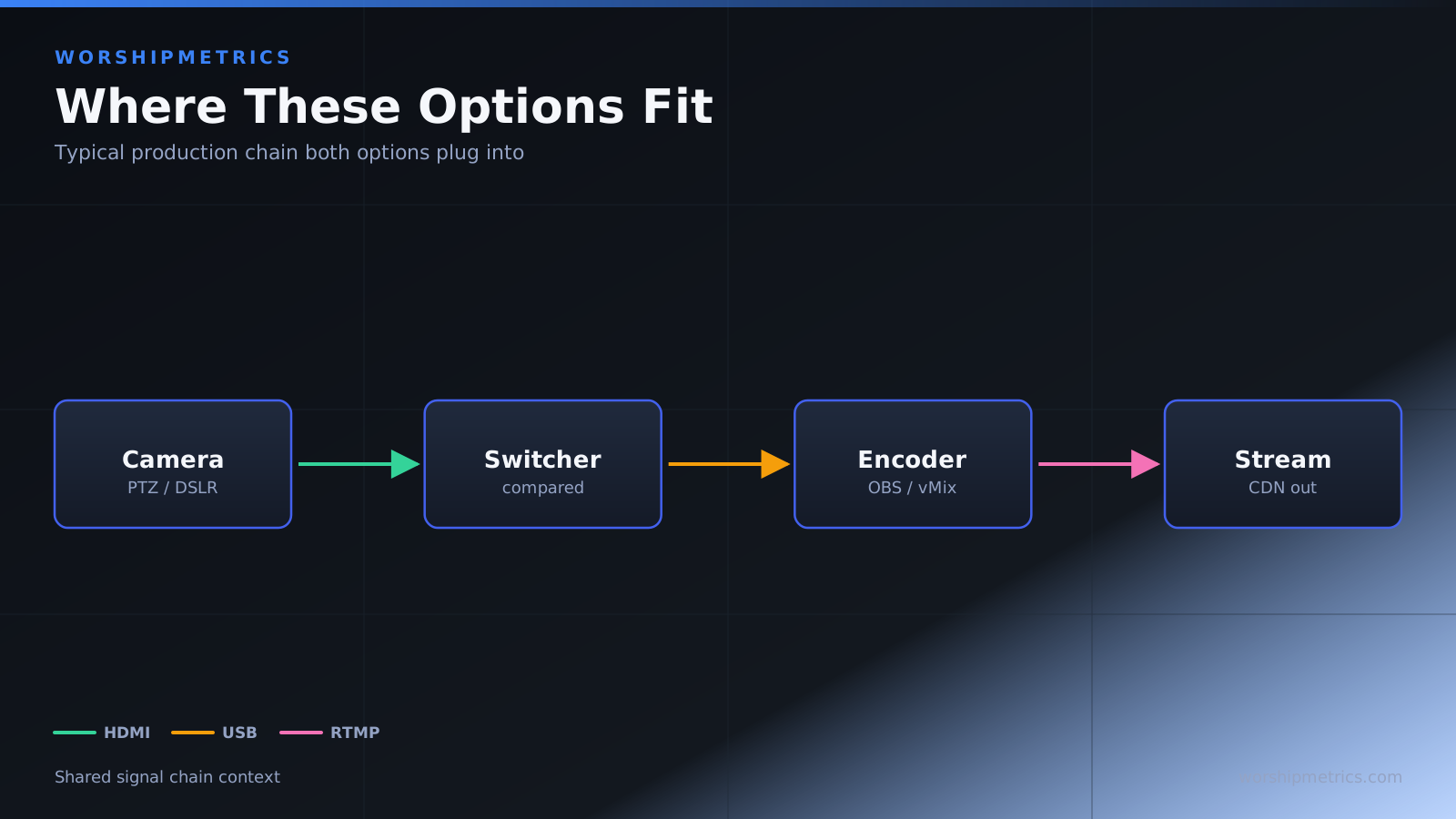
ATEM Television Studio HD Overview
The ATEM Television Studio HD represents a different approach: hardware-centric control with a dedicated control panel. Rather than a compact box with multilayered menus, the Television Studio HD ships with a separate physical control surface — a larger console with dedicated buttons, faders, and displays for every major function.
This control panel makes operation more intuitive. Switching between eight inputs is a single button press. Transitions are controlled by dedicated T-bar faders. Audio levels have physical faders. Keying operations have visible controls. For operators who spent decades on traditional television equipment, this feels familiar and natural.
The switching capability is the same tier as the Mini Extreme — multiple inputs, keying engines, simultaneous outputs. But the way you access those features is completely different. Everything is physical. Nothing requires menu navigation.
The build quality is broadcast-grade. The control panel is substantial, heavy, and built to survive years of daily use in professional environments. This is equipment designed for television stations, not consumer hobbyists. The durability is obvious and impressive.
However, the size is significant. The control panel requires dedicated desk or console space — you can’t throw it on a rolling cart. The full system (switcher plus control panel) occupies much more space than the Mini Extreme alone. For churches with limited production room or needing portable systems, this is a real constraint.
The cost is also a reality check. At nearly $2500, the Television Studio HD costs 2.5x the Mini Extreme. You’re paying for the physical control panel, broadcast-grade construction, and professional ecosystem. For many churches, this investment is hard to justify.
Head-to-Head: Software Navigation vs Hardware Control
The core difference is operational experience. The Mini Extreme requires understanding its menu structure to access advanced features. Once learned, the menus are logical and navigation is fast. But it’s still navigation — you don’t have a single physical button for every function.
The Television Studio HD eliminates navigation. Every major function has dedicated hardware. This is faster for frequently-accessed operations and more intuitive for operators new to digital switchers. But it requires significant physical space and cost.
For a typical church workflow, both switchers are more powerful than you need. Most services involve three or four inputs, simple transitions, and basic graphics. The question becomes: are you paying for capability you’ll use, or capability you might use someday?
The Television Studio HD’s hardware approach makes sense if you have a dedicated, trained television operator who will be using the console multiple times per week. In that scenario, the intuitive hardware interface and broadcast-quality construction justify the premium.
The Mini Extreme’s software approach makes sense if your production team is distributed, occasionally volunteers, or includes people less experienced with broadcast equipment. The software interface is learnable, and the compact form factor is manageable.
Which Should Your Church Choose?
Choose ATEM Mini Extreme if you want the most powerful switching capability at the lowest cost. For most churches, this is the clear choice. You get advanced features, professional capability, and software that grows with your team. Budget $1000.
Choose ATEM Mini Extreme if your production space is limited. The compact form factor means you can set up and break down quickly, or integrate the switcher into rolling production gear.
Choose ATEM Mini Extreme if your production team is volunteer-based or rotates. The software interface is teachable, and having everything in one portable device makes setup straightforward.
Choose Television Studio HD only if you have a dedicated, trained television operator. If someone on your staff has professional broadcast experience and will be operating the console multiple times per week, the hardware control interface justifies the premium. Budget $2500.
Choose Television Studio HD if you have dedicated production space and want broadcast-quality equipment that will serve your church for 10+ years. The build quality and professional ecosystem position this switcher for long-term reliability.
For most churches, the ATEM Mini Extreme is the obvious choice. It offers more capability than you’ll need at a fraction of the Television Studio HD’s cost. If you decide in five years that you need hardware control, you can upgrade then — the Mini Extreme will still be valuable as a backup or secondary switcher.
The Television Studio HD is excellent broadcast equipment, but for churches, the ATEM Mini Extreme offers better value. Unless you have a professional broadcast operator on staff, the software interface of the Mini Extreme is perfectly capable and costs significantly less. Choose the Mini Extreme, and reinvest the savings in cameras, audio, or lighting that directly impact worship experience.